
Quality of life, a lens on the country for 35 years

2' min read
2' min read
Every year, the most incredulous reactions to the Quality of Life of the Sole 24 Ore are - paradoxically - those of those who live in the territories placed higher in the ranking. The most controversial, each time, are precisely the residents of the winning province. After each publication, from 1990 to the present day, the wave of reactions from the territory to the results of the survey has made one certainty clear: the quality of life for each of us is something absolutely subjective; the perception of the place where we live is influenced by our relationship, a personal one, with what is around us. And each of us is inclined to see what is wrong first, as opposed to what works.
What, then, is the role of the Sole 24 Ore's Quality of Life ranking, produced as a simple 'average of averages' of a package of 90 statistical indicators (objective measurements certified by authoritative sources)? We answer, helped by the awareness consolidated over the years by the many numbers published: the role of 'our' Quality of Life is that of an enquiry, born from the reasoning of journalists who observe reality and the factual data it produces every day. Telling the country, its gaps, its fragilities and best practices through numbers makes it possible to denounce what is lacking, guide decision-makers or turn the spotlight on certain phenomena.
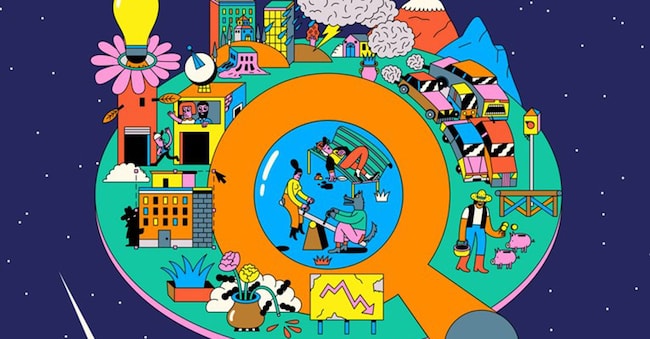
The magnifying glass used (the Q also represented in the survey's logo) is that of the editorial staff of Il Sole 24 Ore, which, already 35 years ago, decided to produce the ranking in-house, starting from two consciousnesses: no scientific method can ever guarantee the objectivity of any ranking; the choice of indicators can always be discussed. The strength and independence of the survey lies precisely in the process of collecting and selecting the 90 parameters (some published for the first time for this occasion), guided by the need to best represent current events and the changes taking place in society and the country.
Some unprecedented elaborations, then, allow the numbers to 'speak', putting them in relation to each other. What does the rest, finally, is the 'reading' of the indicators, considered positive or negative in the light of the ranking: choices, again, that spark debate every year.
The absence of intervention in the statistics (rendered homogeneous with a score from 0 to 1,000 and presented in a simple arithmetic mean), without formulas or attribution of weights, allows one to dwell on the values and their interpretation. The narrative device of the ranking list and the visualisation of the data then support the journalistic narrative.

