
Quantum technologies, start-ups and spin-offs in the North-East pole
Consolidated know-how between Veneto and Trentino, with universities at the forefront - Many applications for manufacturing
by Barbara Ganz
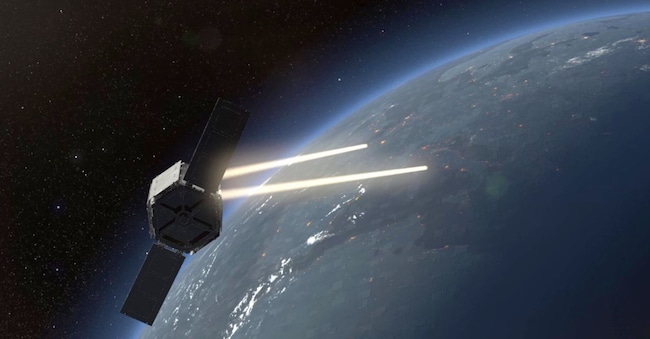
A quantum technology hub with cutting-edge know-how has consolidated between Veneto and Trentino. Enterprises, university spin-offs and start-ups are part of it, often deploying university lecturers and researchers who have become their own entrepreneurs. Giuseppe Vallone, Professor of Experimental Physics of Matter at the University of Padua, explains: 'We come from twenty years of research work.
The applications
The group started at the beginning of this century with Professor Paolo Villoresi, who began experimenting with quantum technologies and communications in satellite channels. From there, an intense research activity started to develop new components, new devices, with the aim of realising quantum communication protocols or, more appropriately, quantum key distribution.
Qkd, the starting point for encrypting a message in a totally secure manner, has considerable business potential. That is why Vallone has co-founded (and is Cto) ThinkQuantum, a spin-off that develops solutions precisely for Qkd; set up in 2021, it has 25 employees and is based in Sarcedo, in the province of Vicenza. This is no coincidence: its industrial partner is Officina stellare, a company specialising in the design and production of astronomical-space instrumentation, based in Sarcedo. "There we have the production line where the devices are assembled before being shipped," Vallone explains. "Instead, in Padua we have a branch office that does R&D, to be closer to the university."
The new challenges
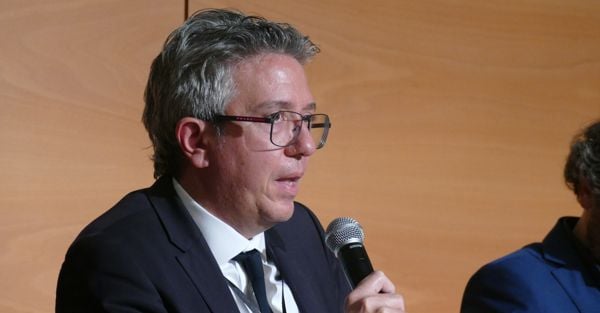
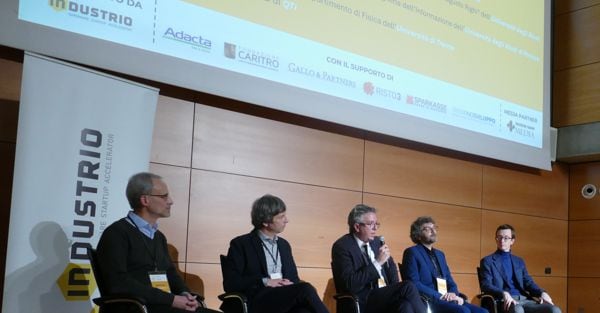
Ex researcher at the University of Padua is also Tommaso Occhipinti. Originally from Vicenza, he is co-founder and CEO of Qti, a company specialising in Qkd. In a historical phase marked by the growing (and costly) threats of cybercrime and so-called hybrid warfare, quantum communication could secure networks, and without the need for special infrastructure investments. 'Qkd works,' explains Occhipinti. 'It is easy, it is plug & play, but it has yet to be presented as a must-have element in the critical communications sector. The process should be accelerated, because it can be of great help to both the public sector and key industries, e.g. manufacturing, to defend themselves against cyber attacks'. Vallone, Occhipinti and the others met in recent weeks at the Future manufacturing summit in Rovereto, organised by the accelerator and investor in manufacturing start-ups Industrio Ventures, to take stock of the situation and assess the outlook.
Know how widespread
In Padua, there is also someone who deals in quantum computing: it is the start-up Rotonium, led by Roberto Siagri, a physicist and entrepreneur from Friuli who has already co-founded Eurotech. But quantum know-how is widespread throughout the north-east, which after having seen the opportunity to host a microchip factory slip away (the Intel case, which ended in thin air) now has the chance to have the right skills at the right time. In Trento, there is Bec, the Pitaevskii Center on Bose-Einstein Condensation: the project of one of its members, Gabriele Ferrari (Full Professor of Experimental Physics of Matter at Unitn), was recently awarded funding by the European Research Council as part of the 2024 Erc Advanced Grant. The objective? To understand in the laboratory what might have happened immediately after the Big Bang. In short, the North-East is ready. But, as Gabriele Catania, an analyst from Vicenza, points out, 'if it is true that there are cutting-edge companies, more public support is needed, because the quantum game, which has just begun, is not only economic, but geopolitical'.

