
Piantedosi: questioning how to make migrants citizens
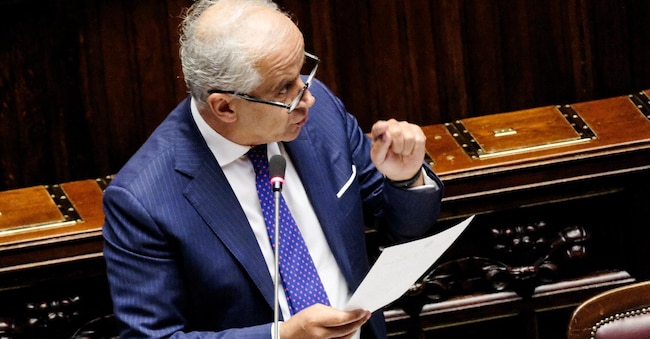
Matteo Piantedosi at the Rimini Meeting emphasising the need to 'satisfy that tendency of every person to find a role and feel useful in society'
by Editors online
 Aggiungi Il Sole 24 Ore
ai preferiti su Google
2' min read
2' min read
"I don't want to anticipate discussions that are a bit complicated these days, but we have to ask ourselves the question of how we make" migrants "our citizens".
So said Interior Minister Matteo Piantedosi at the Rimini Meeting, emphasising the need to 'give satisfaction to that tendency of each person to find a role and feel useful in society'.
The sustainability of migratory processes, he added, "is also nourished by the fact that these are people whose centrality in society we must imagine, wherever they come from". Therefore, 'it is not enough just to satisfy basic needs' but we must pose the problem of how to make these people 'our citizens'.
Citizenship, the discussion must be addressed
"If this discussion serves to update the panorama of evaluations that a country like ours has to make on this important issue of new citizens, that is fine and should be done. In my opinion, the discussion that has been raised must serve to open up an evaluation that must also be somewhat technical: doing so in the light of concrete and realistic data could help us not to deny the problem and reject it to the sender, but help us but to do something more targeted and important for our needs, which are for the maximum integration of the people who arrive. These needs are not only economic, but also housing, cultural and adherence. Let us ask ourselves what is needed to complete a path that in Italy has led to the results we have today'. Thus the Minister of the Interior, Matteo Piantedosi, at the Rimini meeting.
"I believe, however," Piantedosi added, "that this discussion should be free of ideological conditioning. We must start from a fact: our legislation is the one that allows the greatest number of concessions in all of Europe. We are the country in first place for concessions in absolute terms of citizenships. In some cases we are almost double the number of countries like Germany and France. So we do not have a framework of total closure'.

