Quiet luxury, parallel and varied itineraries in the central Ionian region around Catanzaro
A little-known corner waiting to be discovered, rich in history and traditions linked to agriculture and craftsmanship

Key points
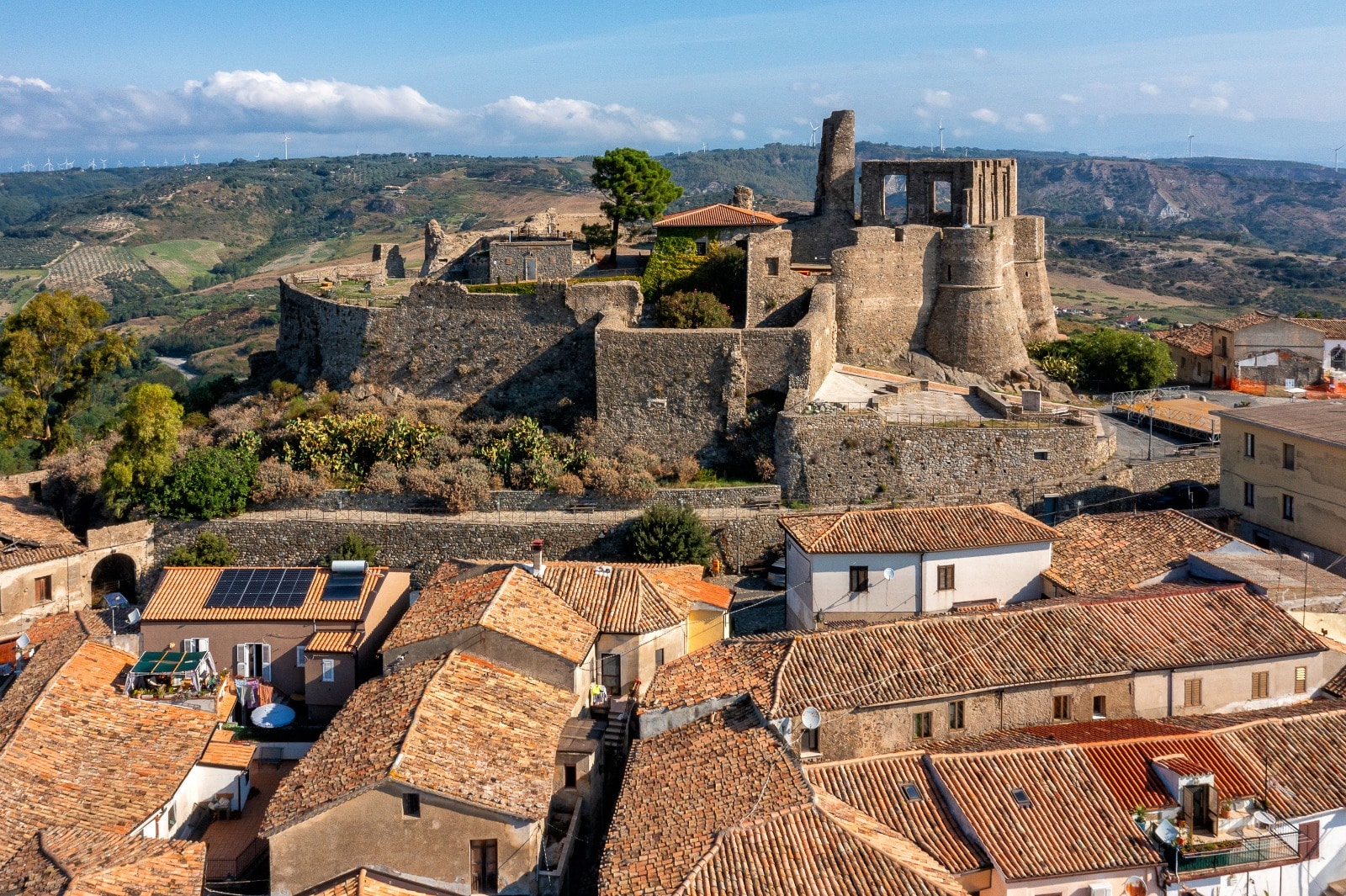
Squillace, Montauro, Isca, Copanello, Le Castella, Cirò – starting from Roccelletta di Borgia, in the central Ionian coast of the Catanzaro province, far from the places affected by ‘touristification’: Norman, Roman and, above all, Magna Graecian remains. Castles, monasteries, amphitheatres – a variety of archaeological sites – all opening out towards the sea. Parallel, ever-changing routes that eventually converge at the medieval castle of Squillace, along the Catanzaro isthmus, the narrowest point in Italia, between the Ionian and Tyrrhenian Seas. This is where some historians place the Homeric kingdom of the Phaeacians, a hospitable people who were the first to welcome Odysseus, a shipwrecked stranger with no name. It is also there – perhaps with a little more leeway – where Italia was born. That is to say, where Italo reigned over the Oenotrians, ‘in that stretch which originally bore the name of Italia all to itself’: so wrote the traveller and archaeologist François Lenormant at the end of the 19th century.
Isca on the Ionian Sea and the surrounding area, “Where Italy Begins”
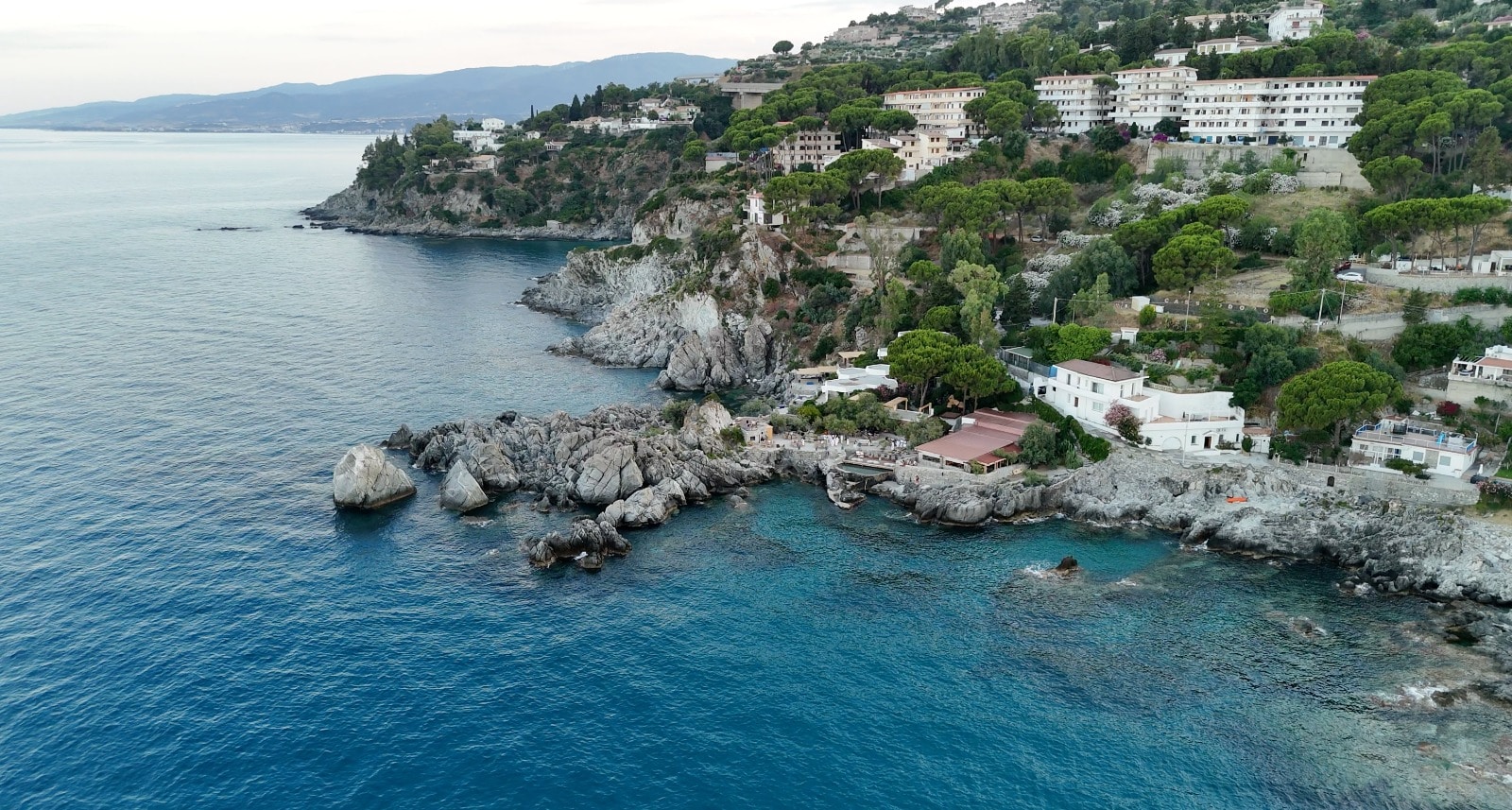
Isca sulla Ionio is a stretch of coastline in the Catanzaro area, perched high above the landscape amidst ravines and olive groves. From above, it is surrounded by beech, holm oak, fir and pine trees from the Serre. Olive mills press the juice from the olives. Some are historic establishments, having been in the olive oil sector for over a century. “My work is always focused on communities, regions and people, who are an integral part of the process of creating a genuine travel experience,” says tourism entrepreneur Angela Donato, the driving force behind the second edition of the “Calabria Food Fest, Where Italy Begins, an event that attracts industry professionals to the area every year in search of what is described as ‘Calabrian quiet luxury’.”
Scolacium, olive oil tastings in the archaeological park
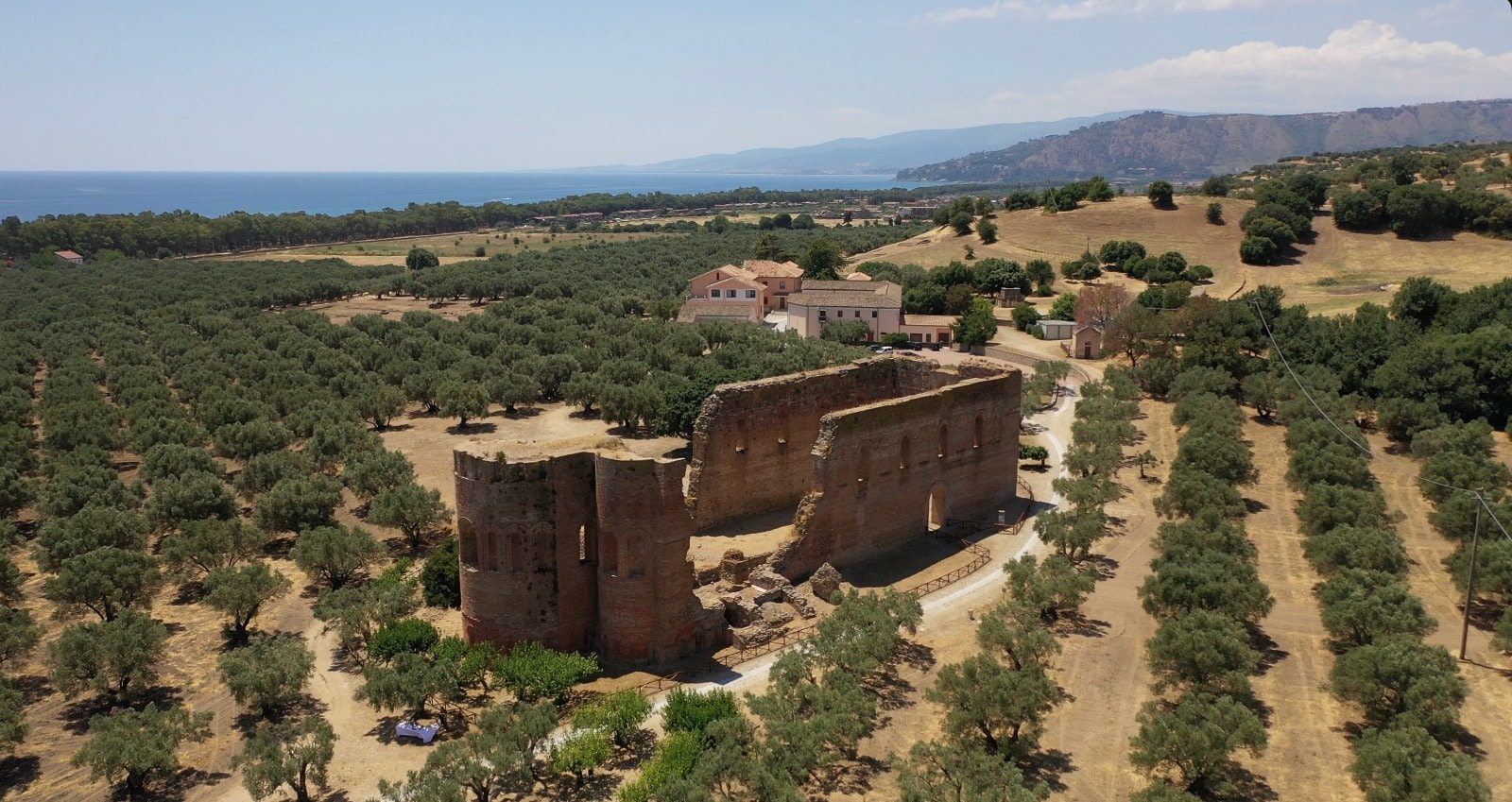
Scolacium, one of Calabria’s most important archaeological sites, stands out against the sky above Roccelletta di Borgia. The area preserves the remains of the Roman colony, built on the site of an earlier Greek settlement. Amidst the dense grove of silvery olive trees, one can make out the amphitheatre (the only one in Calabria), the forum, the cobbled streets and a majestic Norman basilica. The museum complex also features an ancient olive press, bearing witness to the region’s centuries-old agricultural heritage. The director, archaeologist Elisa Nisticò, maintains a close link between the landscape, archaeology and olive cultivation, organising tastings in the park.
Spontaneous welcome in Montauro
Nestled between the Serre hills and the Ionian Sea, Montauro, perched halfway up the hillside, overlooks the Gulf of Squillace. The brass band turns out for the tourists, marching along Corso Umberto to the church of San Pantaleone. The rest is a spontaneous welcome, such as the greetings from the ladies waving enthusiastically from their little balconies.
A tour of Cirò’s heroic vineyards
Visitors come from the United States, Greece, Hungary and the United Kingdom. They explore the coast, the hills and the inland areas. There are various areas of interest: archaeology, crafts, leisure, music and traditional dances. The common thread is the cuisine. Local produce and flavours – amidst toasts in the square and impromptu tastings – enchant the chefs who have travelled from abroad. The Tropea onion reigns supreme, as does Spilinga ‘nduja, the stars of cooking classes that celebrate the region’s identity. Then, ‘site visits’ to open cellars and heroic, primordial vineyards – living vestiges of Calabria’s Hellenic heritage: in the Crotone area, the ancient wine is Cirò. And at the Librandi, Ferrocinto and Senatore estates – to name but a few of those involved – the wine production is of the highest quality.