
Quotes go up but all that glitters is not gold (and goes up)
It has been a few months now that the spotlight has gradually turned on the steadily rising price of gold

3' min read
3' min read
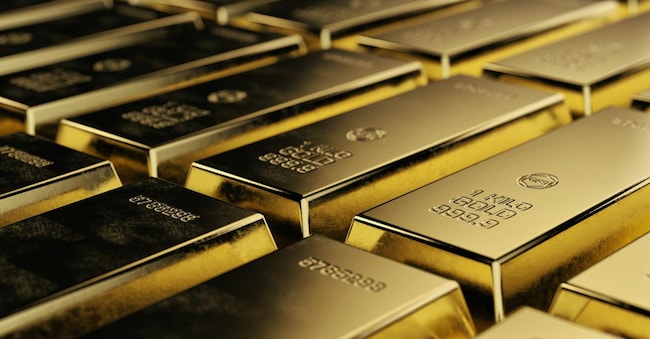
Gold prices continue to rise. The reasons? The markets, which look to gold in times of instability, bets and speculation, and politics, between nostalgic American Republicans and sovereign states that want to reduce their dollar reserves. Savers? They must always ask themselves whether and by how much their preferences differ from those of the markets and politics. It has been a few months now that the spotlight has progressively turned on the steadily rising gold price. Let us start with two numbers. On the one hand, in one year the price of an ounce of gold on the international markets has risen from $1,947 to $2,715, a gain of almost 40 per cent. Last spring, when gold's exuberance first spiked, and its value was at $2,374, some predicted the $4,000 mark in the not-too-distant future. Moreover, the price trend has so far tended to be linear, although macroeconomic conditions and prospects have changed, with inflation trends and the Fed's monetary policy in mind. On the other hand, we look at the long-term trend of gold's real yield. Robert Barro - systematically considered as a possible candidate for the Nobel Prize - some time ago carried out an econometric analysis using gold prices over an extended period of time - from 1836 to 2011 - and discovered an average real yield of 110 basis points, with a band of fluctuation between 10 basis points and 210 basis points. A return, the study concludes, from a risk-free financial asset.
Being in the long run a risk-free asset is the property that is traditionally attributed to gold. But, there are at least two "buts": one from a macroeconomic point of view, the other more microeconomic.From a macroeconomic point of view, history has taught us that when gold was the anchor of the monetary system, the aggregate effects on the countries that that anchor adopted can be represented by a two-sided currency. Gold is a physical commodity, which can have a use other than being money, so its price will always be positive; moreover, its quantity is relatively scarce. Consequently, if gold is currency, it becomes the unit of account in which the prices of other goods are expressed. Therefore, whenever there is an increase in the demand for goods and services, there is a parallel increase in the demand for money, hence for gold and its price, which automatically curbs the rise in other prices. In short, gold becomes an automatic price stabiliser. An econometric analysis compared the three historically most important monetary regimes, which were characterised institutionally by: the gold anchor between 1881 and 1912; the dollar anchor, i.e. Bretton Woods, between 1946 and 1970; and no anchor, i.e. flexible exchange rates, from then until 1993. The result is that price growth in the second and third regimes was respectively three times and seven times that recorded during the gold standard regime.
Monetary stability explains why the gold standard is still so popular today. The case of the US Republican Party is emblematic. For example, during the Trump presidency, one of its candidates for the Fed, Judy Shelton, was considered by the media to be a historic proponent of a return to the gold standard. But the gold standard also has a bad side: precisely because its quantity is limited, in phases of economic expansion, when more money is needed to develop more trade, it shows all its rigidity. In fact, if one looks at economic growth, the gold regime has performed one-third as well as the Bretton Woods regime and half as well as the flexible exchange rate regime. From a microeconomic point of view, the stability of the real value of gold is all the more uncertain the shorter the time horizon, because the effects of changes in preferences, both from an economic point of view and as a reflection of a change in geopolitical balances, automatically reverberate on the price of gold. This is what has been happening in recent months. On the price of gold, for example, are reverberating the consequences of the choices of sovereign countries - such as China, or Russia - which must or want to reduce the dependence of their trade, real and financial, on the dollar. In short, gold is shining, but there are 'buts'. The time horizon is crucial. Let savers always remember that.


