
Rail freight: a further decline in volumes is forecast for 2026 (-4 per cent)
President Carta: urgent measures to support the sector are needed as early as the Budget Bill

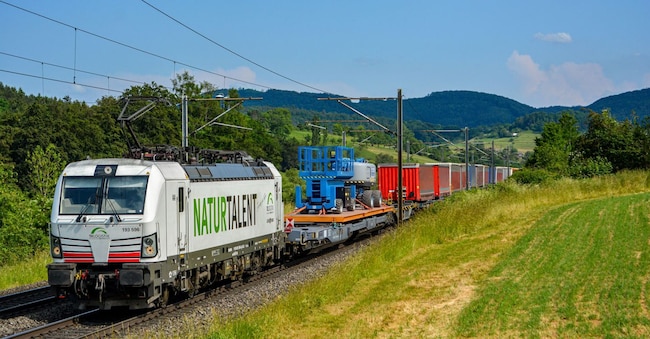
2026 is set to be the most critical year for Italian rail freight transport. This is according to Clemente Carta, president of Fermerci, the association representing over 80 per cent of rail freight companies operating in Italia. During the ‘Mercintreno’ event, held at the CNEL headquarters in Rome on Thursday 5 November 2026, the association once again sounded the alarm over the severe economic hardship currently being faced by rail freight companies. The main causes of the crisis are, first and foremost, the Covid-19 pandemic (with traffic at an all-time low in 2020), followed by soaring energy costs, the slowdown in European industry, restrictions at Alpine border crossings and, finally, the numerous disruptions to the rail network linked to the 1,300 construction sites under the National Recovery and Resilience Plan (PNRR).
Fermerci regards these measures as strategic and necessary to improve the network’s capacity and performance. However, the operational impact on freight traffic is extremely severe and risks undermining a significant proportion of the progress achieved through ten years of public policies aimed at supporting rail freight transport. And over the next three years, constraints on European networks – starting with the German network – and disruptions at Alpine crossings could compound, reducing connections and alternatives. Carta says: ‘Rail freight transport ensures the country’s logistical continuity even under extremely challenging conditions. This requires reliable and coordinated support policies. Today, however, companies often face long delays in receiving the funding on which they have based their plans, whilst national and regional measures are not always implemented in a coordinated manner,’ explains Carta.
The president of Fermerci cites some figures: ‘In Italia, rail carries 11.6 per cent of freight, compared with a European Union average of 16.6 per cent, over 20 per cent in Germany and 30 per cent in Austria. The figure has fallen from 53.8 million train-kilometres in 2021 to 49.4 million in 2025, representing a 7.8 per cent decline over the period 2022–2025. In 2025 alone, the decline was 3.5 per cent, the third consecutive year of decline. In the first half of 2026, the decline continued: −8.1 per cent, over 2 million train-kilometres fewer than in the same period of 2025. ‘According to the current projections from our monitoring,’ continues Carta, ‘2026 could end at around 47 million train-kilometres (down 4 per cent on 2025). The key is to ensure that, upon completion of the PNRR works on the network, the sector still possesses the necessary industrial capacity and has not, in the meantime, been reduced to zero.”
It is in response to these needs that Fermerci has accepted the CNEL’s invitation to draw up a draft bill for the revitalisation of rail freight. Carta explains: ‘It is a proposal that places no new burden on public finances, aiming to make more effective use of existing resources and to simplify procedures. It sets clear deadlines for the payment of contributions and brings incentives into line with European rules on state aid. It allows the regions to supplement or co-finance central government measures, thereby ensuring more coordinated support policies.”
It will be up to the CNEL to take up this draft bill, using the power to initiate legislation conferred upon it by the Constitution, in order to bring it to the attention of Parliament. Carta goes on to say: ‘This legislative measure must be accompanied by a plan to ensure the continuity and adequacy of the resources allocated to the sector. This is the commitment we are calling on the Government and Parliament to make, starting with the next Budget Bill.”


