
Freight, rail and intermodality in trouble
Cdp study: road transport dominates in Italia, infrastructure constraints weigh heavily
by Marco Morino
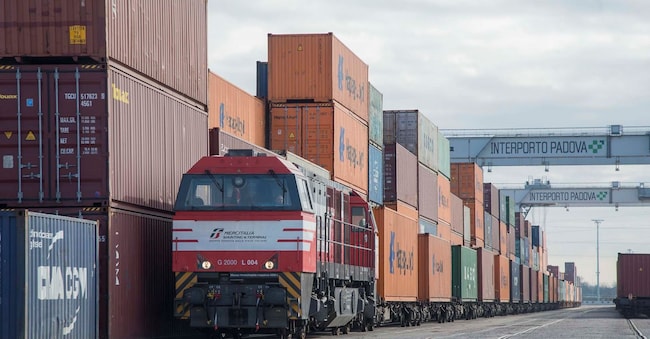
With a turnover of 120 billion euro, 72 thousand companies and 720 thousand employees, the Italian logistics supply chain is the third largest in Europe, after those of Germany and France, and accounts for over 10% of the sector's turnover at EU level. This is according to a study drawn up by Cassa Depositi e Prestiti (Cdp), which set out to take a snapshot of the sector, highlight the challenges it faces and identify the key factors for its competitive development.
The first fact that strikes one when reading the research is the modal imbalance that dominates Italian logistics, characterised by a multitude of small and medium-sized enterprises. In particular, in Italia road transport accounts for 88% of internal volumes (the European average is 78%) with intermodality still not very competitive in terms of cost and capillarity. Rail's market share remains limited (13% in Italia compared to an EU average of 17%), even though the contestable rail market is potentially well above its current level. In Italia, notes the Cdp study, intermodal freight transport is still not very competitive in terms of cost compared to traditional road transport, partly because of infrastructure constraints. Weighing on the choice are the still insufficient capacity of some intermodal nodes (ports, rail terminals, interports) and the lack of efficient penultimate and last mile connections with industrial areas.
Loading...
The national rail network directly connects only 40% of ports and less than one third of airports are connected to rail infrastructure or other transport systems. This is often compounded by the failure to adapt the railway infrastructure to European requirements for freight traffic and the persistence of critical situations such as the scarcity of double-track sections, the presence of tunnels that are too narrow and unsuitable for the passage of dedicated vehicles (semi-trailers up to 4 metres high on rail wagons) and tracks that are unsuitable for 740-metre trains (European standard). In the medium to long term, adaptation to European standards could reduce the unit cost of rail transport by around 25%, increasing competitiveness. The high dependence on road is accentuated by the railway infrastructure upgrades under the NRP and the temporary closures of the Alpine passes, which are crucial for trade flows with Central Europe. These factors, notes Cdp, have slowed the process of modal transfer - from road to rail because it is more flexible in the face of disruptions and saturation - with repercussions in terms of congestion and environmental impact.
The last mile, i.e. the route of goods from a logistics hub to final delivery, deserves a separate chapter. The steady growth of e-commerce also in Italia has stimulated the spread of on-demand delivery, with greater focus on consumer preferences. The impact of proximity logistics on the urban fabric is also manifested in the increase in road congestion: the share of city traffic made up of commercial vehicles (vans) in Italia has been estimated at around 15% of total traffic. Such a large increase in these vehicles makes it necessary to re-plan urban loading and unloading areas.
Copyright reserved ©


Brand connect
Loading...
