
Railways, works on German network stop 200 goods trains with Italy
From 2026 to 2032 total line breaks of up to six months per year are planned

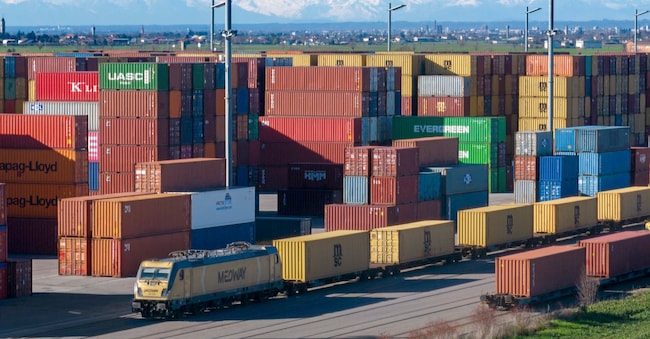
The German rail freight case is exploding. The maxi-restoration works on the German network, announced by the federal government, with total interruptions to traffic for at least 5-6 months a year on 40 routes in the period between 2026 and 2032 (the climax year will be 2028), are frightening European logistics and intermodal transport operators, including Italy. And they worry the industrial sectors that choose rail freight to reach their respective markets.
The alarm is at its highest, and this is confirmed by the letter just sent by the top management of Kombiverkehr, Hupac and Tx Logistik (Ferrovie dello Stato group) to the German Minister of Transport Patrick Schnieder and the CEO of Deutsche Bahn (Db), Evelyn Palla, signed together with the associations Erfa, Fermerci, Sgkv and Uirr (Union International Rail Road). The German planning, denounce the operators, does not take the needs of the market into account at all. The redevelopment of the main corridors ignores the needs of the logistics sector, with the result that thousands of goods trains could be cancelled or diverted to longer, less efficient routes.
From 2028, for example, Germany will close the line to Italy for at least four months, where about 200 goods trains a day run. We are talking about the German section of the Genoa-Rotterdam corridor (Rhine valley), a strategic connection axis between Italy and Europe, both for exports and for the supply of raw materials and semi-finished products of our companies.
The end result, argue the German, Swiss and Italian logistics operators, will be the gradual abandonment of rail and the return of goods to the road, i.e. the opposite of what Europe is calling for with its policies to encourage the transfer of goods from road to rail. Projections for the next few years speak of a reduction in rail freight capacity of between 20 and 30 per cent, with up to 500,000 additional lorry journeys on the Alpine corridors through Austria and Switzerland, leading to higher emissions, congestion and the risk of accidents. Already today, in the European Union, 78% of land freight travels by road and only 17% by rail. Italy is above the average for the former, with 88%, while it is below in relation to rail freight, with 12%.
Says Clemente Carta, president of Fermerci (as of September 2025, Fermerci member companies handled 77% of the traffic volumes on the Italian network): 'Unlike in Italy, where Rfi is able to guarantee continuity of service by alternating works, in Germany the closures will be total. These are key lines of the European North-South corridor, which runs through the most productive areas of the continent. In some cases, the proposed deviations would lead to route increases of up to 400%, with a devastating impact on costs and competitiveness'.


