
Range Rover Electric: the wait is over. Here is the first zero-emissions version
It took five years to bring the zero-emission British luxury SUV to market. The question is whether it will succeed where others have failed. The determination to design the benchmark model for electric SUVs suggests that, perhaps, it is possible.

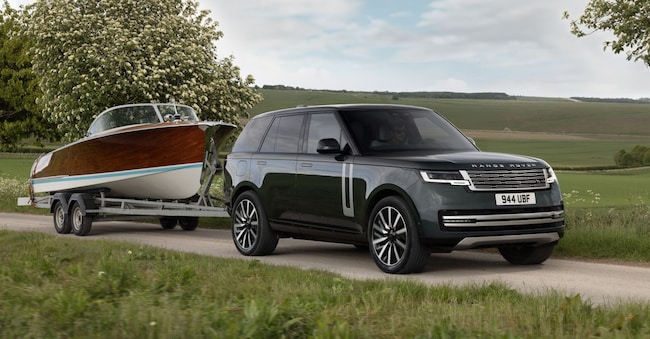
Range Rover’s first electric model is finally available on the market after a full five years of development and anticipation. The Range Rover brand has always been renowned for its all-wheel drive, and the Electric is certainly no exception: the configuration features two electric motors, one per axle, each producing 260 kW, delivering 550 cv of power and 850 Nm of torque. These are powered by a 118.5 kWh lithium-ion battery, comprising 344 prismatic cells arranged in a dual-layer structure, whilst the system operates at 800 V. The Electric goes from 0 to 100 km/h in 4.5 seconds, whilst it takes just 2.7 seconds to accelerate from 80 to 120 km/h. As for the figures we mentioned, it should be noted that one would hardly expect such performance from an SUV weighing over 2.5 tonnes. Turning to the battery, the maximum DC charging rate reaches 350 kW, taking 22 minutes to go from 10 per cent to 80 per cent capacity, with 220 km of range regained in 10 minutes. Not bad, then. The ThermAssist thermal management system can also help to optimise range, charging speed, battery life and performance in extreme temperatures. The system can add up to 40 km to the range. Another interesting aspect is the car’s traction management. The system introduced by the Electric can intervene to prevent wheel slip in just 50 milliseconds, whilst torque distribution to the rear axle limits loss of grip. Finally, the new technology enables the vehicle to climb gradients of up to 45 degrees. This demonstrates that the electric vehicle can tackle even extreme off-road terrain, proving itself entirely free of both difficulty and hesitation.
The car aims to set the benchmark for battery-powered models. The global market for luxury electric vehicles in this segment has peaked and then plummeted rapidly. However, there is reason to be optimistic: if the new Range Rover Electric truly has the same look, the same driving dynamics and the same character as the internal combustion engine version, it will be easy to convince even the most ardent defender of internal combustion engines that there will be no compromises whatsoever when switching to a luxury electric car.
The success of the Spectre, Rolls-Royce’s second best-selling car, demonstrates that certain types of car are better suited to electric propulsion than internal combustion engines. However, it is undeniable that the reputation surrounding electric cars, particularly in this price bracket – regardless of their objective characteristics – can have a negative impact on the brand’s prestige and the car’s residual value. Range Rover is not, however, replacing a car with an internal combustion engine with an electric one.
If anything, it is adding a new powertrain option to the range, which means it does not need to sell at breakneck pace – at least initially – given that JLR will have to fully electrify its range in Europe over the next decade anyway. In any case, the odds seem to be in its favour: in a relatively nascent segment – largely due to the reluctance of other brands – the Range Rover Electric has the specifications, prestige and strength of the British brand to make a significant impact.
If ever the JLR Group is to capitalise on this almost pioneering position and keep the car competitive to ensure its long-term commercial success, as it perhaps could and should have done with the Jaguar I-Pace. That said, let’s see how Range Rover is preparing to take its rightful place in the luxury electric car sector. Starting with the design, which, quite rightly, does not differ all that much from that of its flagship models with internal combustion engines.

