
Rap and theatre, helping minors in prison
Redemption opportunities

2' min read
2' min read
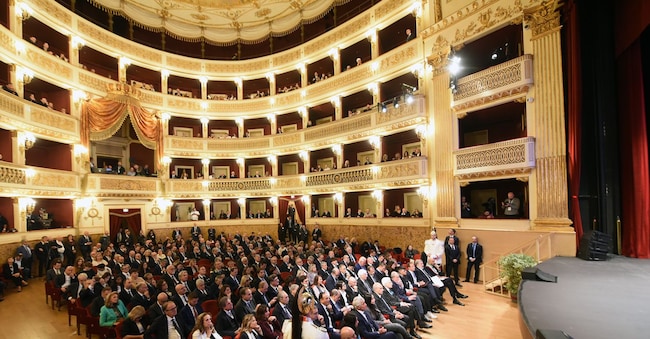
Rap music and theatre are tools for unravelling emotions, expressing discomfort, offering a second chance to juvenile prisoners. This was the thread running through yesterday's event entitled 'Take me out there. Rap and theatre in juvenile penal institutions'. Francesco Carlo, a.k.a. Kento, rapper and writer, Adriana Follieri, director and theatre pedagogue, and Totò, a young artist who uses rap to express emotions, confronted each other on stage. Educational tools for juvenile prisoners were discussed, such as the 'Presidio culturale permanente', a project of the association Crisi Come Opportunità, structured within penal institutions and born from an idea of rapper Lucariello. The project includes weekly workshops on rap writing, music recording, and theatre.
"Rap music," said Kento, "is an extraordinary expressive tool" and is also "exceptionally accessible and democratic" because to create it, the artist explains, all you need is a functioning head and voice. This is demonstrated by the fact that even illiterate youngsters, whom Kento has intercepted in his work as a trainer in prisons, create rap music, even in different languages.
During the meeting, adults were often blamed for the situation in which some young people live, for their illiteracy, for the language they use, for the violence that characterises them. In other words, when young people write violent, offensive, misogynistic texts, they often mirror society. Adults, therefore, must question themselves, try to know and understand the language of youth, to change the cultural basis from which sexism and violence arise.
Another form of expression and opportunity for redemption is offered by the theatre. Adriana Follieri recounted this, giving as an example the story of a young man who was allowed out of prison to do professional theatre work. 'With theatre,' she emphasised, 'we try to think about the concept of free will because it is not certain that there is no possibility of building another reality'.
Working on the re-education of prisoners is moreover provided for by our Constitution itself, which states in Article 27 that sentences 'must tend towards the re-education of the convicted person'. Today, according to Antigone's report, there are 532 juvenile inmates in the 17 Italian penal institutions for minors, a figure that is growing.

