
Rare earths, pilot plant in Lazio for recovery from permanent magnets
At the Itelyum Regeneration plant in Ceccano (Frosinone), the first infrastructure for the treatment of 20 tonnes per year, industrial scale-up already planned
3' min read
3' min read
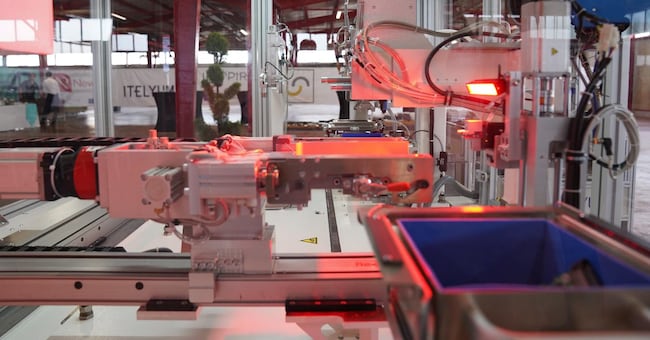
A pilot plant has been inaugurated at the Itelyum Regeneration plant in Ceccano (Frosinone, Italy) capable of processing 20 tonnes per year of permanent magnets, materials widely used in computer hard disks and electric and hybrid motors. It is part of the European New-RE project, financed with EUR 2.5 million by Eit RawMaterials, a platform of the European Institute of Innovation and Technology, with the aim of improving the circularity of rare earths, and developed by a consortium coordinated by Erion and formed by Itelyum, Osai, Ku Leuven, Treee, Smart Waste Engineering, Glob Eco and the University of L'Aquila.
Hydrometallurgical treatment
.The new infrastructure in Ceccano will process permanent magnets derived from the disassembly of electric motors (carried out by Glob Eco), from electronic waste WEEE from treatment plants (such as Treee), and from the automated hard disk disassembly line built by Osai and Ku Leuven, which is integrated in the same demonstration plant and uses artificial intelligence technologies. The treatment of the magnets will take place through a hydrometallurgical process developed and patented by the University of L'Aquila, which involves cleaning (leaching) the rare earths through organic acid solutions that can be reused up to five times.
Industrial scale-up
.The technologies deployed in the New-RE plant will be used for an industrial scale-up in another project, called Inspiree, which for the construction of a 2,000-tonne/year permanent magnet treatment plant (awaiting the authorisation process) has already obtained EUR 3.25 million, led by Itelyum (EUR 1.161 million), under the European Life programme. To reach the 20,000 tonnes per year capacity, further investments of EUR 9.5 million are estimated. A consortium formed by Itelyum, Erion, Eit RawMaterials, Glob Eco and the University of L'Aquila is working on the project. The objective remains the extraction of rare earths such as neodymium, praseodymium, and dysprosium through a two-stage process: dismantling of the permanent magnets (managed by Glob Eco) and recovery of approximately 700 tonnes per year of mixed rare earth oxides through hydrometallurgy (implemented by Itelyum).
Role of Italy
"To achieve the objectives of the EU's Critical Raw Materials Act, innovative companies will be central, fostering Europe's independence from imports and the emergence of a globally competitive recycling industry," commented Itelyum CEO Marco Codognola: "Italy, with its dynamic and innovative industrial fabric, can play a leading role in this process. For Marco Sala, CEO of Erion Compliance Organisation, the Ceccano plant "is a candidate to be a model of sustainability and innovation in the processes of recycling and recovery of rare earths, which, let us remember, represent fundamental elements of production processes in various industrial sectors".
Authorisation procedures
.Meanwhile, as a virtuous example of the circular economy, it has also become a stage in Legambiente's campaign on transition sites. The association's president, Stefano Ciafani, added: "We hope that the New-RE project will be the first in a long series of innovative programmes for the recovery of rare earths from electrical and electronic components, a path also capable of reversing the trend towards the mining of critical raw materials. The new frontier on which we must focus in Italy and Europe is urban mining, for instance by increasing the collection of WEEE and encouraging the construction of more recycling plants, also by speeding up authorisation procedures'.


