
Water conservation and recycling to tackle water scarcity
This is the water management model promoted by ENEA as part of the Share.MedWater project

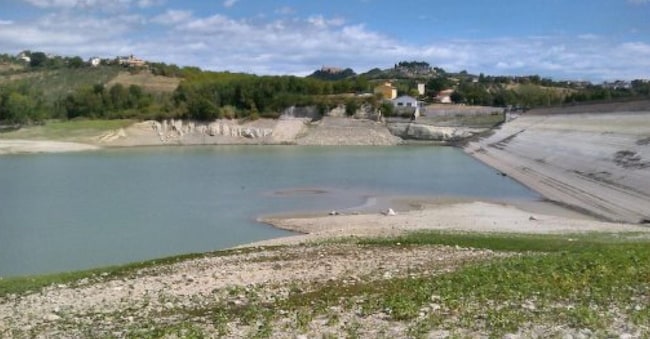
A water management model to tackle water scarcity. Because, when water is in short supply, it is necessary to take remedial action through measures that combine rationalisation and recycling. This is the aim of the project led by ENEA, in collaboration with 10 partners, to tackle the emergency caused by the reduction in water resources. The project, known as Share, is a European initiative (benefiting from a grant of 4 million euros).MedWater, in which 11 associate partners from seven Mediterranean countries are also taking part.
Circular water management
Researchers at ENEA, led by Silvia Di Fabio, head of the Laboratory for Circular Water and Wastewater Management Technologies, will be responsible for developing, validating and implementing innovative technologies for the recovery, treatment and reuse of water resources. “Share.MedWater represents a strategic step towards a more circular, resilient and participatory approach to water management in the Mediterranean,” emphasises the head of the laboratory. “It brings together technological innovation, regulatory harmonisation and the involvement of local communities.”
Support for decision-makers
One of the project’s new features concerns the development of a district-level decision-support tool to assess the contribution of alternative water resources – rainwater, greywater and treated wastewater – towards reducing abstractions from traditional sources and to guide stakeholders’ decisions. The project focuses particularly on rural and island areas, where the impacts of water scarcity are most evident. In addition, seven pilot projects are planned: in Italia, one will be carried out in the municipality of Cervia (Emilia-Romagna) for the reuse of rainwater.
From collection to reuse
As the researcher points out, the initiative ‘promotes the collection, storage, treatment and reuse of alternative water resources, integrating decentralised community-based approaches with scalable district-level models’. ‘The ultimate aim,’ she continues, ‘is therefore to enable Mediterranean countries to cope with prolonged droughts, extreme weather events and the gradual depletion of water resources.’ That is not all. During the course of the project, two district-scale case studies will be developed. These are replicable models that will be accompanied by a cross-border capacity-building programme and a comparative analysis of regulatory frameworks on water reuse. “The decision-support tool,” Enea explains, “will be implemented and validated through its application to the case studies to assist local authorities in assessing the economic, environmental and social scenarios associated with the integration of alternative water resources in different local contexts.”
A survey on acceptability
Other initiatives include a survey on the social acceptability of reusing treated water in the seven pilot areas, with the aim of gauging the perceptions, expectations and concerns of citizens and stakeholders. “The information gathered, which is currently being analysed,” Enea concludes, “will help to guide the development of more effective and inclusive reuse strategies that are consistent with the different local areas.”

