
Ravello Lab, new recommendations for integrating AI in the cultural sector
The 19th edition of the forum promoted by the European University Centre for Cultural Heritage, Federculture and Fondazione Scuola dei beni e delle attività culturali ended: How much does artificial intelligence impact culture?

5' min read
5' min read
Generative artificial intelligences, which we have come to know using tools such as ChatGpt, Gemini, Copilot or Midjourney, are transforming every aspect of our daily lives: from work to study, from interpersonal relationships to the concept of truth, to the point of pushing us to reconsider the idea that creativity is a human exclusive. Regarding its use in cultural and creative domains, while Artificial Intelligence (AI) is improving many of the processes of heritage conservation and management, it is also redrawing the boundaries of traditional artistic conventions through the introduction of new forms of human-machine collaboration. And while events dedicated to the role of these technologies in the cultural sector are multiplying, the need to define guidelines regulating their use is becoming increasingly clear, as was also reiterated at the last meeting of the G7 Culture Ministers held in Naples on 20-21 September 2024.
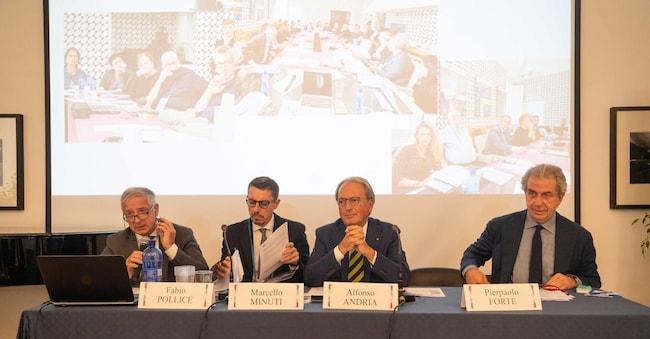
It was precisely on the great challenge of Artificial Intelligence that this year the 19th edition of Ravello Lab - Colloqui Internazionali focused. From 24 to 26 October, it brought together almost one hundred professionals from the sector to discuss the impact that this technology, and more, is having on heritage and cultural activities. As in the past, it is hoped that the positions emerging from the three-day event, which will be presented to the government in the form of Recommendations, will guide standardisers towards coherent actions and policies. It would not in fact be the first time that the reflections that emerged from the Ravello Lab have influenced the regulatory landscape. In 2009, for example, the forum inspired the institution of the Italian Capital of Culture, and again the discussions on integrated planning with a cultural basis in 2016 were incorporated into the Mibact's 'Progettazione per la Cultura' notice. It is also worth mentioning the constant contribution that Ravello Lab has made over the years to the issue of the recognition of cultural and creative enterprises in the national economic system.
The complexity of the subject matter
.According to the DESI - Digital Economy and Society Index, over the past decade, the European Union has invested significant resources to foster a digital transformation that is proceeding at an annual growth rate of 20 per cent. In the National Recovery and Resilience Plans, for example, some EUR 127 billion have been allocated by individual countries for digital reforms and investments, an average of 26 per cent of the total budget, which is well above the mandatory threshold of 20 per cent. However, public investments in Artificial Intelligence still proceed slowly and private ones, as Stanford University's AI Index Report 2024 points out, struggle to compete with the levels achieved by other nations: in 2023, US private companies invested USD 67.3 billion in AI, while European ones did not even reach USD 10 billion. Despite this gap, the AI sector in Europe nevertheless shows promising growth prospects. According to forecasts by Straits Research, by 2030 the AI market in Europe could reach EUR 245 billion, of which it is estimated that more than EUR 10 billion will be generated by the cultural and creative markets.
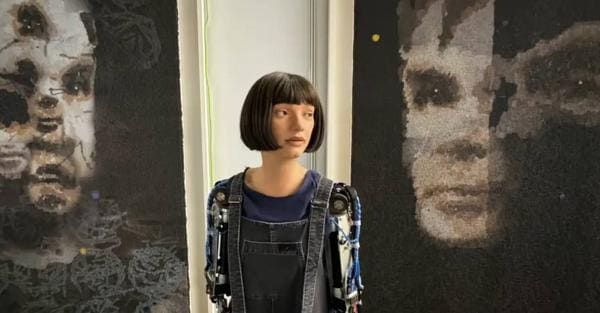
These numbers, moreover, should not surprise us. For the cultural and creative market, AI is in fact an important development asset and, without even having to bother the larger and more lucrative sectors of film, music or publishing to understand the growth prospects, one only has to look at the sales trend of works of art created with artificial intelligence. An iconic example is the "Portrait of Edmond de Belamy", the first work of art created through a Generative Adversarial Network (GAN) algorithm by the French art collective Obvious, and sold in 2018 at Christie's in New York for the astonishing sum of $432,500, a good 40 times the estimated price. Recently, an auction was also announced that will mark another milestone in the art market: on 31 October, Sotheby's will sell the first work of art created by a humanoid robot using artificial intelligence algorithms. It is "Portrait of Alan Turing" (2024), a portrait created by the robot artist Ai-Da, itself programmed by the Oxford gallerist Aidan Meller, estimated at between $120,000 and $180,000.
However, what is most worrying is obviously not the new opportunities for value generation, but the redefinition of production processes that, in the cultural sector, could erase the role of creative people, turning artistic products into real collaborative projects between human beings and machines. Precisely with the aim of protecting creative work, on 13 March 2024, the European Parliament approved the AI ACT a regulation aimed at regulating the development and use of artificial intelligence technologies in the European Union. Among the most relevant measures for the cultural sector is the obligation to label artificial intelligence-generated content, thus enabling it to be clearly distinguished from man-made content, and the requirement that AI developers obtain explicit authorisations in order to be able to use creative and intellectual works as training data. This is only the beginning; in fact, these measures anticipated the intentions of Ursula von der Leyen's new mandate at the European Commission, which, in the Mission Letter sent to the new Commissioner for Intergenerational Equity, Youth, Culture and Sport Glenn Micallef, calls for the development of a strategy for the use of AI in the cultural and creative sectors, highlighting the potential of such technology in enhancing creativity, audience engagement and accessibility. Micallef has thus been tasked to work closely with the Executive Vice-President for Technology Sovereignty, Security and Democracy, Finnish Henna Virkkunen who has instead been asked to develop a cloud computing infrastructure for the EU and implement an act for the advancement of AI, as proposed in The Future of European Competitiveness, a report recently drafted by Mario Draghi.

