
DR Congo, Ebola outbreak confirmed: 65 victims
The Africa Centers for Disease and Control, the health agency of the African Union, has revealed a new outbreak of the virus and calls for urgent coordination in the area
from our correspondent Alberto Magnani
 Aggiungi Il Sole 24 Ore
ai preferiti su Google
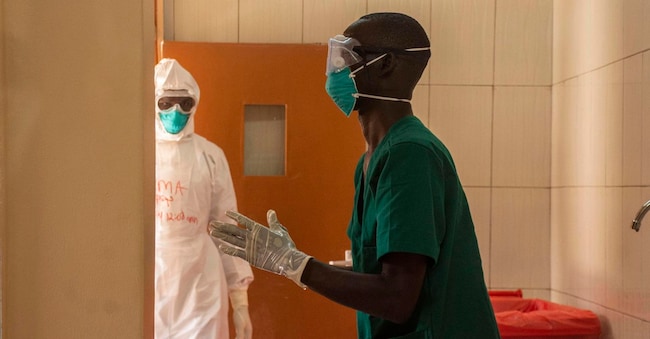
NAIROBI - The African Centres for Disease Control and Prevention declared on 15 May the detection of an Ebola outbreak in Ituri province, on the eastern borders of the Democratic Republic of Congo. The health agency announced the convening of an 'urgent' meeting with DR Congo, Uganda, South Sudan to strengthen cross-border control and response capacity to the proliferation of the virus.
Figures released so far speak of 246 suspected cases and 65 victims in the health zones of Mongwalu and Rwampara. The Africa Cdc said it was 'concerned' about the risks of 'further spread' triggered by urban settings, population movements and mining activities in Mongwalu, recalling the virus' mode of transmission: direct contact with the fluids of infected people, contaminated materials or previous victims of the virus. "Four deaths have been reported among the laboratory-confirmed cases," the agency said in a note. The last Ebola outbreak in Ituri, Médecins Sans Frontières announced in a note, had occurred in 2018 and was part of the 10th most serious outbreak recorded in the Democratic Republic of Congo with a toll of 539 cases and 315 deaths.
The outbreak in the East already in crisis
The Ebola virus, first identified in what is now the Democratic Republic of Congo in 1976, is transmitted with an incubation period of two to 21 days and causes a haemorrhagic fever that can be fatal if not treated promptly. The average mortality rate reported by the World Health Organisation is around 50 per cent, although in previous outbreaks the rate has ranged from 25 to 90 per cent.
The outbreak took place in a province already plagued by almost a year and a half of the new offensive by pro-Rwandan M23 rebels against the Congolese regular army, in one of the richest regions in Africa and globally. On 14 May, the non-governmental organisation Human Rights Watch denounced new abuses against the civilian population by the rebels in neighbouring South Kivu, in a security crisis that has triggered one of the continent's most drastic humanitarian emergencies.
Now attention is (re)growing on the health side and the capacity for a timely response to a virus with new connotations. With sequencing underway, the Africa Cdc stated that preliminary results indicate a different strain of Ebola from the one in Zaire. Available vaccines and drugs, according to the World Health Organisation, are designed to work against that variant.


