
Reading to make: the map of creativity is a paper pattern
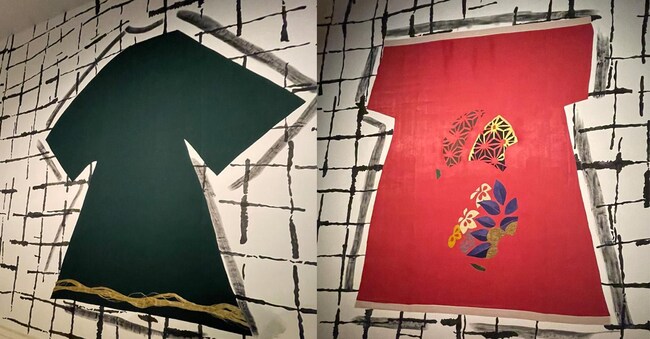
A book resets the boundary between design and fashion, theory and practice and takes a journey through the centuries, from the two-dimensional to the three-dimensional, from the kimono to Issey Miyake.
by Lisa Corva
4' min read
4' min read
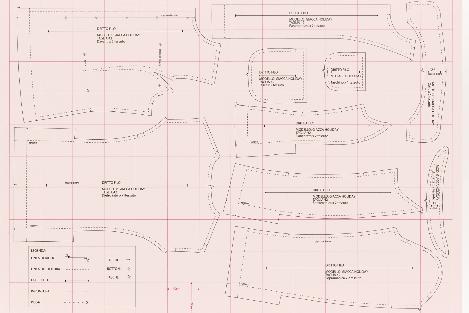
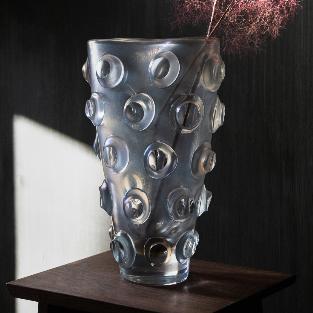
Our three-way conversation begins with a mysterious disappearance. Luca Nichetto is looking for the paper pattern book we have to talk about, and realises that on the desk in his studio it is no longer there. "My wife, Åsa Carlstedt, who is a costume designer at the Stockholm Opera, took it," he laughs. "She saw it and decided that she wants to try to sew some of the patterns right away." Cartamodello by Colomba Leddi (Edizioni Quodlibet/Naba) is a book that straddles the line between fashion and design. Colomba is a Milanese fashion designer and fashion design area leader in Milan and Rome at Naba, the Nuova Accademia di Belle Arti. The idea of a book on paper patterns has always been a passion/obsession of hers. Luca Nichetto, one of the most popular, multifaceted and skilful designers, presented at the Salone this year an installation for Kerakoll, new outdoor furniture for Ethimo, small tables for Cassina and a glass vase designed for Mjölk in Murano, where he was born and where he lives when he is not in Stockholm.
What we engage in is a three-way dialogue with a design expert, commenting on a fashion book: "What struck me most was the technical aspect narrated by the book: the know-how. Starting with the cover, which is fun and evocative, which opens up and becomes a real paper pattern, to the patterns inside (which reproduce Leddi's best-selling garments, ndr)," explains Nichetto. 'Anything related to craftsmanship has always fascinated me. I still remember the workshop on the Rhode Island University campus, a sort of evolved hardware store that impressed me with all the pieces it contained: if only I had had it during my university years!" he smiles. "On a trip to Tokyo, I accompanied my wife to a famous fashion school, Bunka. We came back with a manual on the subject of Pattern Magic, a subject I found in the book, in the pages on Japanese deconstruction'. The garment is the architecture of the body and the patterns can also tell that story.
"Three years ago, I signed a fashion capsule collection for La Manufacture, a Parisian brand," he continues. "It was then that I realised how in design you work on the outside: the armchair, for example, serves to 'support'. With clothing, on the other hand, you work on the inside: it doesn't just dress you, it encapsulates you'. In addition, adds Colomba, "there is a different durability. The design object goes through fashions and seasons, while clothing you wear it, you use it and you wear it out, it is a completely different exchange between leather and fabric'.
There is a lot of information passing through touch, including the gesture of writing, which is increasingly rare in a digitised world where people only write on screen, perhaps from their smartphones. "I still sketch by hand. And on Saturdays, when I'm with my son, we write," says Nichetto. "I teach him the difference between cursive and block letters, which today's children practically don't know: for me, the value of being able to create with one's hands - and with scissors, needle and thread, as the book reminds us - is fundamental". Can you do it? Nichetto laughs: 'I can sew: badly, of course, but I learnt it at school, in technical education classes. Today if I hand my son a needle and thread, he gets scared. Instead, understanding how things are made is the first step: I started by drawing, in Murano, for the furnaces. When I worked with master glassmakers, I understood how, even if you don't blow the vase yourself, it is essential to know how it is made: above all to be able to experiment, to move the limit forward. A process, this, that is in the DNA of Made in Italy: 'Here we still have, fortunately, what I call evolved craftsmen, in glass, in wood, in ceramics. In this scenario, the designer has the role of conductor,' Nichetto sums up. And in fashion? 'I think of our pattern-making courses at Naba: students struggle at the beginning,' explains Leddi. "Learning how to do a straight seam is difficult, but it is not necessarily necessary to become a patternmaker, as much as to understand how to design a dress. This is demonstrated by the attention that the big fashion houses, from Dior to Valentino, pay to savoir-faire'. Craftsmanship in haute couture, the luxury of métiers d'art, of craftsmanship, a slow and patient art.
It is here, on this fine line, that the point of contact between fashion and design occurs: in the hands. "In the thimble," Nichetto corrects. "Not only because, in Japan, my wife bought beautiful ones: special rings that leave the tip of the finger uncovered. But also because they remind me of an exam thesis I did with architect Manolo De Giorgi: I chose to do it in the thimble, as a prosthesis of the body'. It is the continuation of the hand, Colomba confirms: 'Curiously enough, this is what my father Piero Leddi, a painter in the 1960s in Milan, maintained. In his archive, in San Sebastiano Curone, in addition to the canvases of a lifetime, we have also conserved his collection of prosthetic objects, i.e., all the scythes and hammers, farmer's tools, blacksmith's tools, carpenter's tools: sometimes forgotten tools of manual labour'. There is a return to knowing how to do things with the hands, to the brain-fingers transition, completely different from what we are used to. The book traces precisely this, in a journey through centuries and eras, from the two-dimensional to the three-dimensional, from the kimono to Issey Miyake, to Burda magazine.

