Telecoms

“We are ready to invest up to 770 million in spectrum, but we need proper plans”

The proposal was put forward to the Italian authorities by Federico Protto, CEO of Cellnex Italia, following the securing of EIB funding

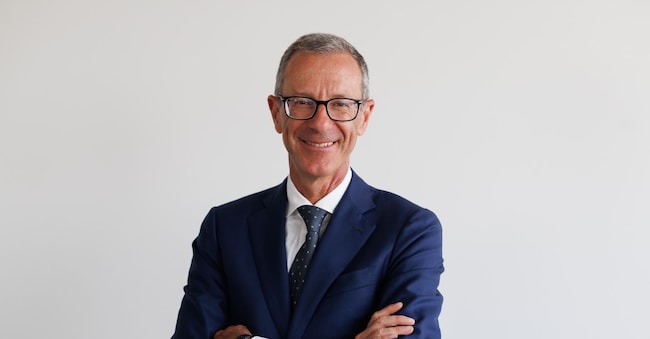
Federico Protto, amministratore delegato di Cellnex Italia

5' min read

Translated by AI
Versione italiana

5' min read

Translated by AI
Versione italiana

Up to 770 million euros to be spent in Italia on the necessary investments linked to the renewal of spectrum licences. The proposal comes from the tower company Cellnex, which recently secured a 375 million EIB loan that could lead to the mobilisation of up to 770 million euros. The renewal of spectrum licences due to expire in 2029 is one of the hottest topics for the telecoms sector: Asstel and telecoms operators are calling for a cost-effective renewal in return for investment; AGCOM has conducted three public consultations on the matter, resulting in a proposal for renewal linked to investment, on which the Competition Authority has also commented, emphasising the need to preserve competition and proposing a mixed system that would put part of the spectrum out to tender.

Whilst waiting for the Government to have the final say, Federico Protto, CEO of Cellnex Italia, puts forward his proposal: the towerCo could use a significant portion of the EIB funding for the sector in Italia; ‘the resources are there; we need suitable projects’.

Loading...

Hence the appeal to the institutions and the country as a whole: ‘There is an opportunity to inject up to 770 million euros into the national economy. It is clear that investors must be able to secure a return, but at a time when resources are scarce, it would be a mistake to ignore this opportunity.’

The EIB has recently provided Cellnex with 375 million to roll out 5G and modernise digital infrastructure in Spain, France, Italia and Portugal. How will you decide who will receive the funding and which projects it will be allocated to?

We have launched a funding scheme that could also represent a significant opportunity for our country. We are talking about approximately 770 million euros in resources, half of which is in the form of funding, which will enable us to mobilise a significant amount of investment. We have decided to allocate this initiative to Italia, France, Portugal and Spain, without setting out a breakdown between the different countries at this stage. The distribution will depend on the projects that are submitted.

Are there any projects in Italia capable of tapping into these resources?

Yes, I am thinking in particular of the issue of spectrum. If, as it seems, spectrum allocation were to be linked to investment – which could even be at no cost to operators who commit to carrying out such investments – it will be necessary for someone to inject liquidity into the system. After all, resources are needed to make investments. We, as a towerCo, could therefore help to create the conditions for network densification and other investments that the system requires.

Would 770 million be enough to fund this process?

Of course, this would not be enough to cover everything, but it would represent a significant contribution. If we consider a total licence fee revenue, as envisaged in one of AGCOM’s scenarios, of 684 million euros a year for eight years, the possibility of injecting up to 770 million into the system would constitute a significant resource. It could cover a substantial proportion of the measures, particularly those relating to network densification.

Could the entire sum of 770 million be allocated to Italia?

Loading...

Funding has been earmarked for all four countries, but I cannot rule out the possibility that, should the Italian project prove to be particularly attractive, interesting and, above all, quick to implement, a significant portion might end up in Italia. It’s up to us. If the Italian system is able to act swiftly, we could get there before the others. And seize this opportunity.

Do you agree with Agcom’s proposal on frequencies?

We responded favourably to the consultation, both formally and informally, fully endorsing AGCOM’s approach regarding the 800 MHz to 3.4–3.6 GHz frequency bands, which are due to expire in 2030. We have also taken note of AGCM’s opinion, received in early October, which, in addition to the issue of investment, emphasises allocation.

How does the renewal-in-return-for-investment scheme work, and how can it be beneficial for the operator?

The proposal concerns the renewal of the frequencies for a further eight years. If the renewal were to take place under the current conditions, the total licence fee would be around 684 million euros per year, amounting to a total of approximately 5.47 billion. AGCOM has also provided for the possibility for operators to reduce these licence fees, down to zero, by making concrete commitments to improve network quality. Furthermore, a matter of fundamental importance for our country is the coverage of critical infrastructure, such as trains, roads, motorways, ports and airports, as well as the extension of coverage to indoor areas.

We have also proposed incentive mechanisms to encourage the efficient use of the allocated spectrum, as well as a system that rewards infrastructure sharing to be implemented through neutral operators. The reasoning is quite simple: an operator has an incentive to invest if the investment required is less than the licence fee it would otherwise have to pay.

What if the investment required to meet the necessary quality standards were to exceed 5.47 billion?

This is a factor that needs to be taken into account. If the investments required were to exceed the value of the licence fees, the scheme would become less cost-effective and less of an incentive for operators. It is clear that a balance needs to be struck.

Do you expect this issue to be included in the next Budget Bill?

The Budget Bill is not necessarily the only means by which to address this issue. It could be a matter to be dealt with through another piece of legislation. We also need to understand what the Government’s stance will be regarding taking on a commitment of this kind.

In short, what, then, is your appeal to the Italian authorities?

Regardless of the pace at which progress is made, the key question is whether there is anyone in Italia willing to invest. The resources are there, but suitable projects are needed. At present, telecoms companies have no certainty about what will happen after 2030, nor about the economic conditions under which they will be able to continue using the frequencies. My appeal is directed at the institutions and, more generally, at the entire Italian system. There is an opportunity to inject up to 770 million euros into the national system. It is clear that investors must be able to secure a return, but at a time when resources are scarce, it would be a mistake to ignore this opportunity.

Copyright reserved ©
Loading...

Brand connect

Loading...

Newsletter

Notizie e approfondimenti sugli avvenimenti politici, economici e finanziari.

Iscriviti