
Real estate in Dubai: developer liquidity saves sites but the challenge is durability
The financial strength of real estate developers protects established construction sites, but regional uncertainty threatens to slow down new launches and the sector's race

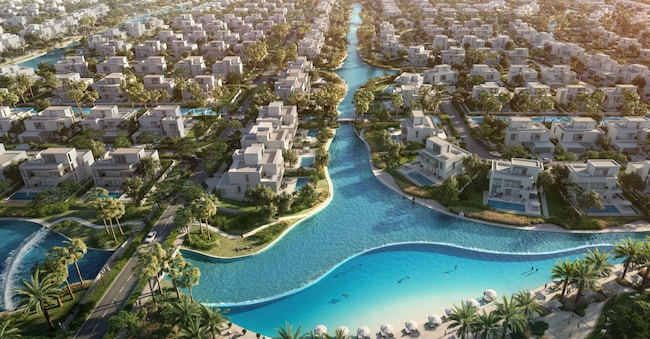
Among the cranes in Dubai is the construction site of the Bulgari Lighthouse, the residential tower on Jumeirah Bay developed by Dubai Holding and designed by Antonio Citterio that brings much of Italia to the Emirate. There are the projects of the Bugatti Residences - the world's first Bugatti-branded project - and Jacob & Co Residences, the skyscraper in collaboration with the haute horlogerie brand that aims to break the residential tower height record, both by the real estate company Binghatti. But there is also The Oasis, one of the most significant urban developments Dubai has seen in recent years in the hands of Emaar - the real estate company that built the Burj Khalifa, - conceived as a low-density, water-centred residential destination. Walking around Dubai in recent years, one seemed to glimpse a universe under constant construction, and it was not just an impression. There are many construction sites with cranes raised in the city and the number is growing month by month with the arrival of luxury brands, international collaborations and development plans related to the new frontiers of living.
But now, the real estate market is at a crucial crossroads. While the financial fundamentals of large real estate developers are solid, geopolitical pressure is already leaving tangible marks on the markets. The Dubai Financial Market property index has lost over 25 per cent in the past month, a clear sign of how uncertainty is weighing on investor sentiment, despite recent announcements of record 2025 budgets.
Developers' record balances
Emaar Properties leads the sector with turnover up 40 per cent to AED 49.6 billion (USD 13.5 billion) and an impressive order book of AED 155 billion (over USD 42.1 billion), up 39 per cent. However, its exposure to the stock market has seen it drop 27 per cent in the past month. Damac and Pnc Investments (Sobha Realty's parent company) also arrived at the geopolitical stalemate after a solid 2025: Damac with sales of Aed 36 billion (USD 9.8 billion) and Sobha Realty with 30 per cent growth to Aed 30 billion (USD 8.1 billion). Omniyat Holdings, with sales up 150% to Aed 4.1 billion (USD 1.1 billion) and a backlog of Aed 19.6 billion (USD 5.3 billion), is another among the names of the real estate giants active in Dubai but not the last, the list may in fact be even longer.
The future of open construction sites
The question now, however, is what will happen to the ongoing projects? The answer lies in the resilience of these giants, all of which are highly exposed to Dubai (S&P Global Ratings currently stand at BBB+ for Emaar, BB+ for Damac, BB for Pnc and BB- for Omniyat). Experts estimate that the current order books of these four developers guarantee between 2 and 5 years of revenue visibility. Thanks to escrow accounts, the funds to complete the construction sites are largely protected, minimising the risk of a total work stoppage.
However, open construction sites have medium-to-long lead times and the continuation of the conflict could trigger a price correction. With significantly lower values, analysts do not exclude that investors might reconsider some of their purchase choices and that newer projects or projects with low pre-sales might slow down. Dubai's regulatory system could act as a shock absorber: developers can retain up to 40 per cent of the property value (if construction is on schedule), repay the rest, and repossess the unit for resale. During previous downturns, delinquencies for the major players were only between 3% and 10%, the biggest risks of disruption here could affect smaller or less experienced players.
Brand connect


Newsletter RealEstate+
La newsletter premium dedicata al mondo del mercato immobiliare con inchieste esclusive, notizie, analisi ed approfondimenti
Abbonati