
Real faces for credible stories, employees more and more storytellers
From shops to large groups, communication evolves in a trust economy perspective

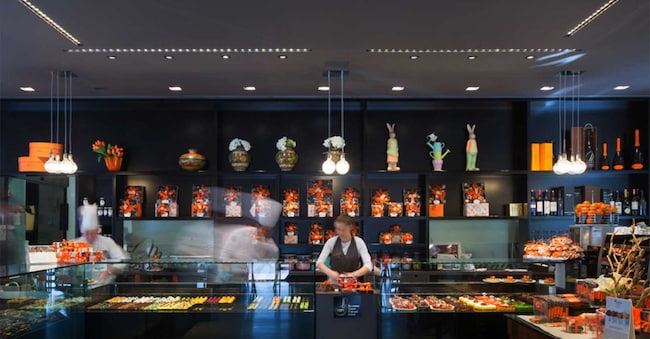
Hands in dough but also on the web. A historic Milanese pastry shop has decided to tell its story in an online docuserie starting from its own people, those master pastry chefs who study, knead and create masterpieces. A way of celebrating the company and remembering its founder. A piece of history that builds pieces of the future. The pasticceria Martesana was founded sixty years ago in one of the most iconic areas of Milan's capital city, on the Naviglio canal that flows by the same name. It was here that master pastry chef Vincenzo Santoro opened his shop in 1966. Now the company has five sales outlets between Milan and Como, a team of about one hundred people, including about thirty pastry chefs, and a turnover of EUR 7.6 million. The people storytelling product is called Lievito Padre, a tribute to the startupper founder of yesteryear. "We put people and their uniqueness at the centre, which is reflected every day in the excellence of the sweets we make in our workshop. There are no automated processes here: we like to put our hands to the dough. For example, on stage there is the work of our leavening experts, masters who know the chemistry of the mother yeast and guide its development into the perfect gluten mesh of a dough,' says Marco Marsico, Head of Sales & Marketing at Martesana. The five-part series was filmed entirely in the workshops. "With this series we want to strengthen the sense of belonging and the reputation of the brand. The human dimension generates interest and increases desirability. There is also a theme of enhancing historical arts and crafts,' Marsico points out.
Employees and storytellers
Putting your face and reinforcing the story. In the time of the trust economy, employees become narrative mediators, guiding the purchasing choices of consumers or the professional choices of the new generations. This is how marketing unleashes the employee advocacy, a form of collective storytelling that transforms corporate people into micro-media, i.e. bearers of credibility. It is a declination of firm generated content, content produced by the company. What a paradox: in the growth phase of synthetic content with the multiplication of artificial intelligence, real faces and voices dominate the scene. Already thirty years ago, the two British sociologists Nicholas Abercrombie and Brian Longhurst theorised about the rise of performers: the spectacle would soon overflow the natural boundaries to invade all the interstitial spaces of everyday life, including that of work. "It is a phenomenon that already emerged in some pioneering campaigns in the 1990s and slowly grew to an explosion in recent times. It all starts with the need for human contact, for relationships, for meaning. Because person-to-person communication is impactful, it is considered authentic, it inspires. And because the collaboratorstoryteller in the role of ambassador acts as a guarantor of the truthfulness of the message and the consistency between what is communicated and the internal reality of the company,' says Alessandra Mazzei, professor of economics and business management and director of Cerc at Iulm University. The trend is to make everyone a corporate spokeperson. "The advantages are narrative in terms of impact and memorability of messages and economic in terms of the desired effectiveness of campaigns. The identity ones are the most important: if well expressed, the corporate identity emerges distinctively. With faces, expressions, situations unique to the specific company,' says Mazzei.
New Celebrities Grow
Virtuous cases are multiplying. From Salesforce trailblazers to Microsoft humans, from Starbucks baristas to Lego designers. Meanwhile, Airbnb has opened the Belong Anywhere Stories videoblog dedicated to the stories of its hosts and employees. In Patagonia's The Stories We Wear project, employees and customers recount the most used and repaired clothing items over time, symbolising sustainability and shared values. On the Italian front, Heineken has a training programme for its employee ambassadors. At Generali there is Smile, an acronym that stands for social media link education. It aims to support Alleanza Assicurazioni's consultants in using social media in a professional manner, managing their online presence and image, developing new opportunities and amplifying customer relations. The company has three thousandsmiler consultants who act as a sounding board for the company's initiatives with over 200 thousand posts published in the last nine months for more than 100 million contacts on social. The campaigns also land on TV: Illy has been programming for a few weeks now to tell the story of its coffee starting from its people. Enel celebrates the energy of emotions with the new commercial made exclusively with internal creative resources. Even anniversaries become shared: the pharmaceutical giant Pfizer has decided to celebrate its presence for seventy years in Italy with a storytelling based on the voices and faces of its own people.
Stories out of control?
But every coin has its downside and out-of-control amplification can expose the organisation. It is no coincidence that cases of internal communications reaching external audiences and the press are multiplying. The one that made the most noise involved Amazon with the New York Times scoop on the substitution of human power for labour. "The externalisation of issues and problems by employees to the outside world aims to amplify the message, gain support. It is the modern form of organised worker action. A trend that will intensify because we have all become media users. In the case of company-governed campaigns, one risk is the potential discrepancy between what is portrayed and the internal reality, which can undermine the organisational fabric. In addition, the spread of storytellers can generate a homologation effect,' says Mazzei. The solution lies in transparency: avoid cynical choices that favour the interests of the few and in the short term.

