
Reality between art and science in the name of Salvador Dalí
The Gala-Salvador Dalí Foundation in Figueres has launched a programme looking to the future of art, Platform Dalí, featuring talks and residencies

Key points
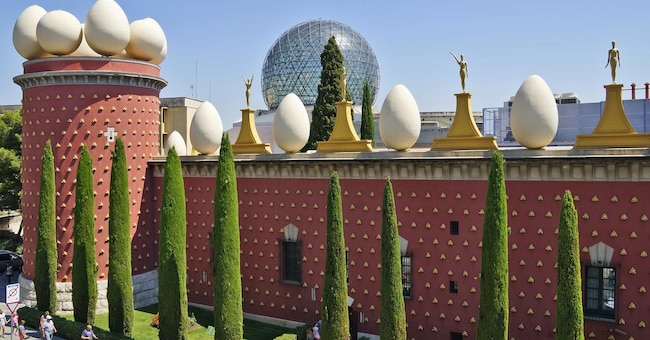
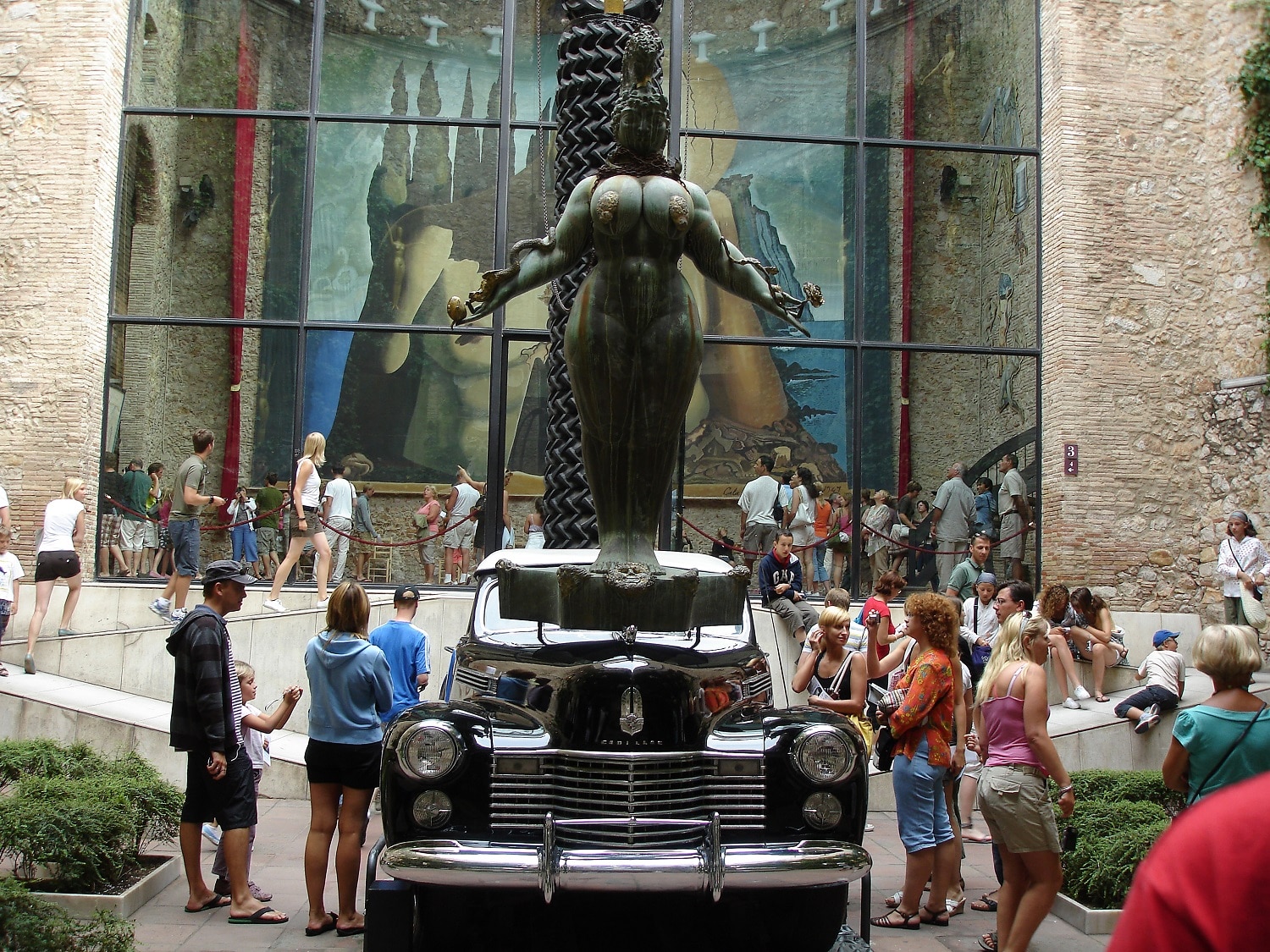
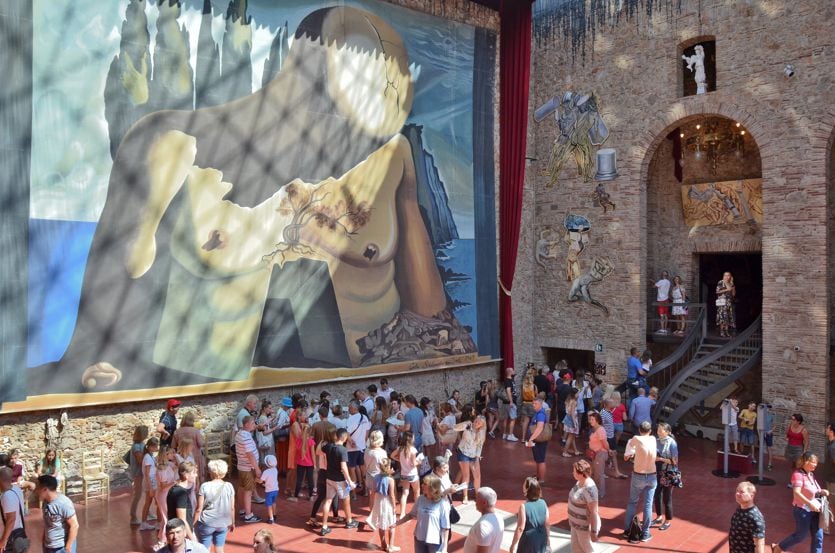
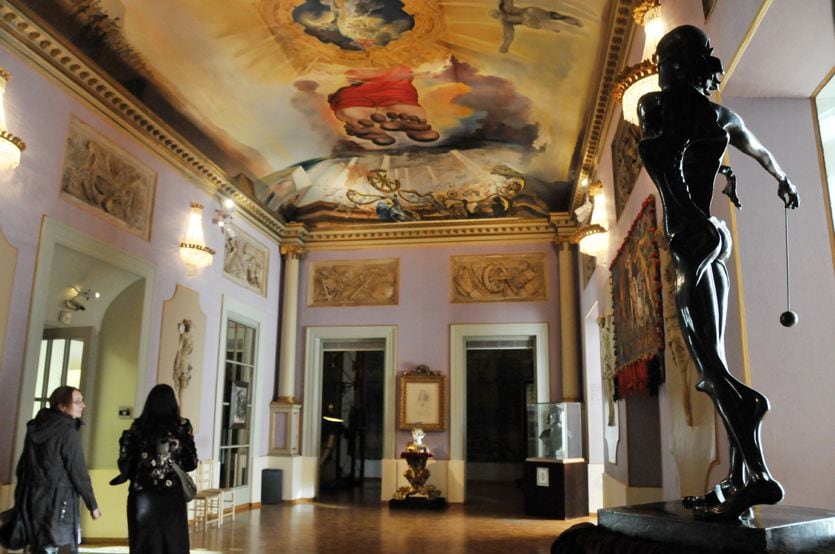
The Fundació Gala-Salvador Dalí in Figueres, an hour’s train journey from Barcelona, does not merely aim to preserve and promote the works of the master known for his surreal eccentricity: thanks to the significant resources at its disposal, it has just launched a programme looking towards the future of art, named Platform Dalí. Around one million visitors a year visit the venues that make up the experience of encountering the art and life of Salvador Dalí, one of the most recognisable and well-known artists to the general public. Thanks to ticket sales, merchandising and image rights, the Foundation established by the artist in 1983 is financially independent; in 2025, it recorded revenue of around 19 million euros and a surplus of over 7 million, of which 2.2 million was allocated to new acquisitions to enhance the museums’ collections.
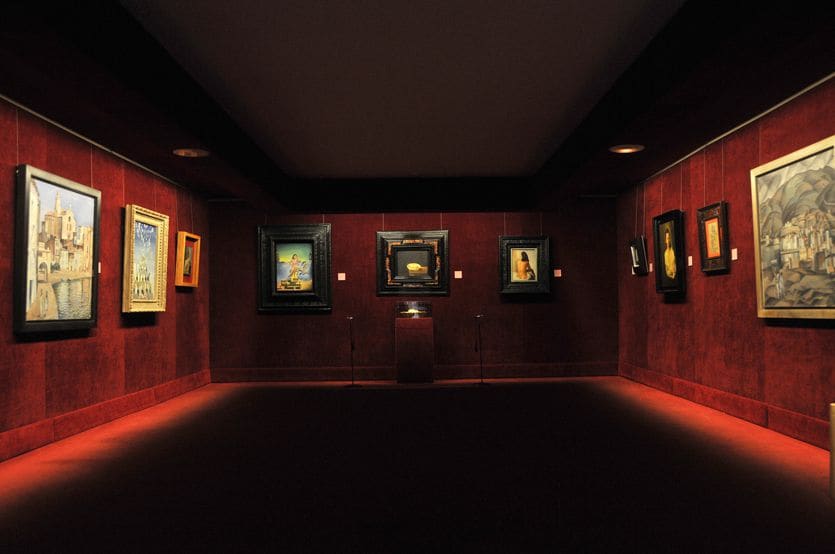
A recent acquisition was ‘Naissance des angoisses liquides’, painted in 1932, which was sold at Christie’s London in 2024 for nearly 2 million pounds, whilst in 2011 the 1934 painting ‘Enigmatic Elements in a Landscape’ had been purchased for 11 million dollars.
The public success of the Theatre-Museum in Figueres and the Artist’s House in Portilligat (Cadaqués) provides the solid economic and organisational foundations on which the Dalí Platform is based, the new international initiative which opened its headquarters in Barcelona on 22 June, and which, from 1 July, is hosting the first three works created in this context following the artists’ initial months in residence.

The Platform and its partners
The programme, which was launched at the end of 2025 for an initial four-year period – already fully funded – is led by Monica Bello, who brings a decade of experience from CERN in Geneva, where she worked as a curator and support for artists invited to take up residencies at that prestigious scientific centre. For each annual cycle, an open competitive process leads to the selection of two ‘fellows’, each awarded 60,000 euros for a period of 18 months, and five 12-month residencies worth 45,000 euros each. These are significant sums for artists who usually turn to the institutional ‘market’ due to the non-commercial nature of their work, particularly performance art.
Artistic and creative research takes place at one of the programme’s five scientific partners, leading local institutions in the fields of biomedical research (PRBB), physics (IFAE), marine sciences (ICM-CSIC), photonics (ICFO) and supercomputing (BSC-CNS). The underlying idea is to capitalise on the great artist’s interest in the world of the invisible, the atomic age and optical illusions – not so much to pay homage to them, but rather to expand the artistic discourse beyond its conventions, not with the aim of providing a didactic explanation, but rather to use the various languages of art to overcome the barriers of scientific language.
What is Real? An exhibition open to the public
The organisers’ aim is to engage a wide audience, reaching beyond the world of art and local scientific institutions. To this end, the Espai Platform Dali, based in a characteristic building in Barcelona’s old town, plans to host events which, according to its director, will ideally take place on a weekly basis, focusing on major current issues concerning the relationship between art and science. A particularly significant and wide-ranging example was the event organised on 1 July, which attracted hundreds of people to the former stock exchange building, the Llotja de Mar, where five artists and a panel of scientists discussed and presented their responses to the increasingly pressing question of what is real. The wide variety of responses highlights both the appeal and the risk inherent in this approach.
The most concrete response comes from the local artists’ collective Estampa, with an interactive installation that effectively challenges our perception of reality through the use of technological materials that Dalí would have loved to have had at his disposal for his optical illusions.
The premise of the South African George Mahashe, a narrator of shamanic ceremonies, is quite different; his premise lies in the invitation to ‘not try to understand’: a paradox for the space physicists who hosted him. The relationship between the biomedical research centre and the flamenco dancer Israel Galvan, who is dedicated to exploring movement, is far more direct. The music and the video ‘HUM’, featuring a Swiss alphorn, were the captivating communicative choice of the performer Tania Candiani. The evening also featured artists from outside the Platform, including a video installation by Suzanne Treister which ironically demonstrates the limitations and futility of so-called AI in the creative field, and a reinterpretation of the 2024 album ‘Space as an Instrument’ by the avant-garde composer Felicia Atkinson.
Future projects
This autumn, the Anglo-Algerian artist Lydia Ourahmane will join the group in residence; her research at the European Molecular Biology Laboratory (EMBL) will focus on the issue of memory, a theme that brings to mind the title of what is perhaps Dalí’s greatest painting: ‘The Persistence of Memory’, a 1931 masterpiece now housed at MoMA in New York, whose melting clocks remain one of the most iconic images in his entire body of work. Meanwhile, the ‘Calls’ for the 2027 residencies are now open, once again centred on the theme ‘What is Real?’. We hope that some Italian artists too will seize this opportunity to explore these forward-looking themes, thanks to the generosity of this pioneering Spanish institution.

