
Charging the electric car on the motorway without too much hassle
Full of energy

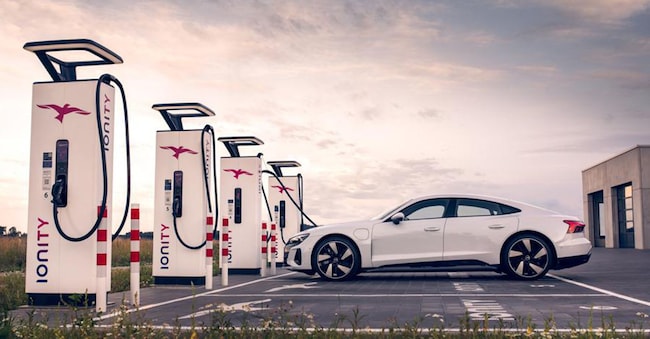
Having an electric car requires the certainty of being able to recharge it in an acceptable timeframe, especially on long journeys and on motorways. The year 2025 marked a turning point in this respect, with the doubling of motorway charging stations. Let's see, then, how best to handle this important milestone.
On motorways, recharging of electric cars takes place with ultra-fast (HPC) and direct current (DC) charging stations operating in service areas. The columns, operated by the main operators, offer high power of up to 300 kW, enabling 80% of the charge to be recovered in about 20-30 minutes. But let's see how to start charging. The process is similar to that of city charging stations, with some speed benefits. You can activate the charging station via your supplier's app (MSP) or with an RFID card or the new Plug & Charge system if your car and supplier support it. In that case, simply plug in the cable and charging starts by itself.
At motorway high-speed stations, then, there is no need to use your own cable, since the CCS Combo connector is already connected to the filling station. As for payment in addition to apps and subscriptions, many new stations on the A1, A14 or A22 allow payment by credit or debit card. obviously in the case of fleets it is good to have a 'fuel' card. As far as costs and savings are concerned, it must be said that prices for fast charging on motorways are the highest on the market, but they differ depending on the mode chosen. The consumer tariff can vary between EUR 0.75 and EUR 0.95 per kWh. And we come to subscriptions. Managed with monthly plans provided by their operator, they reduce the cost per kWh, making the journey cheaper. Returning to the columns, they are now widespread along the main arteries, A1, A4, A22, A7, A14, and can be found on average every 50-80 km. It is advisable, however, to monitor their position in real time via apps or those of the motorway operators. The recharging network on Italian motorways has achieved widespread coverage, with around 1,374 recharging points installed. To date, 50 per cent of motorway service areas are equipped with charging infrastructure, while 86 per cent of charging points are direct current (DC). Of these, more than 62% are Ultra-Fast stations with power above 150 kW, ideal for short stops. The highest coverage is in Northern Italia, which hosts 57% of the points, but with a strong acceleration also in the South and Islands, which now cover 23% of the national network. Growth was driven, above all, by the completion of the Free To X plan of the Autostrade per l'Italia Group, which installed HPC stations in 100 service areas. Other relevant players on motorways are Enel X Way, Ionity and E.ON, the latter operating with new installations this year. Average prices for motorway charging are stable, although they remain higher than for domestic charging.
The cost varies depending on the power of the column and the payment method. If you recharge without a plan, the rates are as follows: Fast 50-100 kW recharge between 0.70 and 0.85 euro/kWh and Ultra-Fast/HPC recharge from less than 150 kW: 0.76 euro/kWh, with peaks between 0.90 and 0.95 euro/kWh. For frequent motorway travellers, the monthly subscription is the cheapest solution, because it cuts the kWh cost by between 40 and 50 per cent. And here dishearteningly, in the case of fleet cars, the company has to step in.

