
Reclaiming our identity: the return of Kae Tempest
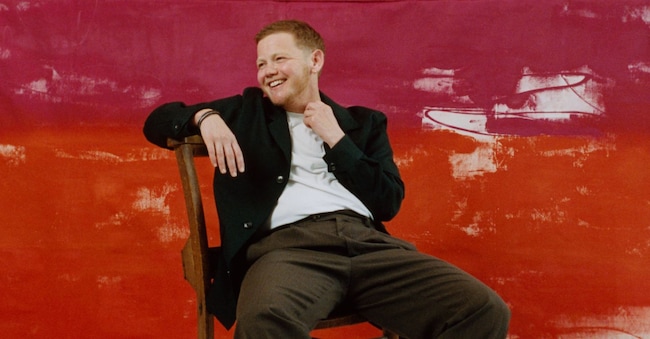
The British artist returns to music with a dialogue between present, past and future reinforced by powerful rhythms and diaristic rhymes
2' min read
2' min read
In her wonderful book 'Connections', Kae Tempest invites us to tune in to others, putting aside our own selves. But those 150 pages show, paradoxically, how the creative process can be helped by establishing a deeper connection with ourselves and the world, through awareness of our identity. Thus, knowing ourselves better and being less selfish. Tempest wrote it in 2020, in the midst of pandemics and lockdowns, on the strength of two decades of experience in which writing and narratives had been declined into the spoken word, into rap; they ended up between the grooves of vinyl records and between the pages of books.
His fifth album
.Now almost 40, he releases his fifth album, an autobiographical stream of deep bass, massive beats that expand to free jazz and a reconnection with his younger self, the one who rapped in the street with strangers or on a stage to vent his adolescent hatred against everyone and everything. Since those beginnings, Tempest has published novels, plays, poetry collections, albums, and in 2014, the Poetry Book Society presented him with the prestigious award that is given only once every ten years, that of 'poet of the new generation'.
A self-recognition process
.Around the time 'Connections' was released, Tempest declared that he was non-binary, changing his name from Kate to Kae. Three years later, he recounted the operations and gender-affirming hormone therapy he underwent in a documentary. In a 2025 interview with the New Musical Express, the artist explained about the album: 'It was important for my community, for myself [...] for some crucial elements of my identity'. That is why his fifth album is entitled 'Self Titled'. One of the first singles to anticipate it was 'Know Yourself', where at one point Tempest sings 'When I was young I sought help in my adult self. He came into my mind and said: know yourself'. It was producer Fraser T. Smith who made the record so intimate and autobiographical with a simple question: "Who else can tell the story that only you can tell?"
Anatomy of an identity
."Self Titled" begins with Tempest's hypnotic flow and his biography immersed in the cinematic refrain of "I Stand on the Line", in which he states, "Time is a river that carries and buries". "Statue in the Square" moves in the same vein, with a central riff, an intense beat and rhymes disturbing for their blunt sincerity - "They never wanted people like me around here" - and only in "Sunshine on Catford" does the mood calm down, with a melodic aside. In "Bless the Bold Future", hip hop is skewered by world music, while the clinical "Diagnoses" is a claustrophobic spiral that moves in the same restless perimeter as the asphyxiating "Breathe". If the martial "Forever" begins with a cross-section of social apathy - "arguing with autobots and shaking to the point of boredom" - the record closes with a final confession. In ''Til Morning'' an old jazz vinyl is played on the platter, before we hear one of Tempest's most moving lines, when he holds out his hand and convinces us that 'we can find that little girl, we can guard her door'. It would behoove us all to try.

