
Solar energy: record growth thanks to technology and research
Alongside economies of scale and cost-cutting, there are solutions that help to boost efficiency

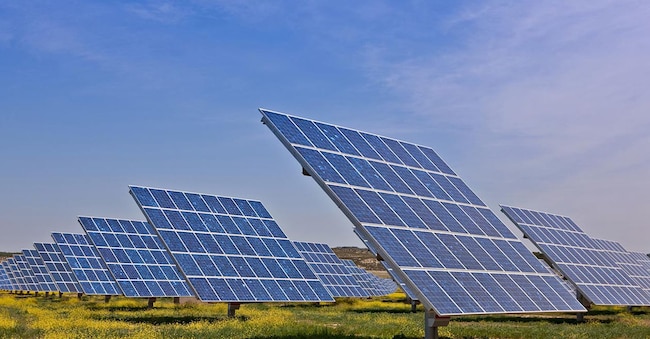
Solar power continues to break record after record, but nobody seems to notice. After surpassing the 100-gigawatt mark in 2012, it took the world 10 years to reach one terawatt of installed solar capacity. By the autumn of 2024, less than three years later, the second terawatt had already been installed – a capacity sufficient to meet the entire energy demand of the United States at times of peak consumption. Less than two years later, last month, the 3-terawatt mark was surpassed. And the growth curve is set to soar even further. According to Solar Power Europe, capacity will double to six terawatts as early as 2030, and Bloomberg New Energy Finance estimates that by 2032, solar power will generate more electricity than coal globally. In 2025 alone, solar power generated 2,780 terawatt-hours of electricity – the same amount produced by burning 540 billion cubic metres of gas, equivalent to five years’ worth of LNG supplies through the Strait of Hormuz.
The fall in prices
This revolution is not driven by environmentalist ambitions, but by falling prices and advances in clean technologies. As early as 2020, the IEA described solar power as ‘the cheapest source of electricity in history’, and costs have fallen even further since then. According to the latest figures, the price of solar panels has fallen by 95 per cent since 2007, making photovoltaics the cheapest source of new electricity generation not only compared to fossil fuels, but also to other renewable sources, such as hydroelectricity or wind power. At the same time, the cost of storage systems has plummeted by 93 per cent since 2010, making it easier to combine solar panels with batteries. And prices continue to fall, partly thanks to China’s exports of surplus capacity, particularly to Africa.
Furthermore, unlike electricity generated from gas, the price per kilowatt-hour of solar power does not spike as a result of conflicts such as the war in Iran. Once the panels are installed, the daily energy supply is free, and some homes even generate a surplus that they can sell back to the grid.
Increased cell efficiency
This has created a virtuous circle that has enabled the solar sector to achieve double-digit growth for the past twenty years, benefiting from ever-increasing economies of scale, which in turn make it even more competitive. In addition to economies of scale in production and installation, there have been improvements in cell efficiency: in just a single decade, we have gone from modules with efficiencies no higher than 17–18 per cent to those currently on the market, which achieve conversion efficiencies of up to 23–24 per cent. Not to mention the advances on the horizon, which promise efficiencies of 26–27 per cent. This is down to relentless research: according to the European Patent Office, inventions in the photovoltaic sector have increased more than 17-fold over the last three decades.
Technologies in the field
Over the years, silicon wafers have become increasingly thin, reducing the weight and size of the modules required to generate the same amount of energy, whilst the use of silver in the cells has decreased, thereby reducing costs. Bifacial modules have been developed, capable of absorbing light from both sides of the cell, thereby increasing efficiency without significantly affecting costs.

