Climate change

Record heat, zero temperatures above 5,000 metres: Alpine glaciers and the Mediterranean at risk

The icing on the cake of this June 2025 is the altitude at which the thermal zero is expected to arrive in the next two or three days: more than 5,300 metres, much higher than Mont Blanc, which is only 4,806 metres

by Leopoldo Benacchio

4' min read

4' min read

Over the past few days, almost all over Italy, walking across a square, perhaps without trees and between 12 and 3pm, has given us the experience of a safari, in the sense that it has in the Swahili language: crossing the desert.

Hot, afa, sometimes windy hot, an African anti-cyclone that increasingly settles over our regions for several days, resulting in large storms especially in lowland areas. A near-tornado, on 25 June, in the area of Treviso and Pordenone showed currents as high as 12,000 metres and caused hail with hailstones of 10 centimetres and more, which will give a lot of work to the coachbuilders of the north-east.

Loading...

The icing on the cake of this June 2025 is then the altitude at which the thermal zero is expected to arrive in the next two or three days: more than 5,300 metres, much more than Mont Blanc, which is only 4,806 metres.

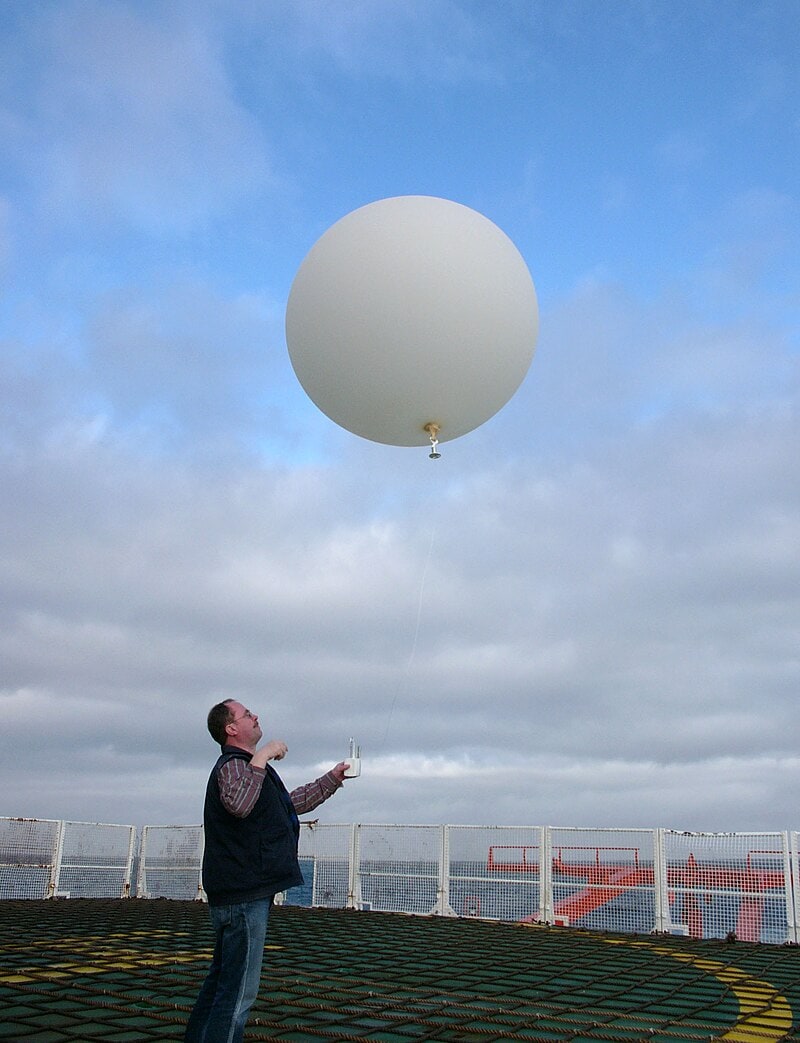
The thermal zero, which is determined by launching sounding balloons that signal the temperature and height via radio, is the point in the atmosphere where the temperature goes from positive, even if only one degree, to negative; with these values, the snow on the extreme tip of that mountain can melt.
Certainly the rocks, especially in the beautiful Dolomites, are put to the test by these temperature fluctuations and also by the water flowing down from snowfields and glaciers; some landslides are certainly due to this as well.
The effects of such a high temperature zero are, however, easy to assess to a first approximation: the Alpine glaciers, already greatly reduced by the summers of recent decades, melt at an impressive rate, with the loss of large volumes of ice even at altitudes above 3500 metres. Snowfields, which you used to be able to see until late summer, are already melting at a great rate.

The effects of such high zero temperatures are immediate and visible: the Alpine glaciers, already severely reduced by the torrid summers of the last few decades, are melting at an impressive rate, with the loss of large volumes of ice even at altitudes above 3,500 metres. The snowfields that used to last until late summer are already shrinking, and the phenomena of rock detachment and debris avalanches linked to slope instability made more acute by the high temperatures are multiplying.

Experts point out that such a rise in freezing temperatures may permanently compromise the resilience of high-altitude ecosystems, with impacts on vegetation, alpine fauna and, in the long term, also on local economies that depend on mountain tourism and the water resource generated by snowmelt.

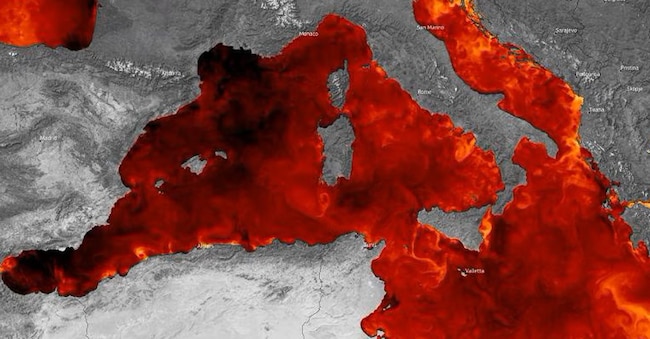
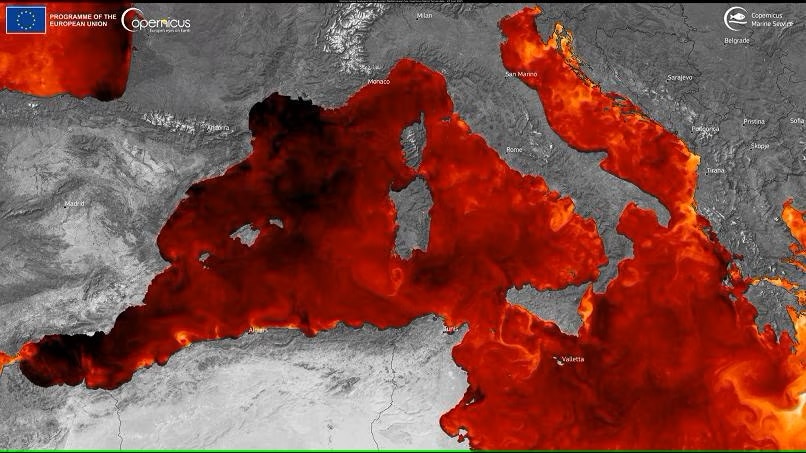
Another fundamental datum is the temperature of the sea, the one that concerns us most closely, namely the Mediterranean. The Copernicus satellite, one of the wonders put into orbit by Europe, shows us a chart that has, unfortunately, all the darker shades of red, the colour used to indicate high temperature. The coast between Marseille and the Spanish border and the Strait of Gibraltar seem almost boiling, so dark red are they; our Adriatic Sea fares much better, but is still well above average.

Such a mass of water, at a high temperature, the only thing it can do is return the heat it has accumulated to the atmosphere, which in turn will overheat further, making the situation worse. To be concrete, satellite readings and monitoring buoys confirmed that in June the surface water temperature often reached 28 degrees Celsius, for example in the Tyrrhenian Sea, the Ionian Sea and the southern Adriatic, with local peaks even higher in more closed areas.

It is a lot, at least +3 or 4 degrees above typical for the period, and there are many reasons for this: the African anticyclone that persists for too many days and on several occasions, the winds that can be used to mix the atmosphere that are non-existent or weak, the low rainfall, the hours of sunshine that are at their maximum around 21 June.

Everything contributes to having an important sea, the Mediterranean, which is very warm, also because, let us not forget, it too is almost closed. Therefore, not only the temperatures and the sensation of heat are amplified, but also the risk of extreme phenomena, such as violent thunderstorms and tornadoes when the cold air at high altitude manages to break through to the land through the heat shield.

We have known for some years now that rising sea temperatures also create major problems for the flora and fauna: the tropical species are proliferating at the expense of native ones, such as blue crabs, which are now present almost everywhere, jellyfish are multiplying and the whole thing is compromising fishing activities, with a good hand given by man: In the lagoons and seas of the Veneto region, sardines, used for dog and cat food, have almost disappeared. Algae blooms and mucilage are also on the increase, causing problems for seaside tourism.

So the debate has been opened as to whether this June, with which the Summer 2025 opens, will be the hottest or not, bearing in mind that we have only been recording temperatures for a few decades; thus, we can know that in the 1300s and 1600s there were periods of small glaciation, very cold temperatures, but we cannot know exactly how hot June 1302 was, just to understand.

To come to our cities, the temperatures that in Rome, Florence, Bologna, Milan have for days touched 37-38 degrees, with an incredible increase of tropical nights in recent years, has equally increased the demand for energy to cool down, an almost paroxysmal effect, given that energy production is obviously not free in thermodynamic terms. And it does not look as if we can expect a sharp cooling in the coming days, especially for those strange little areas of cities that are heat islands, made worse by the indiscriminate use of concrete and bitumen.

There is not much that can be done immediately, but what little can be done must be done, and not just because it is hot, but because we are taking a big risk. Us, but our children even more so.

Copyright reserved ©
Loading...

Brand connect

Loading...

Newsletter

Notizie e approfondimenti sugli avvenimenti politici, economici e finanziari.

Iscriviti