Energy Sources

Redesigning ports in the name of decarbonisation

The high osbolescence of ports requires a clear national strategy of interventions

3' min read

3' min read

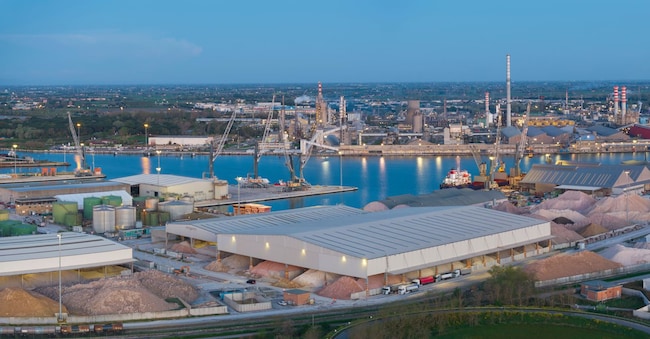
Italian ports have historically been the main gateways for energy sources, not only for the national economy, but via Genoa and Trieste also for some of the neighbouring states to which some 40 million tonnes of crude oil per year are destined.

Time series from the Bank of Italy show a declining trend in the movement of these goods and the climate neutrality policies promoted at European level will accelerate this process, which will require a significant redesign of port areas and, at the same time, offer new business opportunities.

Loading...

The data emphasise that between 2001 and 2023, imports of liquid and dry bulk by sea decreased by as much as 33.2 and 35.6 million tonnes respectively, with the effect of reducing the need for space for these trades and, for example, allowing the complete conversion of the coal terminals in Genoa, Savona and La Spezia.

The phenomenon is so significant that in some contexts it has led to very significant declines in a very short time, such as in Taranto and Brindisi, which together saw a drop between 2017 and 2023 of these two traffic components equal to 6 mln tons (roughly equivalent to what was handled by three medium-sized ports such as Monfalcone, Chioggia and Gaeta). Slightly more than 3 million tonnes are those lost to Venice in the same period in these two traffic segments.

The coming into force of the European regulations, promoted as part of the broader strategies of the 'Fit for 55' package of initiatives of 2021 and the Net Zero Industry Act (NZIA) of June 2024, foresees a rapid development of energy efficiency in the manufacturing sector and the promotion of alternative fuels, leading to a foreseeable further reduction of traditional energy products handled.

The funds deriving from carbon dioxide emission levies, including the Innovation Fund, which will increasingly burden the transport sector through the application of the Emission Trading Scheme regulations, which from 1 January 2024 will gradually apply to maritime transport and from 2027 will also be extended to road freight transport, will allow co-financing of initiatives to convert to alternative fuels and the deployment of infrastructure to support decarbonisation.

These include those dedicated to the transport and storage of carbon dioxide: the so-called Carbon Capture and Storage (CCS). These plants make it possible to permanently deposit, within underground and underwater geological formations, the CO2 generated by industrial sectors with a high rate of emissions (so-called hard-to-abate, such as the iron and steel, cement, paper and glass industries) and, in the near future, also by ships that have applied specific filters on board, exploiting the porous volumes (reservoirs) of depleted or depleting oil & gas fields. In the case of reservoirs in the seabed, the liquefied CO2 is transported by ship to a terminal, which in turn is connected to a subsea pipeline through which the waste fluid is injected into the subsurface reservoir for storage in a geological structure with proven hydraulic tightness. With the NZIA, the EU aims to have an operational CCS storage capacity of 50 mln tonnes of CO2 per year by 2030, with a potential increase to around 280 by 2040 and 450 by 2050. One such storage facility is the one started up by ENI off Porto Corsini with an initial capacity from the end of 2026 of 4 MTPA. Last October, a CO2 capture plant in Ferrara, which will be fully operational in 2028, promoted by Hera in collaboration with Saipem, obtained co-funding from the Innovation Fund of 24 million euro, constituting a potentially replicable example in different port contexts.

The obvious rapid functional obsolescence of several port areas, the high opportunity cost of failed conversions and the long lead times for the development of new facilities for alternative fuels and CCS projects require clear national strategies. The port reform expected by the end of the year and the port master plans under discussion should explicitly take this into account.

Copyright reserved ©
Loading...

Brand connect

Loading...

Newsletter

Notizie e approfondimenti sugli avvenimenti politici, economici e finanziari.

Iscriviti