
Redevelopment of the former Bekaert site in Figline Valdarno: it also includes a zero-impact data centre
The project is set to go ahead thanks to an agreement with Comtel as part of the H2-Era Green Valley circular economy initiative, which was established to produce green hydrogen, develop vertical farming and innovative fish farming. The planning permission process has been lengthy and work has not yet begun.

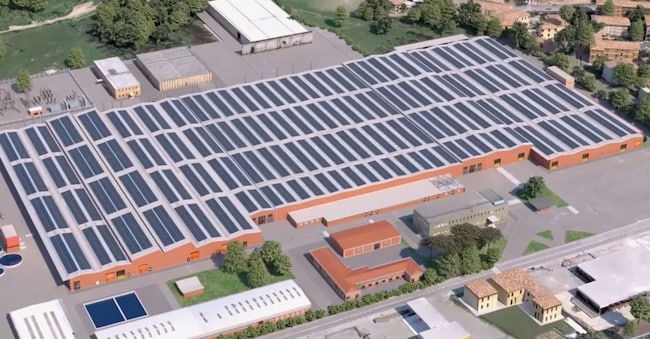
The industrial regeneration project for the former Bekaert site in Figline Valdarno is set to be enhanced by a carbon-neutral data centre (Florence), the factory producing steel cord for reinforcing car tyres, which in 2018 suddenly announced its closure and the redundancy of 318 workers.
That disused factory was purchased in 2022 by a consortium of investors led by the Florence-based Ge-Group, an engineering firm founded by Federico Parma and specialising in renewable energy, which has developed a multi-million project based on the circular economy, named H2-Era Green Valley, to produce green hydrogen, vertical farming and fish farming. The planning permission process has been lengthy and work has not yet begun.
But now H2-Era Green Valley is adding another strategic element to the project by signing a memorandum of understanding with Comtel, a Lombardy-based, publicly listed group and leader in ICT systems integration, to develop what is described as ‘the first data centre designed as an integral part of a zero-impact circular economy industrial ecosystem’.
In practice, the 84-megawatt ground-mounted solar farm envisaged under the H2 project – according to the developers – will cover 100 per cent of the future data centre’s energy requirements, ensuring self-sufficiency from clean sources. Any surplus energy produced will power an electrolysis plant to generate green hydrogen; the oxygen resulting from the electrolysis process will be used in a closed-loop fish farm dedicated to salmon production; the waste heat generated by the data centre will be recovered to provide heating and cooling for a vertical farm, further reducing the production complex’s overall energy consumption. Essentially, each activity will make the most of the resources generated by the others.
For the time being, the developers have not provided any details regarding the size of the data centre, which will cover between 15,000 and 25,000 square metres depending on the user (the agreement has not yet been signed), nor regarding the investment required.

