
Rediscoveries: The Restless Equilibrium by Antonio Rega
The Apulian artist rediscovered in an exhibition in Rutigliano curated by Tommaso Evangelista

Key points
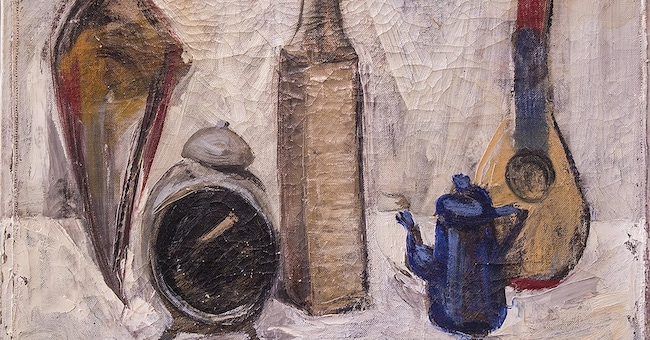
Sometimes, a discovery is made along the lesser-known paths of art. This is the case with the works of Antonio Rega (1915–1983), on display until 21 June at the Frantoio Damato in Rutigliano, a few kilometres from Bari. This space, steeped in the memory of its industrial past, hosts this project entitled ‘Antonio Rega – Restless Equilibria (1950–1960)’, curated by Tommaso Evangelista, as an opportunity for reinterpretation and appreciation, offering a context capable of amplifying the dialogue between the past and the present.
More than thirty years on from the last retrospective held in Bari at Arte Spazio and the publication of Antonio Rega’s monograph ‘Candore e colori’ (Schena Editore), Frantoio Damato is dedicating an exhibition to this artist from the second half of the 20th century in Puglia, whose work is proving increasingly significant within the region’s historical and artistic landscape.
The family archive
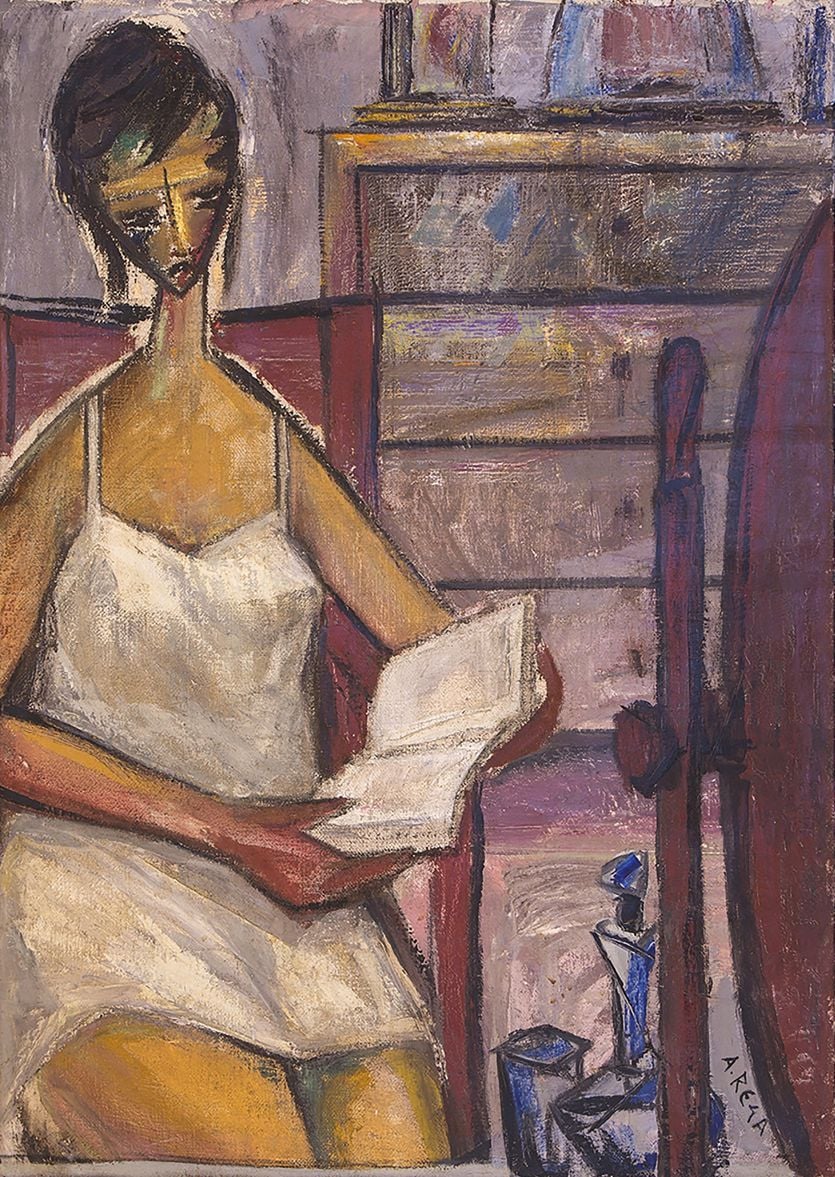
The exhibition, made possible by the artist’s children’s desire to embark on a journey of rediscovery of his work, presents a selection of pieces from the family archive. ‘The project,’ explains Evangelisti, ‘focuses in particular on the 1950s and 1960s, a crucial phase marking the transition from a figurative vision rooted in the natural world and a suspended landscape style to a more intense construction of the image and the body. During these years, the representation becomes charged with tension: the human presence is deconstructed, whilst the brushstroke becomes refined, incisive, capable of articulating a graphic texture that traverses and saturates the space. The chromatic material thickens to the point of eroding the drawing, generating unstable configurations, characterised by precarious balances, where an attraction to form coexists with an openness towards a freer, more symbolic and arcane dimension.”
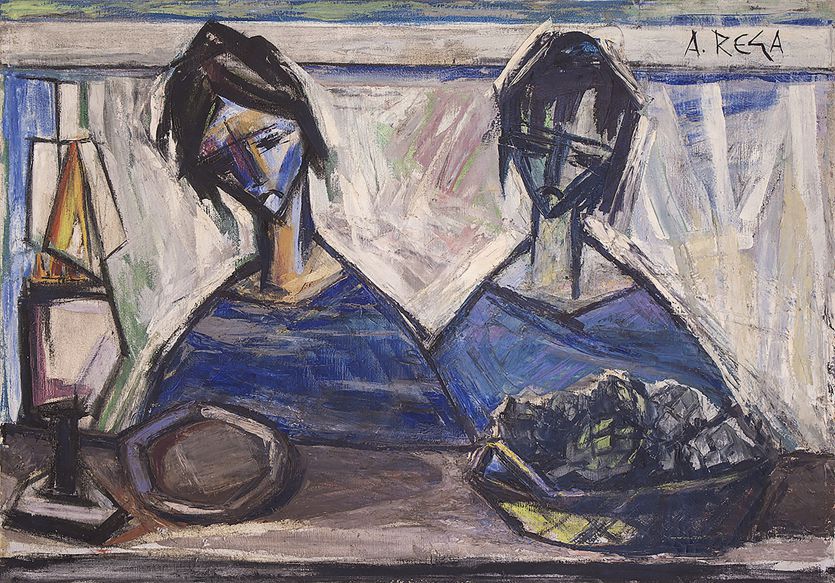
‘During the period spanning the 1950s and 1960s,’ continues the curator, ‘Antonio Rega developed a style of painting characterised by internal tensions, in which the figure and the landscape, whilst retaining a trace of recognisability, are gradually absorbed into a web of marks and texture that undermines their stability, transforming the image into a dynamic field of forces, suspended between order and disintegration, between the memory of reality and the emergence of a more arcane and restless dimension.”
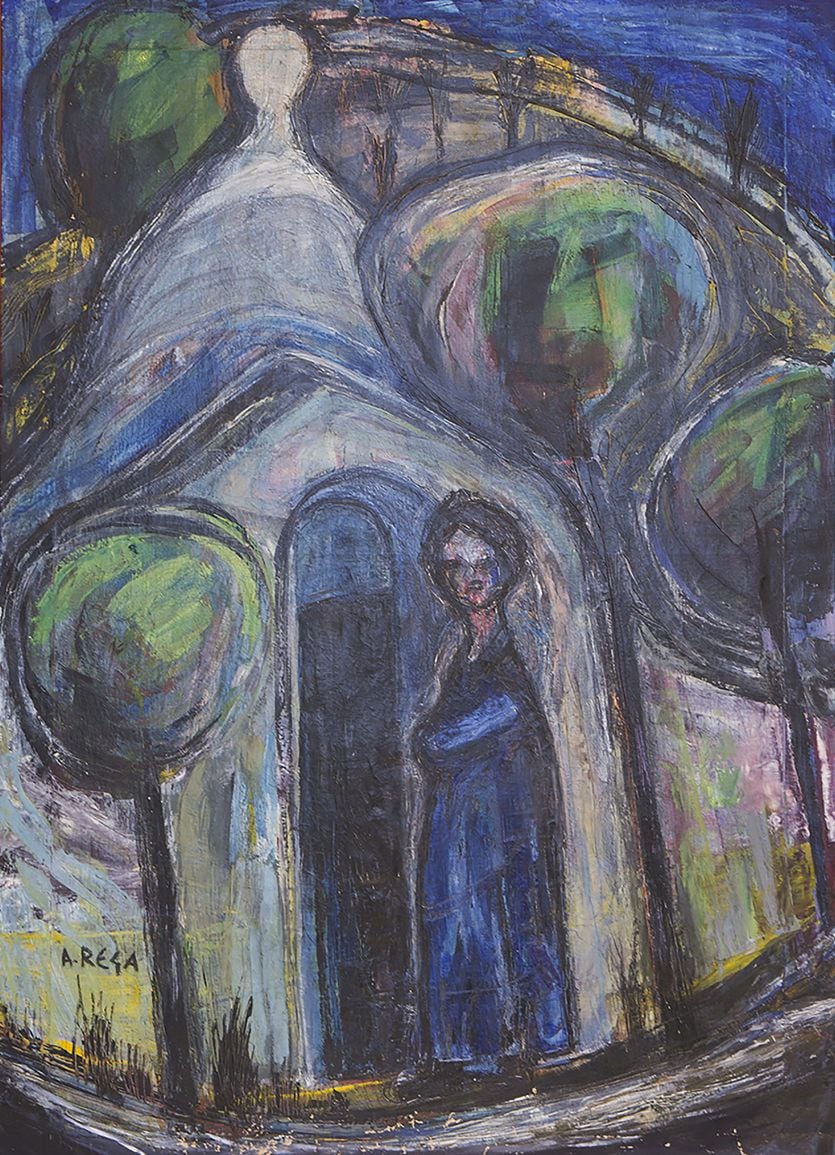
Alongside the main exhibition, the itinerary includes a section dedicated to small-scale works, housed in the new Frantoio space, which offers an insight into the artist’s entire career, characterised by a constant tension between order and disorder: from his early academic phases to archaic influences, from gestural experiments to his later works, characterised by a suspended realism.
His presence
Having graduated from the Academy of Fine Arts in Naples, Tonino Rega – as he was known to acquaintances and friends – was active in the vibrant post-war art scene in Bari, taking part in significant events on the art scene, from ‘Sottano’ to the Taranto Prize, from the Basento Prize to the Maggio di Bari, distinguishing himself through a consistent and uncompromising artistic exploration, pursued with rigour and perseverance. His call-up for military service and subsequent imprisonment brought his early artistic practice to a halt; he subsequently carried out his work mainly in Bari.
The oil mill
At the Frantoio Damato, curated by Evangelisti, the exhibition ‘Soglie della forma. Ricerche tra astrazione, superficie e spazio’ has been staged to mark the opening of the venue, featuring Gianni Colalillo (1964), Roberto Franchitti (1955), Benvenuto Succi (1939) and Antonio Tamontano (1965), An artistic debut that brought together four artists from outside the region, creating a dialogue between the ancient stones of the oil mill and the sculpture and colour palette of the canvases. The space aims to become a cultural hub for the predominantly agricultural area, where the contemporary engages in dialogue with the places of the past. “Contemporary art is like a kinetic force capable of transforming memory into experimentation and history into new opportunities,” concludes Giusy Dizonno, president of Frantonio Damato.


