At the studio

Reducing demand and cooling prices: the EU recipe against high energy prices

Facilitations are being worked on both on the state aid front and on the side of long-term contracts in the wholesale purchase of electricity. Only two countries, presumably Italia and Greece, have suggested suspending the Stability Pact

from our correspondent Beda Romano

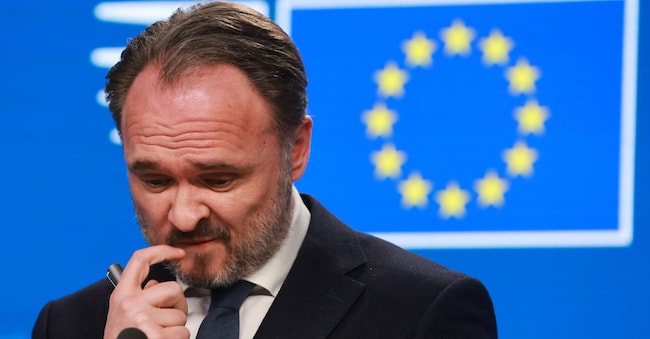
 Il commissario europeo per l’Energia e l’Edilizia abitativa Dan Jorgensen  EPA

3' min read

Translated by AI
Versione italiana

3' min read

Translated by AI
Versione italiana

BRUSSELS - There is full awareness at EU summits that the economic crisis caused by the US and Israeli attack on Iran could prove to be severe and lasting. At the same time, there is the desire, shared by many member states, to avoid a new drift in public accounts as well as to jeopardise the environmental choice to focus on renewables and the energy transition. The synthesis is particularly delicate.

According to the latest figures available, in the first thirty days of the conflict, the price of oil rose by 60%, the price of gas by 70%. There are, as yet, no supply fears, but it is clear that Europe is suffering from rising prices. The situation is different from country to country. The Italia case is particular. Despite the warning of 2022, in the wake of the Russian invasion of Ukraine, Italy continues to depend on hydrocarbons for electricity production.

Loading...

In this context, Energy Commissioner Dan Jørgensen addressed the member states in recent days: 'It is extremely important that we act cohesively and in close coordination with each other. We absolutely must avoid fragmented national responses and destabilising signals to the market. Our measures must be targeted, they must be temporary and they must avoid aggravating supply and demand conditions".

Cooling prices

According to information gathered here in Brussels, the European Commission is working on a panoply of measures and suggestions, with two objectives: to cool prices and reduce demand. The measures should include facilitations both on the state aid side and on the side of long-term contracts in the wholesale purchase of electricity. Brussels also wants to modernise electricity grids, which today are often unable to absorb some of the energy produced by renewables.

Speaking of state aid, EU spokesman Ricardo Cardoso has just confirmed that Rome and Brussels have just started discussing this week the modalities of the so-called Decreto Bollette, the aid measure decided by the Meloni government to support families and businesses in dealing with the energy shock. When asked for more information, the spokesman explained that he could not add anything else for now. The talks have just started.

Meanwhile, the European Commission presented a mini-reform of the ETS market this week. More substantial news could come in the coming days when Brussels will present changes to the parameters that determine the distribution of free certificates. Finally, in July the EU executive will present a broader reform to adapt the ETS market to the decision to reduce emissions by 90 per cent by 2040.

Suspend the Pact?

There is a prevailing feeling in many European countries that the new Middle East crisis fully justifies the decision to reduce the demand for gas and oil and to promote the use of renewables, in order to enable Europe to become more independent. On the subject of demand reduction, Brussels recalls that in 2022 a Council regulation opted for emergency measures. Among other things, on a voluntary basis the Twenty-Seven were called upon to reduce gas consumption by 15 per cent.

Finally, there is the issue of public accounts. According to information gathered on the sidelines of last Friday's Eurogroup meeting, two countries - one must assume Italia and Greece - suggested not closing the door on the possibility of suspending the Stability Pact, as in 2020-2022. No other country would have taken up this idea, and the European Commission itself would have noted that the use of the emergency clause (escape clause, in English) is not, at this moment, justified.

The sharp increase in public debts caused first by the pandemic and then by the Russian invasion of Ukraine induces caution, both on the Stability Pact front and with regard to state aid. More generally, in reacting to the new crisis, the European Union must strike a balance between the need to support the economy and counteract the risk of stagflation, the fear of leaving dangerous scars, and the desire to defend the long-term strategy towards transition.

Copyright reserved ©
Loading...

Brand connect

Loading...

Newsletter

Notizie e approfondimenti sugli avvenimenti politici, economici e finanziari.

Iscriviti