
Technical colleges: shortening the duration of the course is not the solution
To avoid being seen as second-rate, technical education must educate future citizens, including those from abroad

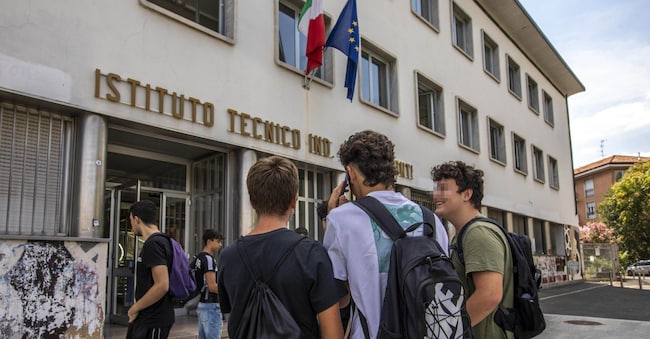
The TechSkill Forum, a conference on technical and vocational education and training in Mediterranean countries, organised by the Italian Ministry of Education and Merit and the Egyptian Ministry of Education and Technical and Vocational Training, has successfully concluded in Cairo. In particular, there was a strong focus on Higher Technical Institutes (ITS) as models of technical education suited to a world undergoing such rapid structural change.
The ITS were established by the second Prodi government by Prime Ministerial Decree of 25 January 2008, at the height of the economic crisis, in the clear understanding that to escape the financial trap it was necessary to revitalise productive innovation, which requires an education system capable of supporting structural change through the provision of appropriate skills. This decree had been preceded by the work of a study commission, in which I participated as a representative of the Conference of Rectors. Following an extensive review of the various models, we turned to the German model of the Fachhochschulen, in which technical colleges and vocational schools, universities, businesses and local institutions came together to run tertiary-level courses, thereby giving shape to a widespread university system, as a hub for innovation and change.
Back in 2010, upon becoming a regional councillor for the Emilia-Romagna Region, I launched the first ITS course in Mechatronics in the Motor Valley, between Modena and Piacenza, involving the region’s four universities, companies in the sector – Ferrari, Maserati, Lamborghini, Pagani, Dallara and their suppliers – technical schools, vocational training centres and local institutions, whilst simultaneously promoting a reform of the three-year vocational training programmes under regional jurisdiction and the link with the five-year technical institutes under national jurisdiction.
This initial experience with ITS was followed by many others across all regions, until, in my capacity as Minister of Education in the Draghi Government, I established the National Higher Technical Education System by Law 99 of 15 July 2022, as an integral part of a national education system, which sees the coordinated interaction of three-year regional vocational training, state technical schools, ITSs as foundations, universities as autonomous entities and, increasingly, corporate academies. At the same time, regulations were approved on the strengthening of technical education, the digital transition, the overhaul of the recruitment system and teacher training.
In this context, technical colleges and ITS Academies have been tasked not only with developing the skills needed to meet employers’ recruitment needs, but also with educating people capable of driving the transformation of their respective sectors, with a strong emphasis on mobility between sectors, working towards the inclusion and integration of immigrants. For this reason, alongside an emphasis on technical subjects and widespread work-based learning, ample scope was provided for education in literature, languages and history, so that everyone could acquire the cultural grounding necessary to understand the changes in the world and face them without fear.

