
Referee investigation, Gravina defends the FIGC from receivership
Awaiting developments in the investigations, the debate in the political world over the possibility of commissioning the Football Association is heating up

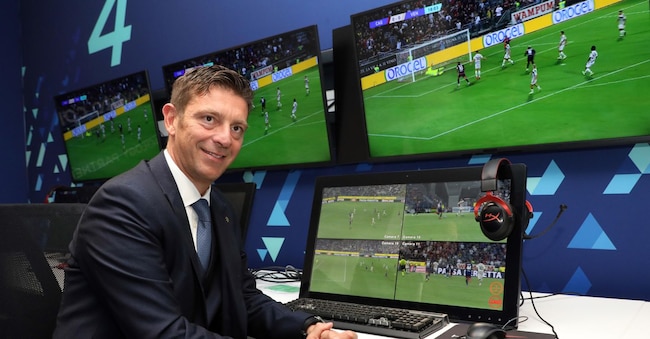
The investigation by the Milan Public Prosecutor's Office into the Rocchi case, which exploded on Saturday 25 April in the midst of the worst crisis in Italian football, after Italia's third consecutive failure to qualify for the World Cup, is igniting the debate on the hypothesis of placing the FIGC under commission.
The debate on the commissioner
On the afternoon of Monday 27 April, during a federal council meeting at which Ezio Simonelli, president of the Lega Serie A, Beppe Marotta, president of Inter Milan and federal councillor, and Umberto Calcagno, number one of the Assocalciatori, were remotely connected, Gabriele Gravina, the resigning president of the FIGC, denounced the risks that the commissioner would violate the principle of autonomy of sport 'sanctioned and protected' by the IOC, FIFA and UEFA.
Uefa denied that President Alexander Ceferin had talks with representatives and representatives of Serie A threatening the withdrawal of the organisation of Euro 2032 and the ouster of Italian teams from the European cups in the event of a commissioner. "At the moment we are following the development of the situation regarding the FIGC with the utmost attention and do not intend to make any further comments."
Gravina responded to the lunge that arrived on Sunday 26 April from the League of Minister Matteo Salvini - after the Minister for Sport and Youth Affairs Andrea Abodi had clearly hinted that the hypothesis of a commissioner was back on the government's table - and to the proposal of FdI senator Paolo Marcheschi, whose football reform bill also proposes a commissioner by law of the Federcalcio in the absence of sports results.
Gravina appreciated how all the points for reform that he indicated after his resignation were incorporated in the draft, circulated in recent days in the Senate, but criticised the one point that was 'non-resolutive' and 'in blatant violation' of the autonomy defended by the world sports bodies.


