
Referendum, Meloni: reform for citizens not to get rid of magistrates
The premier in the field closes the kermesse. At the Teatro Parenti the party staff and many ministers.

Key points
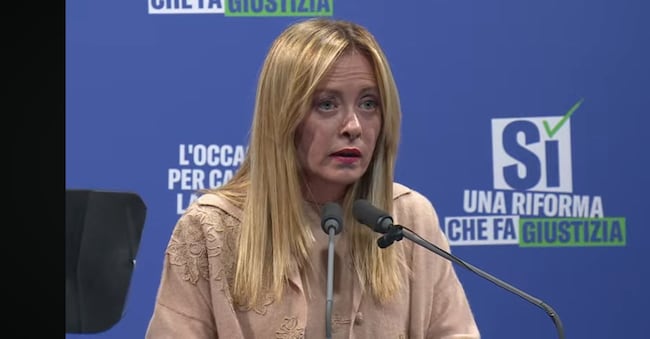
"We are not doing this reform because we have it in for someone, nobody here has in mind to get rid of the judiciary" but "to fix what does not work for the magistrates and above all for the citizens, we have promised them a better nation". Prime Minister and FdI leader Giorgia Meloni closes the party's kermesse for a yes vote in the referendum on justice at the Parenti Theatre in Milan. And she did so by trying to stay on the merits, indirectly distancing herself from the words of the chief of staff of the Ministry of Justice, Giusi Bartolozzi, who had invited people to 'vote yes', so 'we get rid of the judiciary, which is a firing squad'. Words that the premier did not like at all
Meloni defended the contents of the reform (from the separation of careers, to the draw to choose the members of the Csm, to the creation of the High Disciplinary Court) and reiterated that she would not resign in the event of a no vote in the referendum ('I want to get to the end of the judiciary and be judged on the whole of my work at the political elections')
Meloni: efforts for justice always foundered because of Anm ban
For Meloni, the referendum is a historic opportunity, not to be missed. And the premier does not spare the judiciary any stoccatisms. "I don't have to remember," she explains, "how many times in the past concrete efforts to reform justice have foundered" because of "the disqualification exercised by the ANM or by groups of magistrates who had great media notoriety. "After decades of postponements and failed attempts," he adds, "we have approved a historic reform that addresses the main problems underlying the malfunctioning of justice. The task of the legislature is to make laws to correct the distortions".
Magistrates have enormous power that is not matched by responsibility
"If the justice system is slow and cumbersome, everyone pays the consequences, the choices made by magistrates impact on so many aspects of our lives,' insists the Prime Minister, for whom the power of magistrates 'is enormous and is the only one that is not matched by adequate accountability, because if a magistrate makes a mistake, he does not suffer any consequences, indeed he often advances in his career'

