
In Iran, the reformist candidate Pezeshkian won. Here is why it is good news for the world
The victory of the reformist candidate does not mean the collapse of the system. It can, however, restore courage to the younger generation and crack the conservative front

3' min read
3' min read
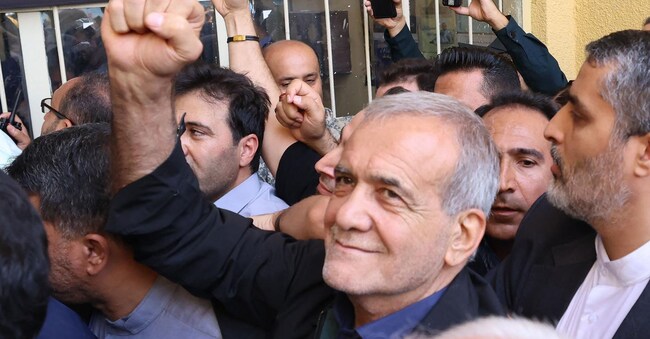
The reformist Masoud Pezeshkian is Iran's new president. In the runoff on Friday, 5 July, he obtained 53.7% of the vote, against 44.3% for the conservative Saeed Jalili. "We will extend the hand of friendship to everyone," Pezeshkian's first words, quoted by Tehran TV, "We are all people of this country, everyone is needed for the progress of this country.
Seventy years old in September, the heart surgeon from Tabriz province had surprisingly come out on top in the first round of the elections on 28 June with 42% of the vote, against 38% for the former chief nuclear negotiator. The first round had been characterised by a very high abstention rate, the lowest since the 1979 Islamic revolution, with only 39.9% of the 61 million voters going to the polls.
On Friday, however, perhaps on the wave of hope for a victory for the reformist, many more Iranians went to vote - many young people and many women - and in an attempt to bolster turnout the closing of the polls was postponed from 6pm to midnight. The turnout is expected to be around 50 per cent. In total, Pezeshkian got 16.3 million votes, against Jalili's 13.5, three million more than the conservative candidate. And already at dawn thousands of Iranians took to the streets of Tehran and other cities to celebrate the victory of the new president, who succeeds Ebrahim Raisi, who died in a helicopter accident on 19 May.
This is good news for the world in perspective. The reformist candidate the West likes won, over his rival from the extremist, anti-Western front. Although in the short/medium term things will change little in Iran.
First of all, because it is the country's supreme leader, Ali Khamenei, who is the most influential man capable of influencing the most important policies. Certainly not the president. Secondly, because the current context - the war in the Gaza Strip and a potential open conflict between Israel and the Lebanese Hezbollah, Tehran's allies - would compact the country by making the militarist wing and national sentiment prevail.


