
Regeneration, an algorithm values social impact
A project, commissioned by the municipality of Turin, envisages the concession ofunused public buildings with a discount based on the impact assessment

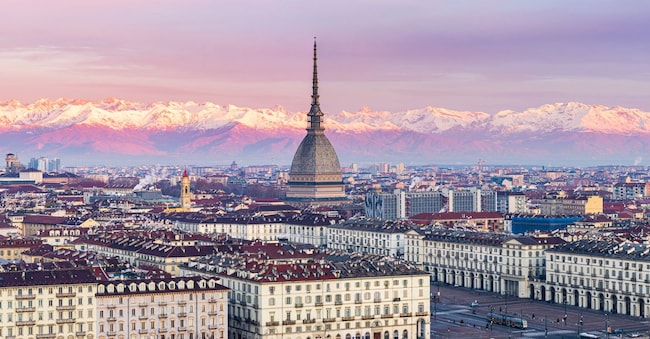
They occupy an area equal to more than 40 times the size of the Vatican City: these are the 19 million square metres of unused public properties with an asset value of 13 billion euros, according to data from the latest Mef report dating back to 2018. These are assets that lie in disuse with costs borne by the entities called upon to take care of them. Almost half of these assets, in terms of value, belong to the municipalities and appear on the balance sheets of the administrations with values that often do not meet the real market demand and therefore fail to be sold. At the same time, however, these properties cannot be devalued or put on the market at lower prices, on pain of the risk of fiscal damage on the part of the administration.
Caramazza: "Shared and participatory process"
How can they be put to good use for the benefit of their public owners and communities? The possible solution comes from a research project - commissioned by the City of Turin - carried out by the Competence Centre for Impact Assessment and Measurement. "We have arrived at a methodology that supports the allocation of publicly owned real estate at reduced conditions, on the basis of a shared and participatory process of defining and weighing ex ante evaluation criteria of the expected impact on the basis of the needs of the territory and the characteristics of the property," explains Marella Caramazza, project coordinator and director of the Cottino Social Impact Campus.
Deputy Mayor Favoro: 'Instrument for urban regeneration'
The process starts with parties - generally third sector entities - interested in winning the property who fill in a form of 12 qualitative and quantitative macro-indicators of social impact, consistent with the development strategy of the city's urban plan. Then the social impact data are processed with an algorithm that returns a percentage discount on the rent that can theoretically reach up to 90 per cent. "It is an innovative project that can be a significant tool for urban regeneration," comments Michela Favaro, deputy mayor of the City of Turin, which is planning to pass a resolution for the transposition and adoption of this model, while the Osservatorio Enti pubblici e Società Partecipate (Observatory of Public Entities and Shareholding Companies) of the National Council of Chartered Accountants has already discussed and validated it. This is a relevant opinion that could be considered by the Court of Auditors, which is called upon to supervise the work of public officials who would, in this case, be responsible for granting an asset at prices lower than those budgeted.
The role of the third sector
In addition to the Turin City Council, the Cottino Social Impact Campus, and the Politecnico di Milano, the Politecnico and the University of Turin, the Collegio Carlo Alberto, and Torino Social Impact worked on the evaluation mechanism. 'It is the result of a co-design carried out with multiple stakeholders including third sector organisations and with the contribution of multidisciplinary expertise,' explains Alessandra Oppio, lecturer in Estimo and Evaluation at the Politecnico di Milano.
In addition to the benefit to the city's accounts, the city could enjoy these abandoned spaces and third sector organisations could have an asset that would otherwise be inaccessible to them. "Through this model, the third sector can train itself to propose projects that have a clear impact strategy," adds Caramazza. In fact, it becomes a stimulus for long-term social entrepreneurship.


