
Regions risk 'paying' European concessions to farmers for Mercosur OK
The 45 billion in advance payments to quell farmers' protests against the EU-South American economic area agreement will be subtracted from the other items in the chapter for national and regional partnership plans, of which cohesion is the most important.

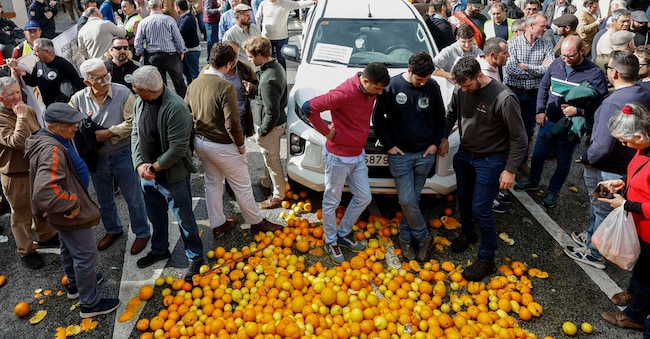
They were designed to compensate for the potential damage of the EU-Mercosur agreement, but could end up penalising cohesion policy. They are the additional funds for farmers, proposed by Ursula von der Leyen in the next Multiannual Financial Framework (MFF), the long-term EU budget.
The trade agreement between the EU and South American countries was discussed by the Europarliament. In the meantime, however, the idea of allocating more resources to the primary sector has entered the negotiations for the MFF 2028-2034, and the regions could be the ones to pay for it.
In early January, with a letter, the President of the EU Commission Ursula von der Leyen proposed to give states the possibility to use up to two-thirds of the funds in the next MFF for the mid-term review in the middle of the seven-year budgetary cycle now. They are "about 45 billion euro," he wrote, opening up to a modification of the proposed Qfp presented by the same Commission in July. But if this proposal is translated into concrete facts, cohesion policy and the regions could be the ones to pay the price.
"It is strange," comments Euralia Rubio of the Jacques Delors Institute. 'Compensation is being offered on the basis of a proposal that is still being negotiated'. Von der Leyen's is a promise that it is not up to her to keep. Now, the ongoing negotiations on the Qfp involve the Europarliament and, at this stage above all, the EU Council. It will be up to them to decide whether to accept the proposal.
Moreover, even if they did, it would be up to the individual states to decide whether to advance funds to farmers and in what amount. Could Italy do this? The answers of Fratelli d'Italia MEP Francesco Ventola suggest that it could. The proposal goes 'in the right direction', says the vice-chairman of the European Parliament's Committee on Regional Development.

