From Espace to E-space: Renault is set to unveil the concept car at the Paris Motor Show
A concept car reimagines the Espace, the iconic 1980s model that is making a comeback with more modern features. A series of updates are also planned for the recently launched models.

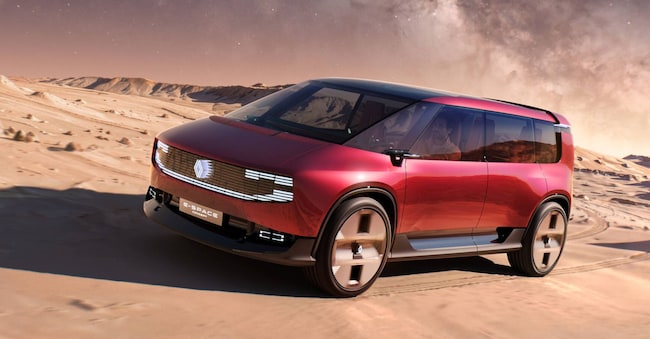
Renault unveiled the first Espace to the public at the 1984 Paris Motor Show. Now, 42 years on, the French manufacturer is reintroducing the iconic model with the E-Space concept car, reimagined with a more futuristic vision. The ‘E’ stands for E-Tech technology – the umbrella term for all the French brand’s electric vehicles – whilst ‘Space’ represents a welcoming and spacious interior. Measuring 4.7 metres in length, this show car – for now – stands out for its elegant ruby-black paintwork and a luminous ‘U’ outline running along the vehicle’s contours at both the front and rear. At the centre of the front end is the illuminated ‘Losanga’, the brand’s symbol, which gives the impression of floating in outer space.
A comprehensive package of updates
Alongside this intriguing concept car, the French manufacturer is announcing at the Paris Motor Show its intention to update its product range, including recently launched models. For example, by introducing LFP batteries – which stand for lithium, iron and phosphate – across its entire electric range, ensuring more accessible zero-emission mobility. These batteries utilise a ‘cell-to-pack’ architecture that optimises energy density and usable capacity: 27.5 kWh for the Twingo, 37 kWh for the 5, and 67 kWh for the Mégane and Scénic. Then there is the ‘One Pedal’ driving mode, which simplifies driving in traffic and, above all, integration with Gemini, Google’s AI for connectivity.
The new Twingbay panoramic glass roof
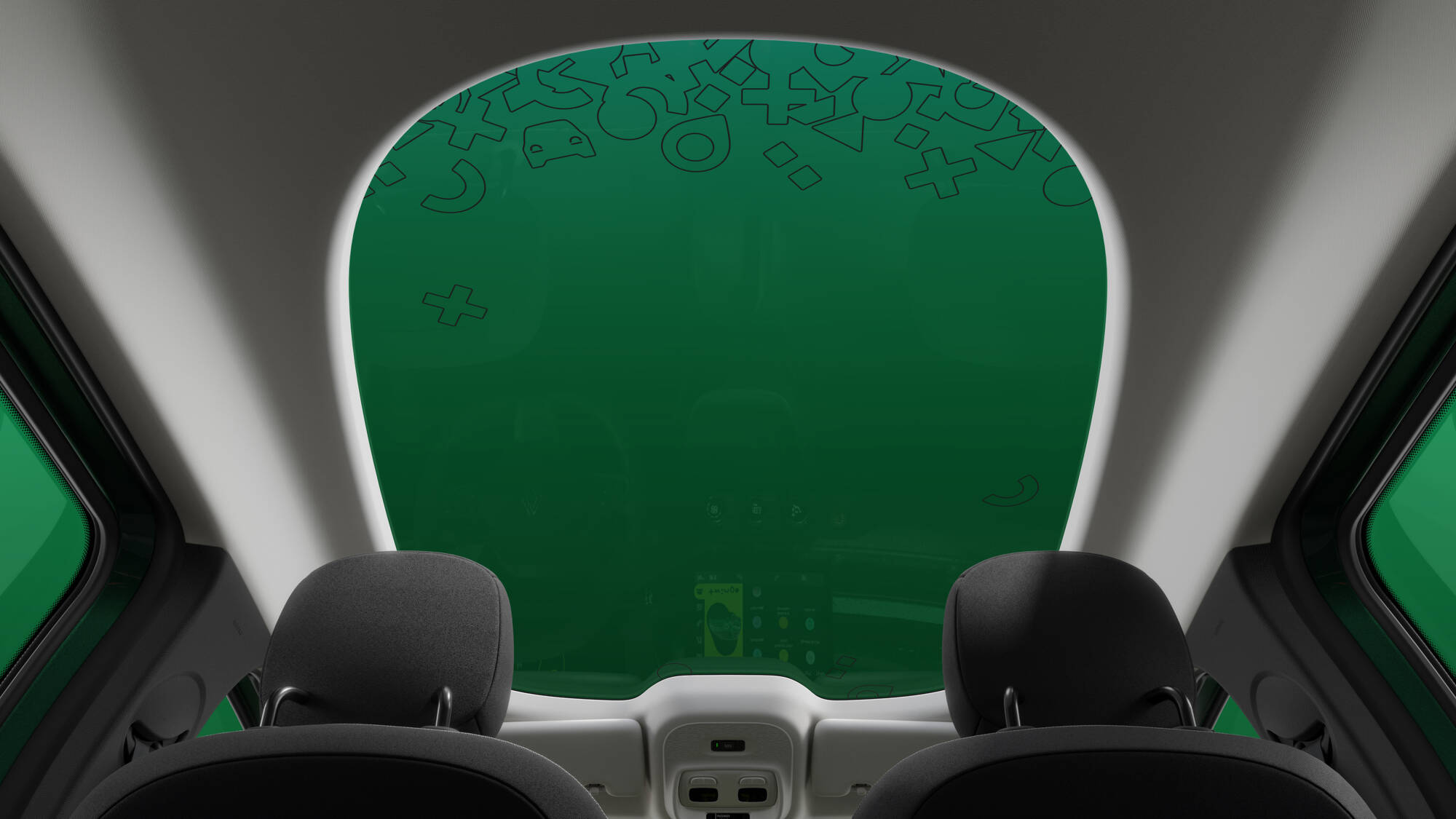
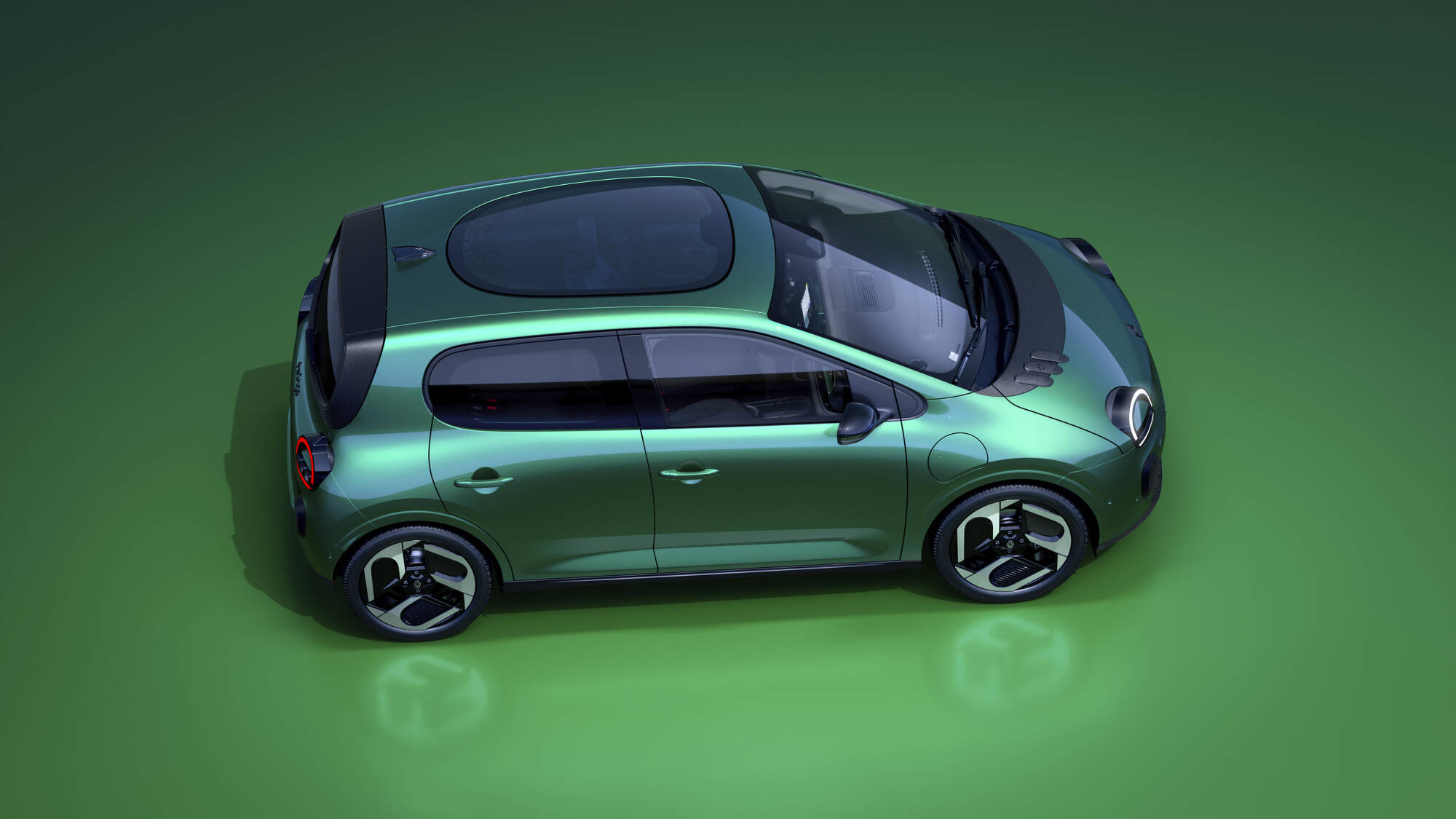
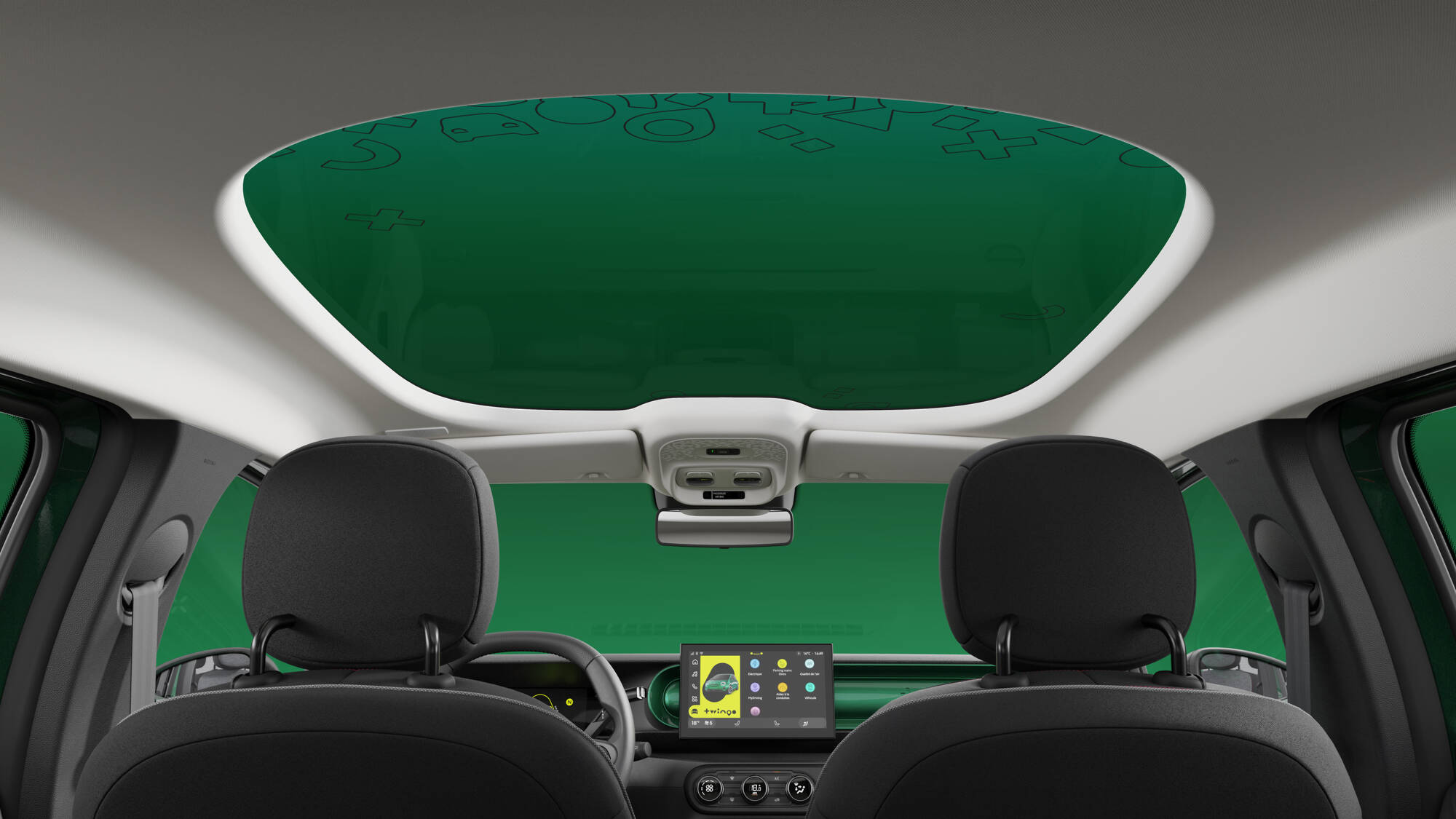
Furthermore, just a few months after its launch, the Twingo introduces a new feature: the debut of the Twingobay panoramic glass roof, with a surface area of 0.7 square metres, thanks to a glass panel that makes the cabin brighter, increasing the sense of space both at the front and the rear. The glass’s multi-layer technology promises improved comfort in all seasons, as it filters out 99.9 per cent of UV rays and blocks most infrared radiation, whilst also incorporating a low-emissivity layer that maintains a better thermal balance in both summer and winter. The new roof will be available as an option from 13 October at a price of between 550 and 600 euros.