
Renewables +16%. But 40% more to be installed per year
The growth trajectory is positive, although the 2030 target is still a long way off. Meanwhile, the average size of projects is increasing

4' min read
4' min read
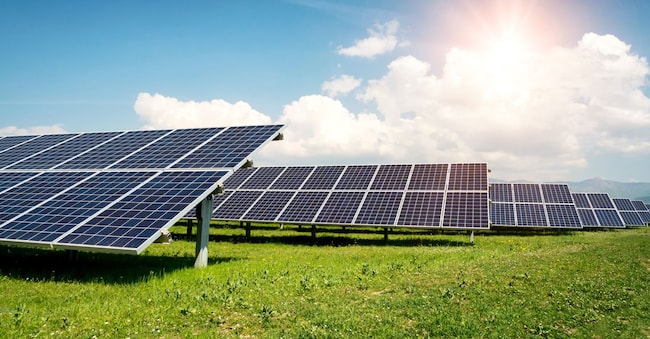
Renewables in Italy continue to run. In 2024, growth is 16% and, for the second year running, new photovoltaic installations exceed 5 GW (+15%). The average size of installations increases, with power above 1 MW, a sign of a greater focus on industrial or commercial-scale projects. New installations are distributed fairly evenly across the Peninsula (see factsheet). Wind power also marks a turnaround, after the contraction of 2023. This is the most up-to-date picture of the Italian energy transition taken by the Renewable Energy Report 2025 of the Energy & Strategy School of Management of the Politecnico di Milano, which will be presented tomorrow.
Positive signs, although still not enough to meet the trajectory required by 2030 by Pniec (National Integrated Energy and Climate Plan). The report outlines two scenarios: in business as usual, the figure would be close to 80 GW out of a target of 107 GW, while 'it would be necessary to install 40 per cent more each year than current volumes to meet the 2030 targets,' explains Vittorio Chiesa, director of Energy & Strategy. A calculation made taking into account all the regulatory measures currently in the field, including the provisional Fer X decree, pending the 'fully operational' version; the Energy Release 2.0 initiative, which incentivises energy-intensive companies; the Rid (Dedicated Withdrawal) mechanism; the Cacer Decree, for energy communities; and the Agrivoltaic Decree.
Net of the long authorisation times for plants and bottlenecks on the grid, there are reasons to hope for an acceleration: 'Terna's new Grid Development Plan 2025- 2034, which aims to increase transport capacity and resolve grid congestion, and,' adds Chiesa, 'the more than 161 GW of requests for new capacity from renewable sources expected in 2024. That is more than double the Pniec targets. At least on paper, the market has already lined up the projects to hit the target'.
The New Normal
.Davide Chiaroni, deputy director of Energy & Strategy explains that 'Italy seems to have reached a new state of equilibrium, thanks to photovoltaics, which acts as a locomotive with over 6 GW of new installations'. Wind power sees 612 MW of new power (+26%), but struggles more, 'both because the size of the investment required is much larger than photovoltaics, and because it is more opposed by communities as it is perceived as having a greater impact on the territory,' Chiaroni adds. Having a balance between the sources would be fundamental to guarantee more stability to the system. On the other hand, according to the report, which analyses the forecasts of the renewable park in the main Eu countries to 2030, in Italy wind power stands at 26%, compared to 42% in Germany and 50% in France and Spain.
Business involvement
.In order to achieve the objectives of energy production from renewable sources, it is crucial to also involve the industrial supply chain, both through the construction of new plants and with modernisation work to increase the efficiency and productivity of those in operation. A path that would also lead, in the medium term, to mitigating energy costs for companies: 'the great advantage of renewables for companies lies in self-consumption,' Chiaroni explains, 'which leads to a reduction in purchases from the grid. The other aspect is the stabilisation of the price: if we were able to have a prevalence of renewables in determining the price of energy, we would have a lower final cost, and above all a more stable one because it is independent of tensions on gas prices'.

