
Renewables, Ligurian companies demand more supply
Confindustria Genova sounds the alarm: wind farms would have to produce four times as much to meet demand.

3' min read
3' min read
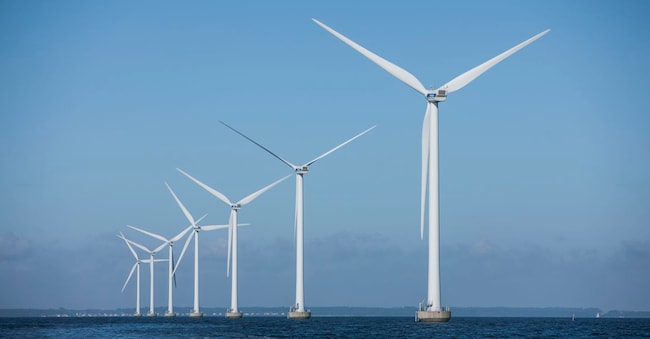
The Ligurian wind farms 'produce 133 megawatts of renewable energy, concentrated mainly in the province of Savona, but the requests coming, in various capacities, from companies, and awaiting authorisation, are for 500 megawatts, so four times as much. And this is because the authorisation process is long and complicated'. Launching the alarm is the president of Confindustria Genova, Fabrizio Ferrari, who adds: "Liguria is the leading producer of wind energy in northern Italy; the companies that have made requests, however, are at a standstill", due to bureaucratic delays.
"Obviously," he continues, "the regulations have to be there, it's not like one can place a wind farm or photovoltaic plant anywhere, but, as always, the key point is time: it's something that, once passed, you don't get it back. And it has a cost that is higher than any other variable. Authorisations, when they arrive, arrive very slowly and this, of course, creates problems for companies' planned investments. We hope, therefore, that the authorisation procedures will be simplified.
Not to mention that, while wind power is not badly ranked in Liguria, but still 'in the middle of the ranking among Italian regions, for photovoltaics and hydro we are in the even lower part of the ranking'.
The reflection of the leader of the Genoese industrialists comes at a time when, he says, 'energy costs are on the rise again; perhaps not as high as in the recent past, but the trend is that of a price that remains high compared to other countries. The latest figure we have, for Italy, is 115-120 euro per megawatt hour, while in countries like Spain, France and Germany it goes from 60 euro, which is almost half, to 80. In short, there is quite a difference'.
This is the focus of a series of evaluations which, says Ferrari, apply to Ligurian companies as well as those throughout Italy.


