
Renewables, half of the projects under authorisation are agri-voltaic
The snapshot of the Renewable Energy Report 2026 of the Politecnico di Milano: for the option that combines energy and agriculture, costs are 5-15 euro per MWh higher

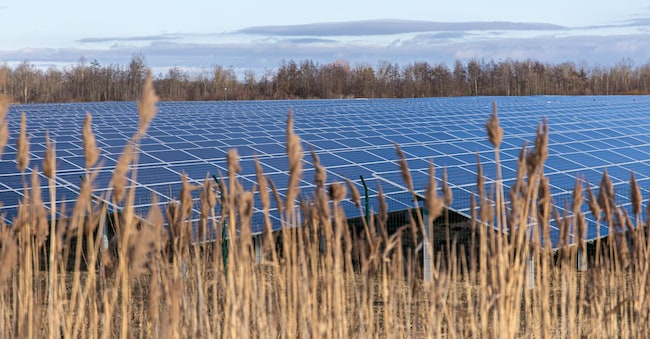
Agri-voltaics in Italy is experiencing strong interest: more than 50 per cent of the applications currently undergoing Environmental Impact Assessment (EIA) concern projects that combine energy production from photovoltaic panels and agricultural activities. This is one of the first steps in the authorisation process, which includes a physiological future mortality rate. Out of 1,918 applications (for a total of 113 GW), 1,032 (46.4 GW) are for agri-voltaic parks, 642 (42.1 GW) for onshore wind projects, 219 (16.6 GW) for photovoltaics, and 22 (8.1 GW) for offshore wind.
This is one of the aspects emerging from the Renewable Energy Report 2026 prepared by the Energy & Strategy of the School of Management of the Politecnico di Milano. A study that annually photographs the state of renewables in Italia. And also lines up its costs.
The cost of generation
Interestingly, the report points out that the generation cost of an advanced 30 MW agrivoltage plant equipped with trackers (sun trackers) is characterised by high variability: the Lcoe (levelised cost of energy) is between 60 and 90 euros per MWh. Calculated that for a conventional 30 MW photovoltaic plant, the Lcoe is between 55 and 75 euros per MWh, the agri-voltaic option has a higher cost of about 5 to 15 euros per MWh for the same producibility.
Interest in this technology has been driven by the incentives linked to the NRP: a capital contribution of up to 40 per cent of expenditure and an incentive tariff, in the form of a contract for differences, for 20 years on energy fed into the grid. The resources, 1.1 billion, have supported 1.76 GW of projects participating in the auction (a portion, next to the share reserved for the smallest) and now the recipients will have to sign the contract with the GSE before 30 June and then put the plant into operation within 24 months. The next incentivised mechanisms will be common to other photovoltaic plants, such as Fer X, which are not exactly favourable at high prices given the results of the first auction (weighted average auction price with respect to allocated power of 56.825 euro per MWh).
The role of solar
If agro-voltaics appears to be one of the technologies emerging in the transition process, it should be emphasised that it is photovoltaics that is pulling the strings of renewables in Italia. The Renewable Energy Report 2026 recalls how in 2025, after three years of growth, installations of new capacity in Italia decreased: 7.2 GW of new power, down by 6% compared to 7.6 GW in 2024 (of which 5.6 GW of solar). Among the causes: diffusion of small size, end of the incentive mechanism of on-site exchange, waiting (for large size plants) for the results of the first Fer X Transitional auction, published in December. However, decarbonisation targets, together with a renewed need for energy autonomy, do not allow for a slowdown.


