
Renewables, tariffs too low for operators' costs
According to the Renewable Energy Report 2024 prepared by the Energy & Strategy of the School of Management of the Politecnico di Milano, after the record numbers of 2023 the development of installed capacity is likely to slow down

3' min read
3' min read
After a run driven by photovoltaics (under 110% bonus effect) last year, the development of installed renewable capacity in Italy risks slowing down. This is the message of the Renewable Energy Report 2024 prepared by the Energy & Strategy of the School of Management of the Politecnico di Milano and presented yesterday. A few numbers: in 2023 our country saw a record leap in the installation of renewable energy capacity: 5.7 GW, almost entirely photovoltaic (5.2 GW), for a total installed capacity of 69 GW (see also the Observatory on Green Transition on the Sole 24 Ore website). A leap that, according to the report, nevertheless does not allow us to be aligned with the objectives set by the Pniec for 2030 (9 GW per year of installations).
Large Installations
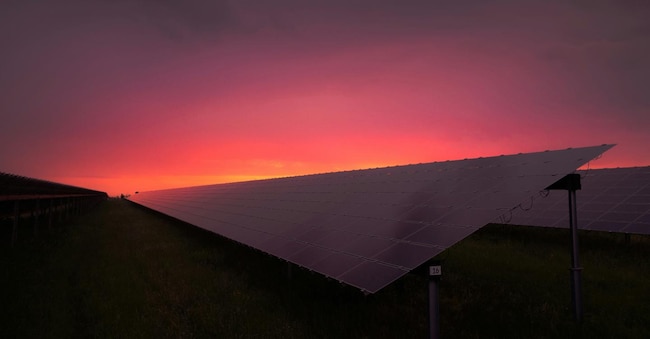
.According to the study, the reason is the difficulty of developing the segment of large-scale plants, squeezed between non incentivising decisions on the one hand - for example the recent Dl Agricoltura, which bans traditional photovoltaics on productive agricultural land, or the moratorium proposed by the Sardinian regional government on the development of renewables - and an auction system for the remuneration of energy produced that is no longer in line with the real cost of the plants and the market trend in energy prices. In fact, small-scale photovoltaic systems account for more than 95 per cent of new installations. The risk is that the growth of the three-year period 2021-2023 will vanish and with it much of the ancillary industry: photovoltaics and wind power in fact contributed to generating a turnover of 9-10 billion euro in 2023, 60% of which remained with companies located in Italy, and another 20% in any case in Europe.
"Large-scale plants are not growing," confirms Davide Chiaroni, deputy director of Energy & Strategy and head of the study: "This is also because the auctions established by the Fer 1 ministerial decree of 2019 have never represented a real accelerator of the market, despite no less than 13 calls for tenders opened since then: most of them, due to a combination of factors such as the complexity and length of the authorisation systems and the inadequacy of the auction base for tariffs, have been deserted or almost deserted.
Fer X and eligible areas decree
"Two elements can change the scenario to 2030: the launch of the Fer X decree, with sufficient incentive levels, and the identification of eligible areas with a dedicated decree. If these two instruments are passed quickly, to take advantage of the years between now and 2030, we could reach the targets of 7 GW of photovoltaics and 2-2.5 of wind power per year. If, on the other hand, they are delayed or there are further constraints on the authorisation front, we could return to low growth rates of 1-1.5 GW of solar and 4-500 MW of wind power per year,' explains Vittorio Chiesa, director of Energy & Strategy School of Management at the Politecnico di Milano. In the first case, this would amount to a total of 70 GW of new installations. However, these numbers are a far cry from the commitment signed by Italy at the last G7 summit to triple installed capacity: if it was 69 GW at the end of 2023, it should reach 207 GW in 2030.
Technology costs
.A crucial aspect to consider is the levelised cost of electricity (Lcoe) for large plants, which according to the analysis conducted by Energy & Strategy is expected to be between 65-80 euros per MWh for photovoltaics and between 90-100 euros per MWh for wind power. Values that rise to 95-115 euros per MWh for agrivoltaics and 115-135 euros per MWh for fixed offshore wind and 150-180 euros per MWh for floating wind. However, if one adds the need for remuneration of the capital of those making such an investment, the Lcoe adjusted, the threshold value, for it to be profitable increases by another 5-10 euros per MWh for each additional percentage point of capital cost to be remunerated. "The auctions that have been applied lately have often offered very low tariff values compared to the threshold remuneration that operators seek," comments Chiesa. As stated in the study, with an auction base set at 70 euros per MWh, the Fer 1 decree of 2019 did not produce important results, and only in the last auction, with the value raised to 77.6 euros per MWh, was a larger participation of plants seen, allowing the start-up of projects for around 1 GW. Hence the need to adjust the new tariffs upwards in the long-awaited Fer X decree.


