
Renewables, which countries have the most capacity (and how Spain fares)
Globally, China comes first, followed at a distance by the USA, Brazil and India. In Europe, Germany emerges second

3' min read
3' min read
Renewables, which countries have the largest installed capacity? In the aftermath of the 28 April blackout in Spain and Portugal, which led some to point the finger at clean energy - particularly important in those countries in electricity generation - let's see in which parts of the world the concentration of these technologies is highest. According to the latest updates from Irena (International Renewable Energy Agency), related to 2024 data, China remains in first place with 1,878 GW of clean sources, followed by the USA (447 GW), Brazil (214 GW), India (209 GW), Germany (184 GW), Japan (154 GW), Canada (111 GW), Spain (92 GW), France and Italy (each on 76-77 GW).
Solar and wind power
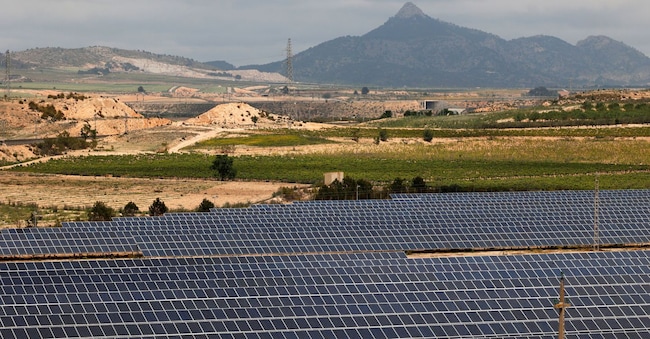
.The photovoltaic capacity ranking still sees China dominating, with 888 GW of cumulative installed capacity in 2024, followed closely by the USA (177 GW), India (97 GW), Japan (92 GW), Germany (90 GW), Brazil (53 GW), Spain and Australia (38 GW), Italy (36 GW), and South Korea (27 GW). Solar photovoltaics increased by 451.9 GW in 2004 to 1,865 GW. China alone added 278 GW to the total expansion, followed by India (24.5 GW).
The world's second largest technology is wind power, and the countries with the most capacity are almost the same: Irena's top 10 still records China (522 GW), followed by the USA (153 GW), Germany (73 GW), India (48 GW), Brazil (33 GW), Spain (32 GW), the UK (31 GW), France (24 GW), Canada (18 GW) and Sweden (17 GW). Globally, the expansion of wind energy has slightly decreased, reaching a total capacity of 1,133 GW in 2024.
The European ranking is inferred from the world ranking. While Germany emerges as the European champion of wind and solar power, Spain is the second power
Idroelettrico
In the field of hydropower, China again ranks first in terms of capacity, followed by Brazil, the USA, Canada, Russia, India, Norway, Turkey, Japan and France. The total installed capacity (excluding hydro for storage) reached 1,283 GW in 2024, showing a remarkable recovery from 2023, again driven by China. Ethiopia, Indonesia, Nepal, Pakistan, Tanzania and Vietnam each added more than 0.5 GW.


