
Renewables: authorisation of projects totalling 144 GW has been on hold since 2020
Figures from Regions2030: 35 GW of wind power projects are awaiting the national environmental assessment

Renewables: since 2020, projects totalling 144 GW of capacity have been on hold pending authorisation in Italia; 25 GW, on the other hand, have been given the go-ahead, whilst 17 GW have been rejected or shelved. Over the last six years, applications totalling 186 GW have been submitted: 119 GW for solar power and 67 GW for wind power. These figures were presented by the Regions2030 Observatory, run by Public Affairs Advisors and Elemens.
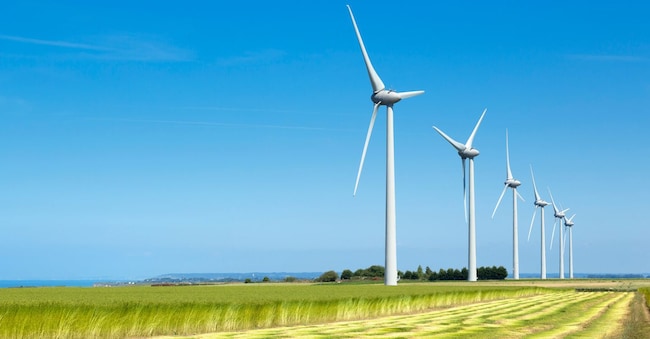
Wind power is facing particular difficulties, with 35 GW currently on hold during the national environmental impact assessment (VIA) process, compared with 28 GW of solar power, and the Ministry of Culture issuing a negative opinion in 91 per cent of cases (for onshore greenfield projects). For projects stalled in the VIA process, the hold-up appears to stem from the high number of projects submitted over the years – as highlighted by the Observatory – combined with the limited resources of the PNRR-PNIEC Commission, and, despite a recent acceleration, the possibility of legal disputes. The figures also highlight the Ministry of Culture’s hold-up: as mentioned, it rejects almost all wind power projects (with the exception of repowering, where only 43 per cent of opinions are negative), and 79 per cent of solar projects. The disagreement with the PNRR-PNIEC Commission requires the intervention of the Prime Minister’s Office: in recent years, it has cleared the way for almost 8 GW; however, according to the Observatory, 8 GW of solar and 5 GW of wind power projects currently remain pending a decision that normally takes over 12 months.
Regions2030 also highlights the progress made: between 2021 and 31 May 2026, Italia installed 27,785 MW of renewable energy capacity, mainly thanks to small-scale solar power systems (15,954 MW), followed by utility-scale systems (8,518 MW), wind power (3,004 MW) and other sources (309 MW). Having exceeded the interim target, there is still a shortfall of 52,216 MW to reach the 2030 target of 80,001 MW. “To meet the Pniec targets for 2030 and reduce energy bills, we need a significant acceleration in renewable energy deployment. We cannot allow this situation to continue to slow down the energy transition and the country’s competitiveness. A decisive change of pace is needed, with extraordinary measures if ordinary ones prove insufficient,” commented Aurelio Regina, Vice-President for Energy at Confindustria.
Giovanni Galgano, CEO of Public Affairs Advisors, emphasised that, in the face of the rise of solar power, ‘we are seeing a virtual standstill in wind power. This applies both at national level – with a great many projects currently under review by the PNRR-PNIEC Commission – and at regional level. There is undeniably a hostile or cautious attitude towards wind power, which is perceived as intrusive by a large proportion of local areas. However, without the contribution of wind power, it will be impossible to achieve the renewable energy capacity targets the country needs.”
“Analysing where projects have stalled has helped us to understand the bottlenecks and design flaws in the planning and authorisation process,” added Tommaso Barbetti, a partner at Elemens. “Among the wealth of data, I am struck by one figure in particular: the Council of Ministers finds itself having to rule on a project’s Environmental Impact Assessment (EIA) in almost half of all cases.” This is an exceptional procedure, in which the Presidency acts as an arbitrator to resolve disagreements between MASE and MIC. But this happens almost every time, typically due to a string of rejections from the latter: so the exception has become the rule.”


