
Renewables, Marche: no authorisations for wind power projects from 2020
Councillor Bugaro: “The windy areas are limited to two parts of the Marche Apennines which are of great environmental and scenic value”

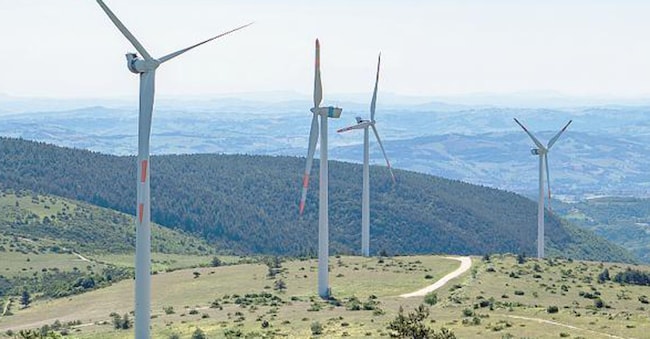
In the Marche region, the burden-sharing target of installing 2.3 GW of new capacity from renewable sources by 2030 is still a long way off. According to data from the REgions 2030 Observatory, compiled by Elemens and Public Affairs Advisors, four photovoltaic projects totalling 108 MW and eight wind projects totalling 470 MW are currently on hold pending assessment by Mase. The Marche Region, which in recent months has rejected four wind power projects in the Apennine area, is currently assessing, through the single regional procedure (PAUR), further projects totalling 235 MW of solar power and a further 90 MW of wind power; however, these have little chance of becoming operational plants. The strategic direction announced by Palazzo Raffaello is reflected in the figures: 182 photovoltaic plants authorised between 2020 and last May, 165 of which were small-scale (4–5 MW), and no wind farms during the same period.
“I cannot deny that there is strong opposition to wind farms,” explains Giacomo Bugaro, Regional Councillor for Economic Development, “as the windy areas are limited to two parts of the Marche Apennines which are of great environmental and scenic value. And the distinctive character of our hilly landscape also faces resistance to the installation of solar panels in agricultural areas.” The choice is a deliberate one: to make solar power the main source of energy production and to achieve the shared European target. But there is a risk of progress being slow, given that, compared to the 2026 target of 930 MW, there is currently a shortfall of 114 MW – a figure that rises to 1.68 GW when considering the final target.
“The Marche region, as well as failing to excel in terms of the approval of submitted projects,” explains Tommaso Barbetti, a partner at Elemens, “has also failed to attract the market’s interest: only in Trentino, Valle d’Aosta and Umbria have fewer applications for authorisation been made in recent years. The region is not vast and has its own particular characteristics, but the business environment, which is perceived as unfavourable, may also have played a part.”
To date, energy produced locally from renewable sources covers less than a third of the region’s annual consumption (2,381 GWh compared with 7,400 GWh), despite the boost provided by solar energy, which makes the region the one with the highest number of solar installations per capita: there are a total of 59,000 installations generating 1,602 GWh annually, accounting for 67.3 per cent of the green energy produced in the region.
A study by the Polytechnic University of the Marche highlights the potential to double the amount of land available and suitable for photovoltaic installations, bringing it to 900 hectares (approximately 0.1 per cent of the region’s total land area). More rooftops in industrial and urban areas, more ground-mounted installations in derelict areas – provided that bureaucracy or local protests do not intervene, as they have previously scuppered photovoltaic projects, even when located within disused quarries. As for other renewable sources, wind power contributes 27.8 GWh; hydropower has been almost fully utilised for several years and currently produces 255.1 GWh (-55.1% between 2024 and 2025), thermoelectric power generates 495.2 GWh, whilst there are no high-enthalpy geothermal plants.

