
Renewables, nuclear and gas: the system seeks the right energy mix
At the Trento Festival of Economics the protagonists of a crucial sector for the functioning and prospects of a country like Italy

3' min read
3' min read
The energy transition must take us to net zero emissions in 2050. The ambitious target has been put in black and white by Europe. For the rest of the world, there is an increasingly uphill negotiation attempt. The challenge remains to slow climate change and keep the temperature increase to 1.5°C compared to industrial times. While the goal is clear, the challenges, to be faced pragmatically every day, are many. Geopolitical, political, structural, industrial. The war in Ukraine and the Russian gas blockade, the Trump administration's retreat on the environment and the announcement of the exit from the Paris Agreements, the recent Spanish blackout and the resilience of networks, the difficulties of European and Italian companies grappling with high energy prices and environmental burdens that make them lose ground in the global competitive scenario.
The energy transition must respect safety and cost requirements: everyone agrees that it is a road that cannot be travelled with just one technology. The system is therefore looking for the right mix that includes renewables, gas, new technologies, from hydrogen to nuclear, but also decarbonisation of transport and efficiency in buildings. In addition, of course, to sustainability actions, also in companies, which must meet increasingly stringent ESG criteria. All of this will be discussed in the programme of events that the Trento Festival of Economics, from 22 to 24 May, is dedicating to the themes of energy, circular economy and sustainability. Trying to highlight the most effective solutions and strategies.
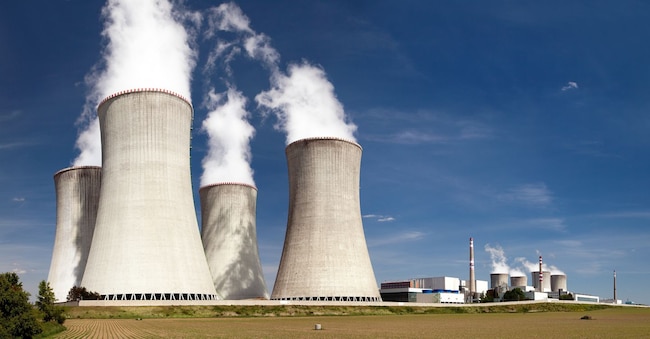
The watchword remains: diversification. And while the race for renewables is continuing - with 7.4 gigawatts (GW) of new power installed in 2024 and 41.2% coverage of electricity consumption -, even with the need to accelerate to reach the 131 GW of total capacity by 2030 as indicated by the Pniec, gas remains fundamental - with the strengthening of the relationship with Algeria, our main supplier, and the increase in LNG (liquefied natural gas) imports - as well as the source that sets the price of electricity. Looking ahead, the NRP is pushing for the development of hydrogen in the medium term, while in the long term the government has turned a spotlight on new-generation atomic energy, with initiatives such as the National Platform for Sustainable Nuclear Power and the enabling act that bears the signature of the Minister for the Environment and Energy Security, Gilberto Pichetto Fratin, and must now be examined by Parliament. With the knowledge that the solutions related to this technology are still some decades away.
The issue of the energy mix, which must be remodelled without ideologies but in a pragmatic way to meet the country's needs, therefore remains fundamental and is at the centre of the energy debate that will bring the protagonists of the sector to Trento.
23 MAY 2025

