Energy

Renewables, record growth. Birol (IEA): 'The world also owes this to China'

Tripling capacity by 2030, as stipulated in the Cop28 commitments, is possible according to the International Energy Agency (IEA). The director highlights how Beijing is driving the installation boom and falling costs

by Sissi Bellomo

4' min read

4' min read

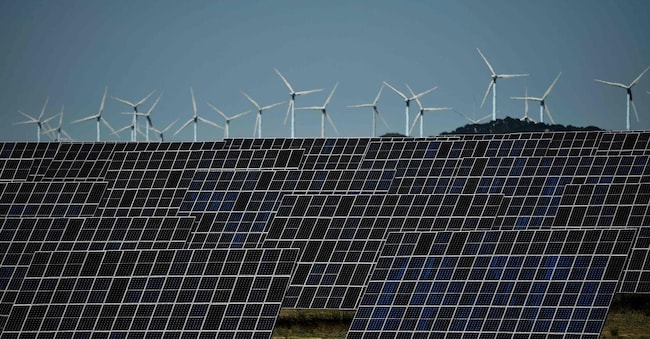
The goal of tripling electricity generation capacity from renewable sources by 2030 is within reach, after a 'spectacular' year for the sector. And the credit should at least partly be given to China, which "to be honest is doing the rest of the world a service", not only because it is driving new installations but also because it is primarily responsible for the fall in costs, which makes green energy increasingly competitive with fossil fuels. This is how Fatih Birol, director of the International Energy Agency (IEA), sees it, as he shared and commented in advance with Il Sole 24 Ore on the results of the latest report on renewables produced by the OECD body.

The report, published on Thursday 11, dwells on one of the main commitments signed by the 198 countries that attended Cop28 in December, and its conclusions are encouraging: "We are on the right trajectory," Birol summarises. "Even if we just apply current policies, we expect the capacity to produce electricity from renewables to increase by two and a half times by 2028," the year at which the report's forecasts stop. The goal of tripling by 2030 to a total of 11,000 gigawatts worldwide is therefore 'achievable'.

Loading...

What is needed, however, is for governments to play an active role, following up on the commitments made in Dubai. And renewables also need to take off in emerging countries, where financing projects has become even more difficult with rising interest rates: "Steps are needed in Africa, Latin America, Asia," urges Birol.

The IEA will be vigilant to ensure that the promises of Cop28 are not betrayed: 'We have started monitoring the actions that will be taken by every single country in the world,' Birol anticipates to Il Sole 24 Ore. 'We will start with renewables, but we intend to address all the goals of Cop28, including those on energy efficiency and distancing ourselves from fossil fuels,

On the renewables front, the shift in gear recorded in recent months invites hope. "2023 was a spectacular year, a milestone indeed,' enthuses the director of the Paris-based agency. 'In just one year, global capacity grew by 50 per cent, i.e. by more than 500 Gigawatts: something equivalent to the entire electrical power, from all sources, installed in France, Spain and Germany combined.

However, the sector could grow even faster, were it not for the many obstacles that still hold it back: from lengthy authorisation procedures to the inadequacy of networks, which slows down the connection of new plants, causing (even in Europe and North America) delays that are measured in years.

In its report, the IEA points out that more than 3,000 gigawatts of solar and wind power plants around the world are still "in the queue", waiting to be connected, half of which are at an advanced stage of development: "enough to almost double the current installed capacity".

Furthermore, to overcome the intermittency of energy from sun and wind, more should be invested in storage systems: the only solution to increase the utilisation and not only the generation capacity of 'green' sources, ensuring less reliance on fossil fuels.

The IEA report contains very optimistic forecasts on the penetration of renewables: in the baseline scenario, global capacity will grow by 3,700 GW over the period 2023-2028, solar and wind will overtake hydro this year, coal-fired generation next year, and nuclear by 2026. In 2028, it says, the share of generation will be 25 per cent globally, twice as high as today.

Already now, the Agency estimates, 96 per cent of new onshore photovoltaic and wind power plants (utility scale) have lower generation costs than new gas or coal power plants. Three quarters are more competitive than existing fossil power plants.

The IEA is hoping for soaring development everywhere in the world. But it recognises that the most powerful engine for the energy transition is China: 60 per cent of the growth in renewables expected by 2028 will come from here, a share similar to that observed last year.

The European Union, the United States and Brazil also recorded unprecedented increases in 'green' capacity in 2023, concentrated mainly in solar photovoltaics (while the wind industry, especially offshore, is suffering). But the pace of growth exhibited by Beijing is jaw-dropping.

The Asian country last year added solar capacity equivalent to what the whole world had installed in 2022 and its wind power capacity increased by 66%, in what the IEA calls an 'extraordinary acceleration'. The results exceed even those planned by the Chinese government itself: according to the IEA, the Dragon is on track to meet its renewables targets as early as 2024, a full six years ahead of schedule.

China's trump card, as is well known, is its very low development costs: an advantage that in turn stems mainly from the almost total dominance it has gained in the renewables supply chain, from raw materials to components.

Birol urges not to focus only on the negative aspects of the situation. "Aiming at supplier diversification is important, but a fair balance that also takes costs into account should be found. And Beijing's dominance in renewables has helped to bring them down. "In a world governed by free trade if you give consumers the choice of the cheapest option, the choice will fall on clean energy."

Copyright reserved ©

Brand connect

Loading...

Newsletter

Notizie e approfondimenti sugli avvenimenti politici, economici e finanziari.

Iscriviti