
Renewables: the Calabrian bottleneck – plenty of projects but few construction sites

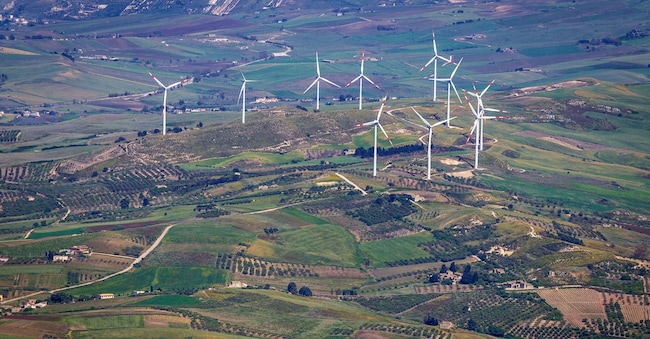
Calabria’s renewable energy sector is caught in a paradox. It has a substantial installed capacity, strong momentum for new projects and the potential for an industrial leap forward. Yet, from plans to connected plants, progress towards 2030 remains slow. The regional government led by Roberto Occhiuto, with Marcello Minenna also serving as regional councillor for energy, faces a twofold challenge: to support solar, wind, hydro, biomass and energy storage; and to avoid a regulatory jungle of immature projects, legal disputes, local opposition, restrictions and permits obtained more for resale than for actual construction. The regional government aims to strengthen its links with Terna, the distribution network operator, the Ministry of the Environment and GSE. The aim is to create an integrated information system to bring together authorised plants, storage facilities, projects and suitable sites: fewer projects left in the dark, more coherent siting decisions, fewer conflicts. In short, to streamline the process to avoid bottlenecks.
Meanwhile, the renewable capacity already installed and in operation totals 3,346.72 megawatts: onshore wind accounts for 37 per cent, solar for 30 per cent, hydroelectric for 27 per cent and biomass for 7 per cent. However, the new capacity still needs to be built: an additional 3,173 megawatts by 2030. Since January 2021, 546.13 megawatts have come online, representing 45.28 per cent of the 2026 interim target and just 17.21 per cent of the final target.
There is no shortage of projects. There are 63 applications for single authorisation. In addition to these, there are 11 PAUR procedures. The market is looking to Calabria, but the process has to contend with a complex landscape and lengthy procedures. Over the past five years, 340 megawatts have been authorised: of these, 194.5 megawatts have progressed to at least the construction start-up phase and, within this figure, 168 megawatts have already been completed. This leaves 145.5 megawatts authorised but with no work yet started, and 26.5 megawatts where work has started but has not yet been completed.
The data confirms the disconnect: authorisation does not mean construction; construction does not mean connection; and connection does not always mean adhering to the energy route. Once the licence has been granted, another phase begins: financial closure, land acquisition, procurement, the construction site and further approvals. Certain procedures, such as those relating to seismic safety, require detailed design plans that were not presented at the inter-agency consultation. Consequently, the project remains formally ready but cannot proceed to the construction stage.
The situation in Calabria presents further obstacles: landscape protection measures, hydrogeological restrictions, geomorphological instability, wooded areas, Natura 2000 sites, communal land rights and land fragmentation. Added to this are opposition from local councils, negative opinions, legal disputes and statutory time limits. Every plant represents a balance between energy, the local environment and social acceptability.


