
Renovis aims to produce heat from time-managed electricity
The company brings together storage systems, energy management systems and heat pumps to dribble out the rising costs of fossil fuels
Key points
While the European market for battery storage systems (Bess) is growing - up 45% by 2025 compared to 2024 - the geopolitical situation in the Strait of Hormuz has created strong volatility in the EU gas price, with rises in the order of 10-20%. And in a country like Italia, where more than 60% of industrial thermal processes still depend on gas, this translates directly into an increase in the cost of heat.
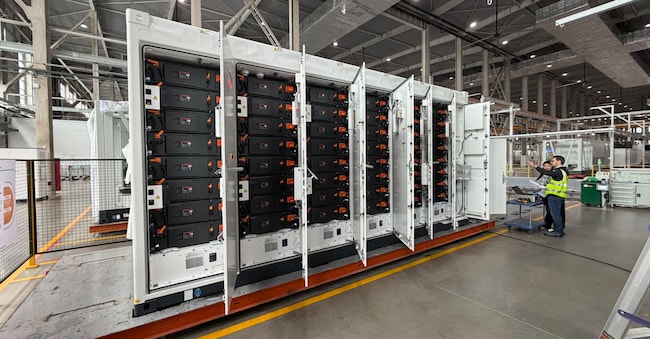
It is in this context that the energy service company Renovis, has decided to focus on an alternative model: producing heat no longer from fossil fuels, but from time-managed electricity. 'The integration of storage systems, energy management systems (Ems) and industrial heat pumps makes it possible,' explains Alessandro Brizzi, the company's general manager, 'to exploit energy available at the most convenient times to generate process heat, even with Pun (single national price) at or close to zero.
Both technological and economic advantage for industry
The advantage, he continues, 'is not only technological, but economic. The storage system makes it possible to buy or use energy when the cost is lowest or when it is available from renewable sources, and then make it available when needed. The heat pump, in turn, uses this energy to generate process heat, even at high temperatures, replacing traditional boilers. The key element is efficiency: thanks to the coefficient of performance (Cop), more units of heat energy can be generated for each unit of electrical energy consumed. This means that the economic benefit of electrical arbitrage is amplified: not only is cheap energy purchased, but it is multiplied into useful heat. The result is a progressive decoupling between the cost of heat and gas, with a reduction in exposure to fossil fuel volatility, and an optimisation of one's energy supply on an hourly basis, exploiting market dynamics and self-production'.
Compared to a heat pump fed directly from the grid, Brizzi continues, 'the integration of a battery storage system allows the cost of the electricity used by the pump to be significantly reduced by using the cheapest time slots. The arbitrage effect is further amplified by the heat pump's Cop, as every cheaply purchased kilowatt-hour of electricity is converted into more kilowatt-hours of thermal energy. In particularly favourable applications, this can translate into a reduction in the cost of the thermal energy produced in the order of 30-40%. More than a new technology, it is the intelligent integration of existing systems: electrochemical storage, energy management systems and industrial heat pumps'
The company is working on the integration of different components
Renovis, however, says Brizzi, 'is working on the first system of this type in Italia, in an industrial context. Since the technologies are already available on the market, there is no real 'launch' programme for the system. The current activity is focused on the integration of the different components and the definition of energy management models. As far as industrial high-temperature heat pumps are concerned, we believe that the Italia market can enter a more mature phase as early as 2027. As Renovis, we are in discussions with some companies and already have heat pumps installed, of course. By September, we will be installing a 40 megawatt-hour Bess in Brescia on an industrial site; but the combination of the two technologies calibrated ad hoc to work in synergy is definitely something that goes to 2027'.


