Circular economy

Repairing goods: what changes with the transposition of the EU directive

Everything is in place for the incorporation of European regulations into the Italian Consumer Code by 31 July. New obligations for manufacturers and more extensive guarantees are expected

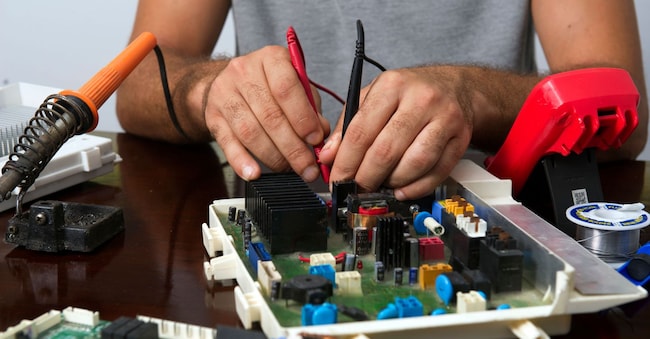
by Camilla Curcio

Credits: Pexels (Tanfeex design)

7' min read

Translated by AI
Versione italiana

7' min read

Translated by AI
Versione italiana

Everything is ready for the transposition of EU Directive 2024/1799, a measure that promotes the repair of consumer goods with the aim of reducing the premature disposal of items that are still in working order or repairable, and of encouraging consumers to use them for longer, in line with the objectives of the green transition and sustainable consumption. This will ensure a high level of protection for the public, improve the functioning of the internal market and promote a more circular economy.

At the Council of Ministers meeting on 2 July, in fact, among the implementing decrees under consideration was also the draft Legislative Decree relating to the directive – which amends EU Regulation 2017/2394 and Directives 2019/771 and 2020/1828 – and which will be transposed by inserting a specific section into the Consumer Code containing new obligations and regulatory guidelines for Italian citizens. Specifically, to facilitate the provision of cross-border services and competition amongst repairers, the legislation establishes clear rules that promote the refurbishment of goods purchased by consumers both within and outside the scope of the statutory warranty provided for by EU Directive 2019/1771. Not only that: to limit premature disposal (resulting in a decline of waste and emissions, as well as reduced demand for resources used in the manufacture and sale of new items), and to encourage the public to reuse products, it is proposed to implement legislative requirements relating to repairs, making it possible to access this service at more affordable prices.

Loading...

Among the most interesting new developments, the following certainly stand out: the creation of an online platform at European level, designed to connect consumers with repairers; the introduction of an EU form providing information on repairs; the obligation on manufacturers to repair goods for which repairability specifications are laid down at EU level; and, finally, an extension of the statutory warranty by a further twelve months should the consumer have chosen to have the defective item repaired whilst the warranty was still valid.

Member States will have to adopt the provisions by 31 July, thereby complying fully with the requirements of the directive and incorporating the new rules into the systems already in place. But let’s rewind a little and try to understand exactly what this is all about.

The assets involved

The provisions included in the new title (included in Part IV of the Consumer Code, which deals with safety and quality issues) will apply to the repair of goods purchased by consumers in the event of defects that occur or become apparent outside the seller’s liability. The goods to which the legislation refers are, essentially, ‘tangible movable goods, with the exception of water, gas and electricity’ and ‘tangible movable goods that incorporate or are interconnected with digital content or a digital service’, an element without which they are unable to function properly. Clearly, not all items are included indiscriminately within this scope: the obligation to repair applies only to those for which – under EU legislation – specific reparability requirements are laid down.

The European module

The first new provision introduced, the ‘European repair information form’, is set out in Article 127-quater and comprises seven paragraphs. According to the text, repairers may provide the form to the consumer within a reasonable period of time following the request being made and before the customer is bound by a contract for the provision of repair services. It must be made available free of charge and on a durable medium.

As you continue reading, you will notice an important detail in paragraph 3. If necessary a diagnostic service, including a physical or remote inspection of the product, to better understand the nature of the fault, the work to be carried out and to provide a rough estimate of the cost, the repairer may ask the user to pay the costs involved, having informed them of the expense in advance.

To initiate the repair, the document must contain all the necessary details. But what are they? The following details must be entered in the appropriate fields: the repairer’s identity, their address, telephone number, email address and any other contact details that enable the consumer to contact them and communicate with them quickly and effectively; the item to be repaired; the nature of the fault and the proposed repair; the price or, if this cannot be realistically calculated, the method of calculation and the maximum amount that may be charged for the repair; the time required to complete the repair; the availability of temporary replacement goods and any costs to be borne by the customer if they decide to make use of the replacement; the delivery location for the item to be repaired; the availability of ancillary services (collection, installation and transport, where offered by the repairer, or a breakdown of the costs if these are to be borne by the consumer); the validity of the form and any additional information.

The repairer may not alter in any way the repair terms specified in the form for 30 days from the date on which they provided the form to the customer. This period may also be extended if the repairer and the consumer mutually agree to do so. Once the consumer has given their consent, the repairer is obliged to carry out the service in accordance with the signed agreement. Should they fail to do so, the aggrieved party is entitled to all the remedies provided for under a standard consumer contract, ranging from termination for breach to compensation for damages.

Repairs

Article 127-quinquies focuses on the ‘obligation to repair’. At the consumer’s request, the manufacturer must repair goods for which EU legislation provides, as mentioned above, repairability specifications. That’s not all: repairers must, in fact, make available spare parts, information on repair and maintenance, and specify the period for which spare parts are available. If a repair is not possible, the manufacturer is not obliged to carry out the repair but may offer a refurbished product. Furthermore, to comply with this obligation, they may, where appropriate, entrust the refurbishment to third parties.

Paragraph 2 then clarifies other details that should not be overlooked. The repair must be carried out free of charge or at a reasonable price, and within a reasonable timeframe. Furthermore, the customer is also to be provided with a replacement product for the entire duration of the repair process. This is, of course, an item that must be returned.

If the manufacturer responsible for the repair is based outside the EU, the obligation to carry out the repair falls to the authorised representative within the European Union or the importer of the goods. If there is no importer, the distributor takes over.

As regards spare parts suppliers, they too are subject to an obligation: the goods they supply must be placed on the market at proportionate prices. Still on the subject of prices, paragraph 5 introduces another new provision: manufacturers, representatives, importers or distributors must ensure that customers have access, via a freely accessible website, to information regarding the prices charged for repairs. This is to give customers full freedom to make all necessary assessments, including, of course, the choice of which service provider to approach.

The online platform

Another significant new development concerns the national section of the European online platform for repairs, which aims to facilitate contact between service providers and customers. Repairers, sellers of refurbished goods and buyers of faulty goods will be able to register on the platform to access refurbishment. And that’s not all: this range of services is also complemented by participatory repair initiatives (Repair Café), as well as those promoted by not-for-profit organisations where people offer their skills to repair items such as computers, bicycles, phones and clothes. By 31 July 2027, the European Commission must develop the platform, for which it will also directly oversee maintenance. The service will be free for the public to use, and the platform will be managed by the Ministry of Enterprise and Made in Italy, which has been designated as the point of contact and, amongst other responsibilities, will be tasked with providing access to the section, monitoring data and removing invalid information.

Consumer information and penalties

Article 127-novies clarifies a key point. It stipulates that the websites of the Mimit, the Ministry of the Environment and Energy Security, the AGCM and the tuttoconsumatori.it portal of the National Council of Consumers and Users must publish dedicated sections containing all consumer rights and a link to the national section of the EU platform.

As regards, however, penalties – with the exception of cases where a criminal offence has been committed – any manufacturer, representative, importer, distributor or repairer who fails to comply with the prescribed obligations shall be liable to an administrative fine, for each infringement, ranging from 5,000 to 50,000 euros, taking into account the seriousness and duration of the infringement, as well as the economic and financial circumstances of the offender. In the event of particularly serious offences or repeat offences, the upper limits of the fines will be doubled. The AGCM will be responsible for investigating such infringements.

Warranty extension

The latest major development concerns the extension of the statutory warranty. Specifically, if the consumer prefers to have the goods repaired to rectify the defect rather than having them replaced, the period of liability borne by the seller will be extended by a further 12 months.

Consumer Watch

Finally, among the measures accompanying the implementation of the directive is the establishment of a ‘National Repair Observatory’. This is a useful tool for monitoring compliance with the provisions of the legislation: gathering feedback on issues encountered by the public and businesses, and helping to promote best practice in the field of repairs, can certainly help ensure that behaviour is brought into line with the law.

The Observatory will be responsible for raising awareness of the goods repair sector, monitoring trends and facilitating coordination between social and institutional stakeholders in monitoring the effects of the transposition of the directive. It will comprise representatives from Mimit, the Ministry of the Environment, the AGCM, the Union of Chambers of Commerce, the National Agency for New Technologies, Energy and Sustainable Economic Development, Istat, the Higher Institute for Environmental Protection and Research, and the National Council of Consumers and Users. In addition to representatives from the main national organisations representing the craft sector, SMEs, modern organised retail, industrial and manufacturing production, and the repair sector.

Copyright reserved ©
Loading...

Brand connect

Loading...

Newsletter

Notizie e approfondimenti sugli avvenimenti politici, economici e finanziari.

Iscriviti