
Maritime Ets and Alpine Crossings: logistics at the 2026 test
The EU ruling on the Brenner dispute with Austria, the decisions on the work on the Mont Blanc Tunnel, the entry into force of the CO2 quota system for the maritime sector

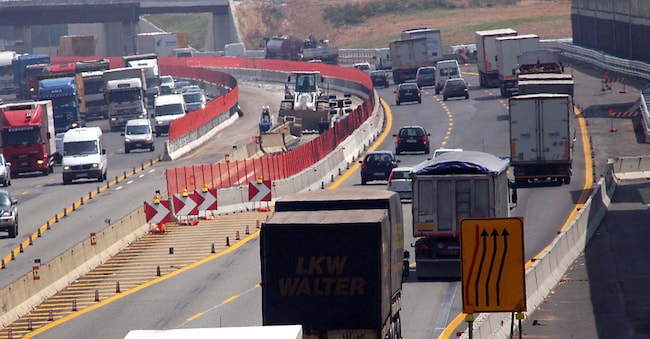
Alpine crossings and maritime Ets: two knots that will come to a head in 2026 with consequences not only for logistics but above all for business and exports.
Expected summer responses on Alpine transits
The summer should see the European Court of Justice's ruling on the appeal filed by Italia against the Austrian stoppages at the Brenner Pass, the busiest Alpine crossing with over 50 million tonnes of goods per year: stoppages that limit capacity to 50 per cent with negative impacts of 400 million euro per year.
Then there is the unknown factor of the Mont Blanc Tunnel: the Italia-France Intergovernmental Commission, which will meet again before the summer, will be able to decide, on the basis of the test sites of the last two years, whether the rehabilitation will take place with quarterly closures or whether to plan a total stop for a few years. Again, current estimates of the economic impacts are in the order of hundreds of millions per year.
According to Uniontrasporti, the problems of the Alpine crossings - with the repercussions in terms of delays, higher transport costs and therefore company margins - are an issue of competitiveness for the country, which risks being affected in exports as well as in investment choices by industrial groups positioned, or interested in positioning themselves, in Italia. About 80% of the 240 million tonnes of goods that Italia exchanges with other European countries each year pass through the crossings, the numbers say.
Maritime transport: Ets enters into full swing
The other node concerns the maritime sector. As of 1 January 2026, 100% coverage of emissions for intra-EU voyages and 50% for extra-EU voyages through the ETS mechanism is required for connections departing from or arriving in Europe. The costs are estimated at EUR 6 billion and Italian shipowners, by type of fleet and transport undertaken, are among the most exposed to have to manage the impacts.
According to the Srm study centre of the Intesa Sanpaolo group, the legislation, which was created with shared environmental objectives, shows three weaknesses: it does not incentivise shipowners to renew their fleets, it does not reinvest the resources collected in the sector and it has distorting effects on traffic. The Spanish Ports Authority presented a study in Brussels on the loss of market share by the main European ports to those in the UK and the eastern Mediterranean, such as Egypt and Turkey: one of the factors is the choice of ships to keep costs down at Ets by calling on non-EU ports. Between costs and undesirable effects, the debate on the revision of the Ets has again become central.
In this debate, according to the general secretary of Fiap Autotrasporti Alessandro Peron, Italia must insert itself with a clear national strategy developed in an interministerial table that addresses all the logistics knots.


