Trend

Company fleets, here's why the residual value issue is holding back the race for electric cars

Models with full battery drive are struggling in the short- and long-term rental sector. They suffer, in contrast to full hybrids, from day-to-day management difficulties and poor resaleability at the end of the lease

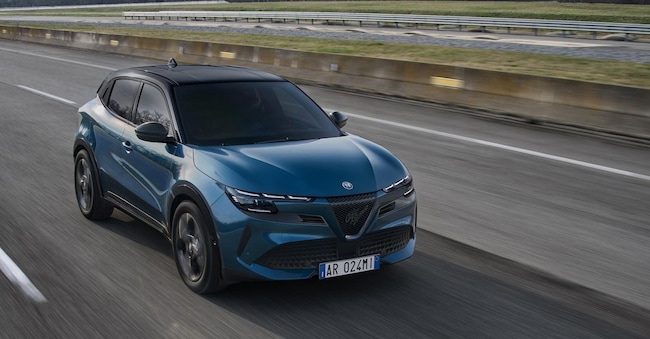
by Mario Cianflone

La Alfa Romeo Junior, crossover compatto costruito in Polonia che ha cambiato nome: fino a qualche giorno dopo dal lancio internazionale il nome di questa vettura, che rappresenta il futuro del brand italiano di Stellantis, sarebbe dovuto essere Milano, ma sulla scia di polemiche sulla provenienza della vettura innescate dal ministero delle imprese e del made in Italy ha cambiato nome in Junior. La vettura è la prima Alfa Romeo  elettrica, ma è anche mild hybrid in virtù della piattaforma Cmp. Ed è una proposta che punta con decisione sul mercato delle flotte aziendali

4' min read

4' min read

It is there for all to see. The electric car in the rental world is, at the moment, a flop. And it is especially so in the short term, but the Bevs are not doing well in the long term either. It is a fact from which to learn a lesson: it is always the consumers who decide, and impositions from above work little and storytelling by the green lobbies even less.

This is not to say that there is no need for cleaner and more environmentally friendly fleets, only that the market needs time to adapt and evolve. The armoury and Brancaleone army of the green crusade does not work and has not worked.

Loading...

This has been seen with the world's leading rental groups that have divested, or are divesting, electric fleets. Emblematic is the case of Hertz, which at the beginning of the year backed out of lithium-ion cars, including many Teslas, to acquire petrol models. Even the CEO, Stephen Scherer, who had decided to buy as many as 100,000 Teslas, resigned after a panic-stricken quarterly report: a loss of $348 million in the fourth quarter of 2023, compared to a profit of $116 million in the same period the previous year.

Let's get to the point: why don't electric cars work in rent-a-car? The answer is simple, and it didn't take a soft mobility guru to realise that if one, used to using a thermal car, arrives in Frankfurt, Catania or New York and has to rent one at the airport, one cannot have the first experience of getting behind the wheel of an e-car. And even if he were used to using a bev (and recharging it) it is still not very comfortable, with little time to even find the time needed to return the car with a full tank of energy (after finding a free pillar). With a petrol car it is a matter of five minutes not hours. And with 'rent-a-bev' you therefore end up renting a car to recharge it. In a word: absurd.
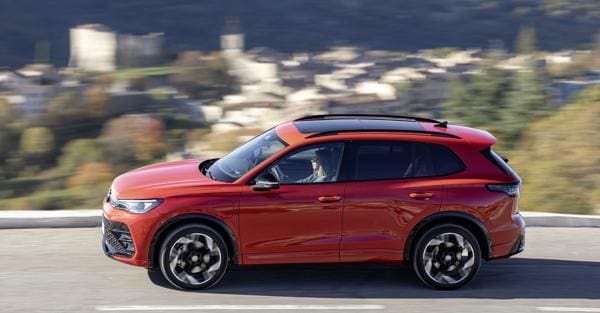
La nuova generazione di Volkswagen Tiguan con motori benzina, diesel e anche ibridi plug-in con circa 100 km di autonomia

"In fact,' explains Pier Luigi del Viscovo, founder and director of the Fleet&Mobility Study Centre, 'it is the rent-a-car that has problems, because the customer does not want the thought of recharging, especially at the drop-off point to avoid charges for not refuelling'.
The rental sector, both short- and long-term, has therefore distanced itself from the electric car and there is also a key issue: that of residual value. In fact, the business model of this sector is based on holding the value of the used car at the end of the rental cycle. It is obvious that if the market for electric cars does not take off, resale value becomes uncertain. To make matters worse, there is the price war triggered by Tesla and the 'divine' Elon Musk, who in this way has dropped an atomic bomb on the car and rental industry. If new prices fall, used cars depreciate even more, and then the bank jumps: hello bev and phev, welcome back petrol (and hybrid) cars in fleets and short-term rental.

What is the situation at this point, even in Italy? 'In long-term rental,' says del Viscovo, 'the share of Bevs is just above that of the rest of the market, while it is much higher for plug-ins, which are a compromise between being in compliance with green policies and still being able to walk. The managers who have them almost always run with the combustion engine. According to a recent survey, this is greenwashing'.

And while electrics and even phevs, the so-called plug-in hybrids, are being forced into car policy, hybrids, the full hybrids are gaining share in fleets. Here the residual value parameter is important and for years now manufacturers have been helping rental companies with discounts to compensate for the more conservative residual values of electrics and phevs. That said, what matters, however, is the fluctuation in residual value. Incentives and price list cuts put Bev cars already listed and in the fleet out of the running, with losses on the part of renters. Fortunately, these numbers are very small.

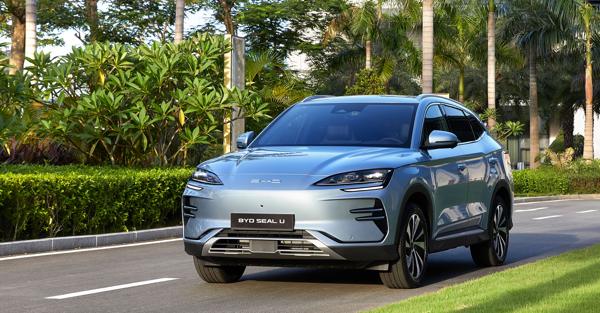
Il crossover elettrico cinese Byd Seal U: offre circa 500 km di autonomia ma è disponibile anche con powertrain ibrido ricaricabile con funzionamento dual mode

Conversely, the residual value of unplugged hybrids is higher. "The hybrid engine," continues del Viscovo, "is a success story of technology and attracts customers in every segment. That is why unplugged hybrid and full hybrid models are the cars that everyone wants".

In the fleet sector there is also, as in the private market, an increased presence of Chinese cars, which not surprisingly focus on hybrid technologies in this sector. "Fleets," says del Viscovo, "started to evaluate Chinese cars, including DR, when traditional manufacturers were not delivering, due to problems and to keep discounts down. In general, there are concrete signs that car policies are becoming less rigid'. So it remains to be understood, especially in fleets that have an employee benefits vocation, how competitive a car made in China is compared to a classic premium German car.

Lastly, in company fleets the issue of taxation is disruptive, also to support the transition to electric mobility. In fact, Anfia, Aniasa, Federato, Motus-E and Unrae have asked the government for a review of company car taxation functional to the adoption of new technologies aimed at supporting companies in the process of renewing their car fleets and accompanying the spread of sustainable zero and low emission mobility in our country.

Copyright reserved ©
Loading...

Brand connect

Loading...

Newsletter

Notizie e approfondimenti sugli avvenimenti politici, economici e finanziari.

Iscriviti