
The Resistance, courage and the example of the partisan Rossella
The memoir of Mirella Alloisio, 100 years old, who took part in the Liberation struggle in Sestri Ponente, running incredible risks with the Germans who arrested and tortured militants

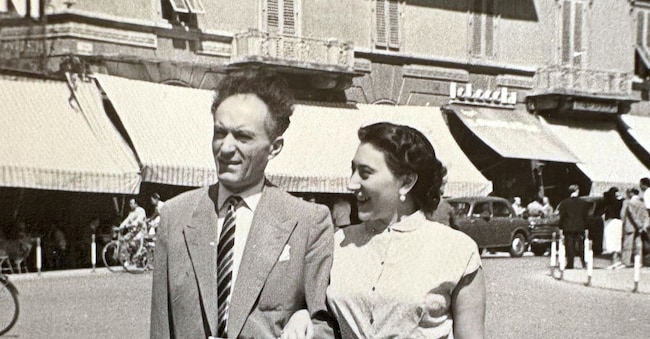
She had to change three battle names in order not to be discovered and avoid danger in the most agitated phases of her partisan experience. The last one is Rossella (after Olga and Marika) in memory of the Rosselli brothers, writes Mirella Alloisio in this short and painful testimony on the Resistance in Liguria. Dense, chosen words, without any frills, just like the experience she has been carrying for a hundred years.
Born in Sestri Ponente on 11 November 1925, the author is among the last voices of that historical moment still with us. She chose to tell her story late in life, she explains, because of the emotion that such strong feelings and memories still so vivid provoke in her. Hers was the normal life of a young girl growing up in a family like many others in the 'red' Sestri (or 'Sestigrado') full of factories: the sound of horns during the day marked the workers' time. Mirella's father was a lathe worker at the Ansaldo shipyard, as her grandfather was at Fossati. Simple people, with solid socialist ideals. Her mother looked after her, took her to the cinema and, when the time came, kept a cool head and lucidity during the Germans' searches.
Fascism and war soon disrupted the daily life of Sestri Ponente, with air warnings, the call to evacuate, and food shortages. The awareness, with the fall of Mussolini on 25 July 1943, that the celebrations had their hours counted soon made its way into the community. With the shock of the armistice and the abandonment of Italia to its fate, Mirella feels she must do something. Learning how to care for the wounded in the Sampierdarena hospital is only the first step: she fiddles with the keys of the Remington, the typewriter with which she prepares dozens of leaflets, and joins the Regional Liberation Committee. It is July '44. Arrests, torture at the Casa dello studente, reprisals by the occupiers multiply, like the trains deporting workers to Germany. Rossella has the task of liaising with the peripheral Cln, with the intellectuals and with the secretary of the Military Command. She is young, inconspicuous, and in her double-bottomed bag, philosophy and Latin books dominate the clandestine documents. However, it happens that her impetuous character causes her to go through moments of terror: one day she is chased by a drunken German who had bumped into her on a tram and caught the 'beast' that escaped her lips.
24 April 1945, after the night-time flight of the fascists from Genoa, is unforgettable: the partisans launch the insurrection, the people take up arms, convulsive hours pass, then General Meinhold negotiates the surrender of the German forces. 'I consider myself privileged to have experienced at first hand an exceptional, perhaps unique moment: that of a regular army surrendering to a people's army'. One could not say it better.
© REPRODUCTION RESERVED


