
Responsible listing: the sustainable IPO model comes from Italy
An all-female pool has theorised the principles for entering the stock market by anticipating the demands of green-minded financiers. And a Neapolitan company is the first to list itself.

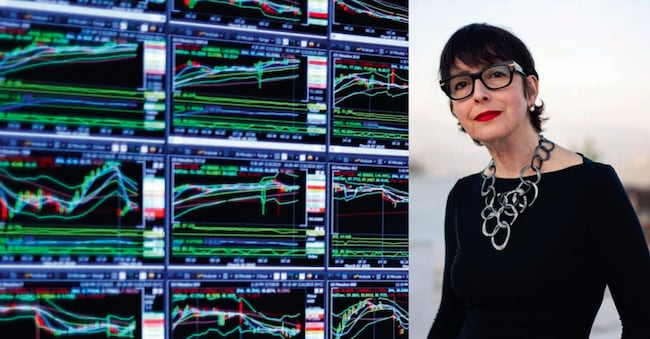
How can sustainability become such a competitive factor that it goes beyond the familiar perimeter of reports and prospectuses for consumers with long lists of how much CO2 has been saved and how it is differentiated in the company, and become a strategic lever, truly appealing and engaging, even for stakeholders? It is around this question and the concept of sustainable finance that about three years ago a pool of female professionals came up with the idea of theorising some guidelines for listing companies according to ESG factors (environmental, social, governance), intercepting a regulatory vacuum: there are currently no laws or regulations that indicate to companies how to list according to sustainability standards, although then, once on the stock exchange, the pressure from investors and banks to comply with sustainable criteria is very high and in the path of growth in the market at some point you have to comply with sustainability ratings. "So we might as well play it by ear, by presenting a virtuous situation right from the start: that is why we gave shape to the idea of sustainable IPOs,' explains Milena Prisco, lawyer partner and head of Esg at the law firm Pavia e Ansaldo, who together with Anna Lambiase, ceo of IrTop Consulting and president of CDP Venture Capital, and Mia Rinetti, equity partner of the Italian capital market, theorised this model, which has become a book, the first in the world on the subject: Sustainable IPOs. Guidelines for raising capital for SMEs.
But why should companies take this route? "For them it means proceeding, even before coming to the stock exchange, with an internal reorganisation, structuring themselves through principles of responsibility that are governance, social and environmental. The ESG factors in recent years have been pillars that have helped finance understand that investments that take into account the environmental, social and governance aspects, where conducted according to precise logic, are more profitable than others. "Let's take a concrete example: an SME that wants to be listed according to these directives should first of all contact a financial advisor who does a real X-ray of the state of the art, to understand from an economic/financial point of view where the company is at; then a legal feasibility study, and also an ESG photograph. At this point, it begins to recalibrate its business model and business plan with respect to the three ESG factors, and thus, for example, to implement governance based on inclusiveness and independence, anti-corruption and anti-money laundering practices, and attention to gender equality and green, drawing up a list of priorities for action, a road map of commitments to be undertaken and completed before and after listing, in a well-defined manner. In the stock exchange admission document that is presented to investors, it tells what has been done and will be done in sustainable investment policies as well, guaranteeing transparency to the market'. The path is not standard, but tailor-made according to the nature of the company and its starting level.
"Let's be clear, not all companies can choose a sustainable IPO: those that have a DNA that does not fall on the black list of activities related to controversial businesses, which forage for certain industries, such as arms, are interested. In terms of size, on the other hand, we have always targeted SMEs, because in theory the big ones should be stronger on these issues, and with a more mature internal structure'.
A case history comes from the Neapolitan Tecno Spa Società Benefit, a sustaintech active in the twin transition, i.e. digitisation and AI at the service of energy efficiency, and the very first Italian company to know and want to adopt the sustainable IPO model: a few weeks ago it was listed on the stock exchange, respecting the guidelines theorised by Prisco, Rinetti and Lambiase. "Setting up this type of path is from the outset an investment: for the company it is an extra item of expenditure, at least initially, but if you have the cost on a voluntary basis - at your own pace, in your own time - it has a different impact than if you are forced to deal with it when you enter into compulsory regulation, which imposes its own constraints and terms on you. And the results are immediate, there might be interested investors who are already moving with an ESG approach: if they know a company is ESG-oriented, they approach it immediately, they recognise its value. Also because choosing a sustainable IPO implies a propensity for risk avoidance: not only ethical, but also economic and financial. In times like these, of great attention to reputation, this is fundamental'. Not to mention that the spin-offs are also internal, because - for example - if a company decides to become energy efficient, not only does it have more appeal to investors, but it has an immediate internal cost saving. Or again: 'If, in need of liquidity, one turns to a bank, the latter will feel more secure, because in the presence of someone who has a monitoring system that reduces the risk of default on credit: this could lead to lower interest rates or more advantageous conditions'.
Whether fashion, design or nautical companies, or consultancy firms, all are potentially interested. And after the virtuous experience of Tecno Spa, attention on the subject is growing and several SMEs are approaching this hypothesis.

